

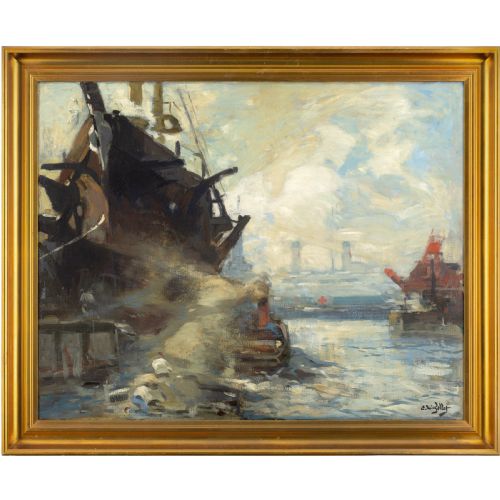
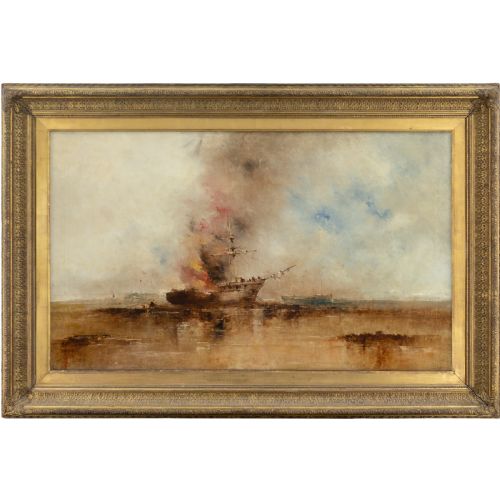
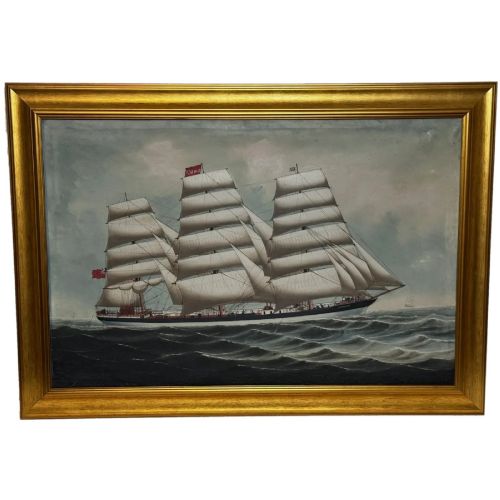
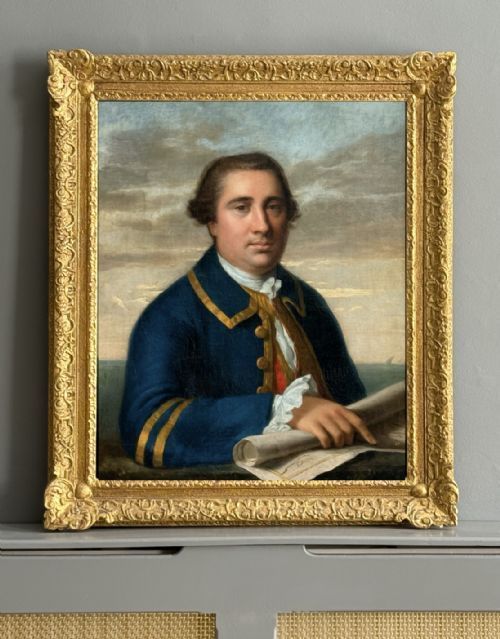

Framed Maritime Canvas Art
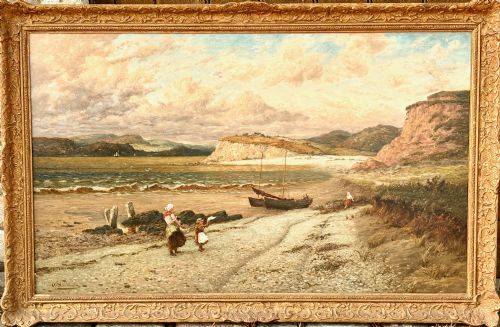
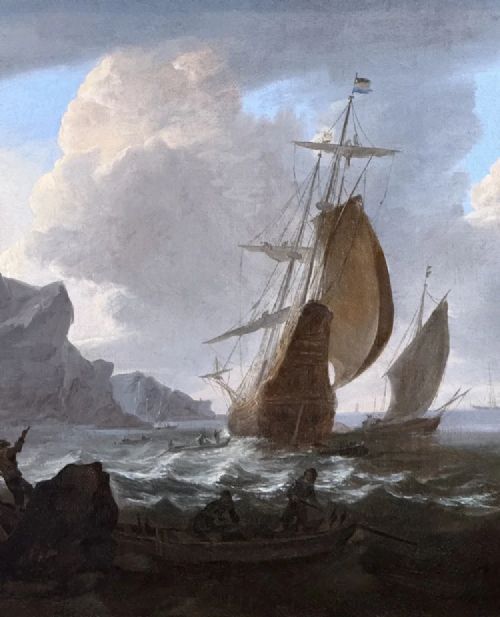
Framed maritime canvas art brings home historic seascapes, merchant vessels and harbour views painted in oil.
Framed Maritime Canvas Art
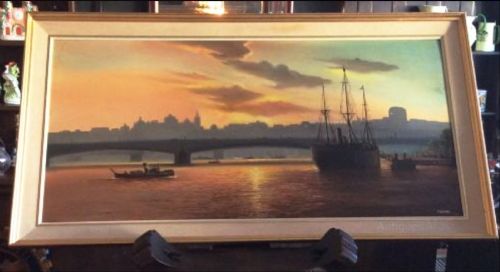
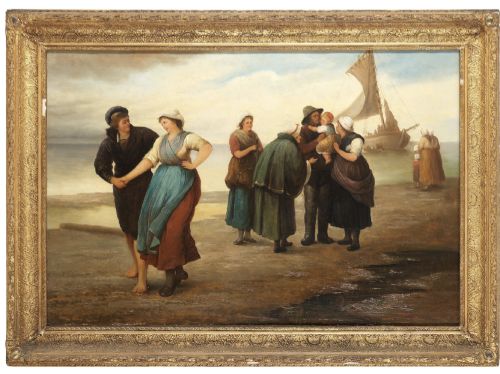
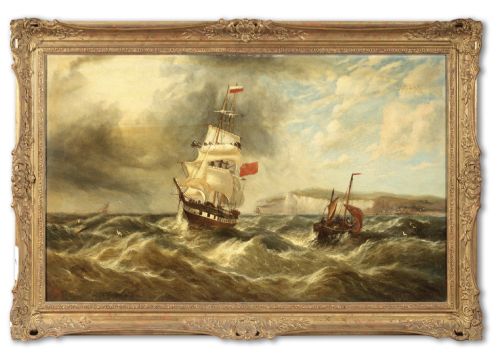
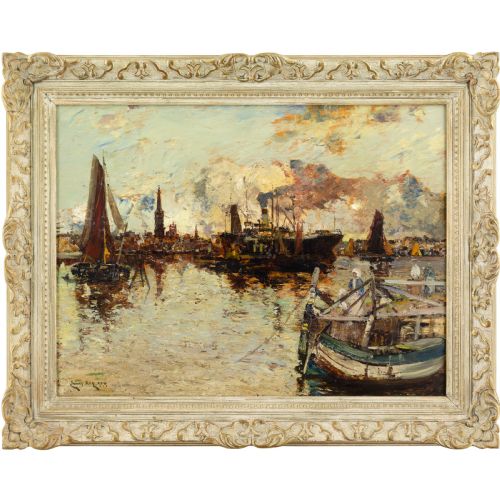
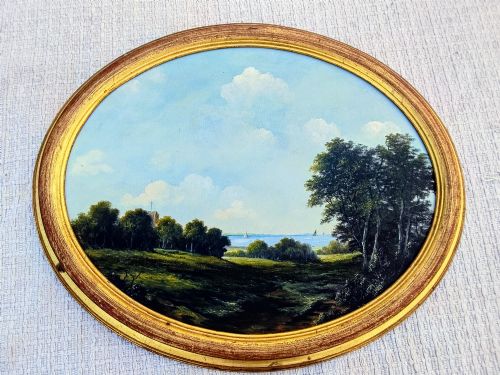
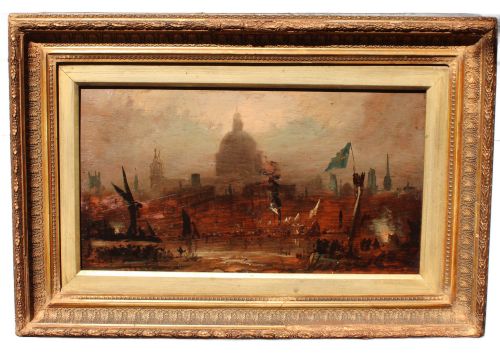
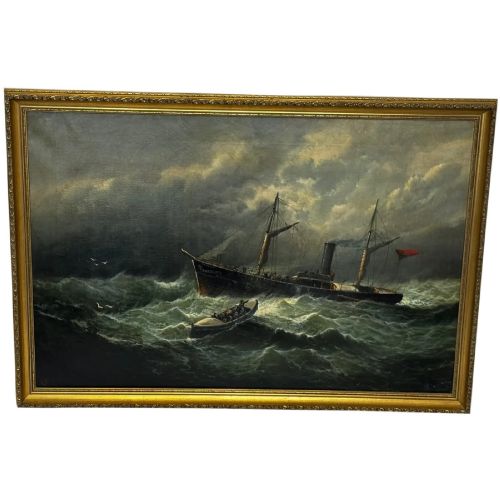
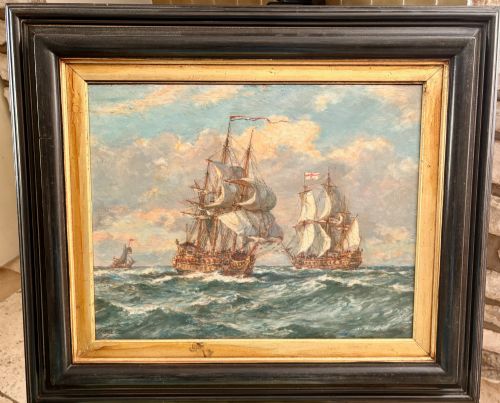
These pieces are oil paintings on canvas depicting seascapes, ships, coastal scenes and harbour views. The subjects range from merchant vessels and warships to quiet river traffic and stormy gales.
Most examples encountered here belong to the nineteenth and early twentieth centuries, alongside occasional mid-twentieth-century works. They encompass British, French, Dutch and Australian schools, showing varied approaches from calm coastal water to heavy seas.
The works span different scales, from intimate oval sea views to expansive panoramas of rivers and bridges. Many retain their period frames, which help anchor the artwork within its historical context.
Materials and construction methods
Artists applied oil paint directly onto stretched canvas surfaces, layering pigments to capture water, sky and atmosphere. The medium allowed for rich texture, visible brushwork and deep tonal variations.
Frames are constructed from wood, frequently finished with giltwood or gold leaf. These surrounds protect the canvas edges and provide visual weight that complements the maritime subject matter.
Listings feature oil paintings on canvas spanning the eighteenth century through to the mid-twentieth century.
Factors influencing quality
Quality rests on the artist's handling of light, movement and maritime architecture. Stronger works convey the weight of water and the correct rigging of vessels with confident, deliberate brushstrokes.
The relationship between the painting and its frame contributes significantly to the piece. Original giltwood or carved wooden frames that suit the period enhance the overall integrity of the artwork.
Eugène-Louis Gillot·William McAlpine·Reginald Arthur Borstel·Lemuel Francis Abbott·James Kay·Bonaventura Peeters·Francis Moltino·Bernard Gribble·Bernard Benedict Hemy·Thomas Creswick·Willem Bos·John Wilson Carmichael·Abraham Cooper·Thomas Hodgson Liddell·Richard B. Spencer·William Henry Williamson
The Framed Maritime Canvas Art Glossary
- Oil on Canvas
- A painting medium where pigments bound in drying oil are applied to a woven fabric support. This technique allows for rich colour depth and blending.
- Giltwood
- Wood that has been coated with a thin layer of gold leaf or metallic powder. It provides a bright, reflective border to historic paintings.
- Marine Painting
- Artwork that depicts ships, boats, naval battles or coastal scenery. These works record maritime history and naval architecture.
- Barque
- A sailing vessel with three or more masts having square sails on the fore and main masts and fore-and-aft sails on the mizzenmast. This rig was common in nineteenth-century merchant shipping.
Framed Maritime Canvas Art: Frequently Asked Questions
What subjects appear in maritime oil paintings?
These canvases typically show sailing ships, merchant vessels, harbour scenes and coastal views. Artists also recorded naval engagements, shipwrecks and quiet river traffic.
Scenes range from calm waters at sunset to stormy gales off the coast. Many works capture specific historical vessels or recognisable ports and bridges.
How do I identify the period of a canvas?
Stylistic clues, costume details on figures and the rigging of depicted ships help narrow down the date. Nineteenth-century works often show a different handling of light and atmosphere compared to Edwardian or later pieces.
The style of the wooden frame can also offer clues, as many paintings retain their original surrounds.
Are these paintings usually signed?
Many works bear the artist's signature, sometimes accompanied by a date or location. Signatures often appear in the lower corners of the canvas.
Unsigned pieces are frequently attributed to particular schools or circles based on technique, subject matter and handling.
How should I care for a framed oil painting?
Keep the canvas away from direct sunlight and sources of heat to prevent the oil paint and wood from drying out. Dust the frame gently with a dry, soft cloth.
Avoid using moisture or cleaning products on the canvas surface, as oil paintings are sensitive to harsh liquids.