






Framed Male Nude Art
Framed male nude art brings together centuries of academic study, photographic experiment, and expressive draftsmanship behind glass.
Framed Male Nude Art
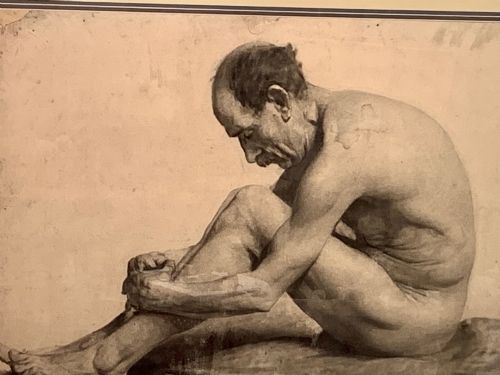
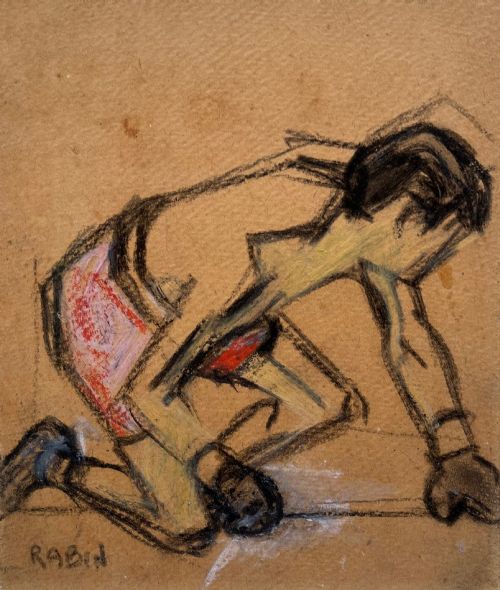
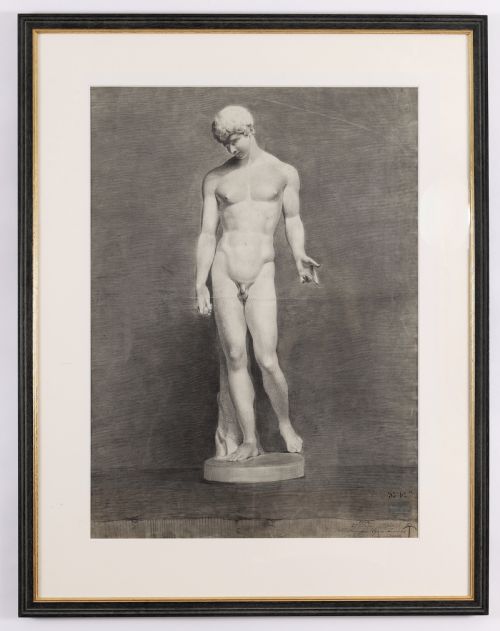
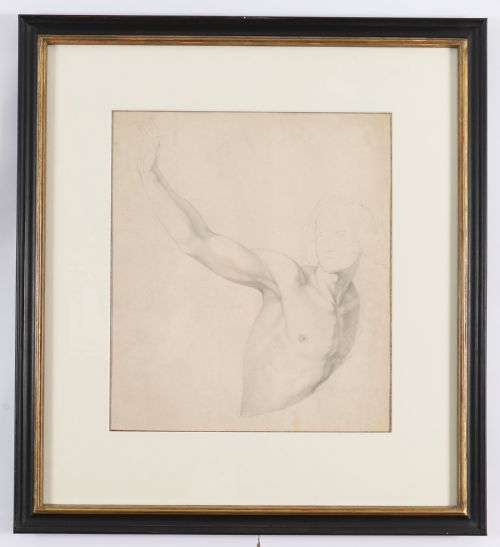
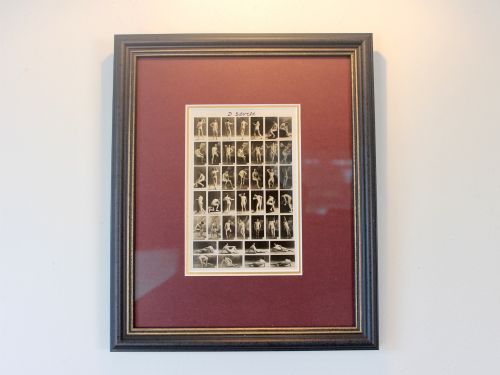
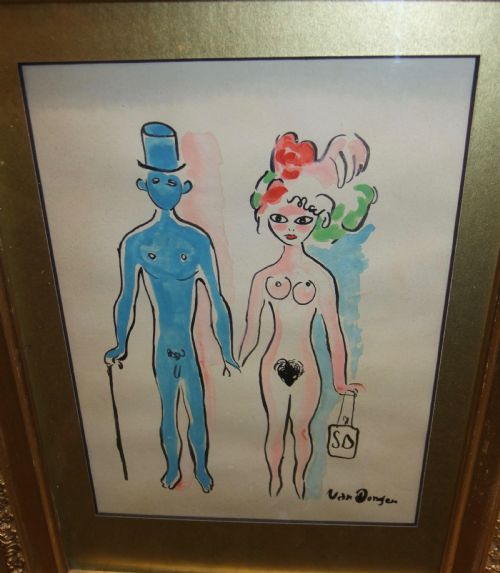
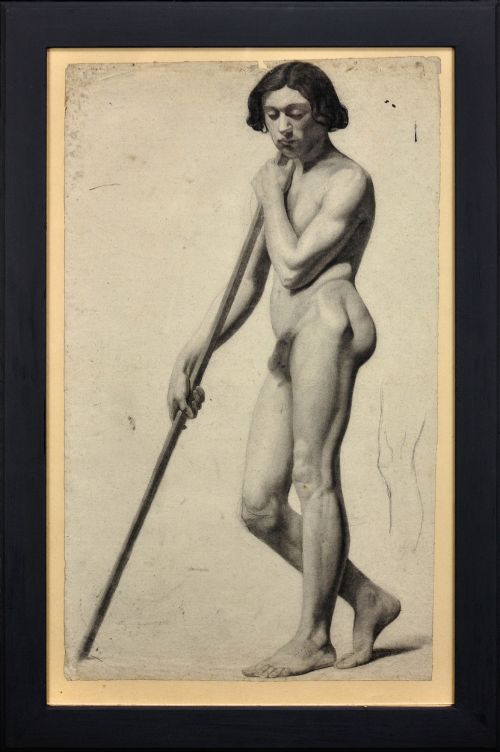
When you search for framed male nude art, you find works spanning the eighteenth century to the mid-twentieth century, dominated by academic life studies and drawings on paper. These pieces range from classical academic realism and neoclassical compositions to early photographic contact sheets and modernist watercolours.
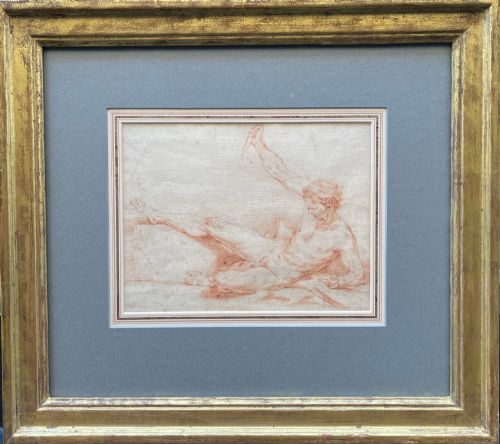
The selection on this page relies heavily on nineteenth-century academic life studies executed in graphite, charcoal, and red chalk. You also encounter French rococo depictions, grand prix de rome submissions, and modern interpretations reflecting shifts in twentieth-century style.
Materials and techniques
Draftsmen utilised graphite, charcoal, red chalk, and pastel on paper to capture musculature, tone, and form. These works were frequently mounted in wooden frames, sometimes with gilded finishes and protective glass.
Photographic works in the selection utilise contact sheet printing methods, whilst paintings employ oil and watercolour on various supports. Academic draftsmen often worked from live models in structured settings to achieve proportion and anatomical accuracy.
Framed Male Nude Art Retail Price Guide 2026
Typical asking prices for framed male nude art among the pieces listed under this phrase on Sellingantiques today, from the lower quarter to the upper quarter. They describe what is for sale here now, not the wider market.
Materials in these listings include paper, wood, glass, charcoal, graphite, red chalk, gilded wood, and pastel.
Distinctions in quality
The finest examples demonstrate precise anatomical proportion, confident line work, and mastery of light and shadow, particularly evident in academic life studies from the nineteenth century. Lesser works lack this structural rigour, often showing hesitation in the rendering of bone and muscle.
The handling of materials also separates the exceptional from the ordinary. Skilled application of red chalk or pastel creates depth and volume, whereas inferior pieces rely on flat tones and uninspired draughtsmanship.
Hyacinthe Colin de Vermont·Samuel Rabin·Julian Mandel·Henry Arthur Roberts·Alexandre-Louis Martin·Kees van Dongen
The Framed Male Nude Art Glossary
- Academic Realism
- A style of painting and drawing produced under the influence of European academies of art. It emphasises strict adherence to classical standards of beauty and anatomy.
- Red chalk
- A brownish-red drawing material made of haematite. Artists utilised it extensively from the Renaissance through the nineteenth century for figure studies.
- Contact sheet
- A photographic print made by placing negatives directly onto sensitized paper. It records a series of exposures taken during a session.
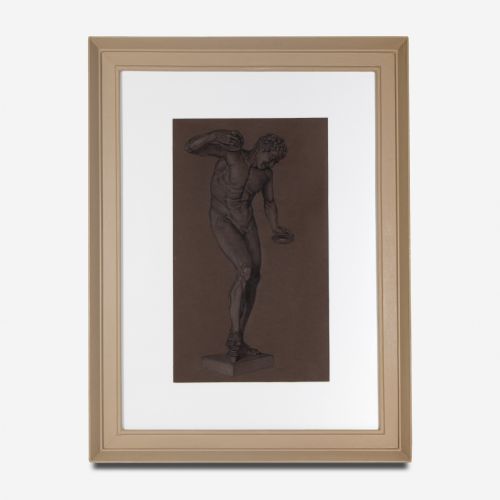
- En grisaille
- A painting executed entirely in shades of grey or neutral monochrome. It often mimics the appearance of relief sculpture.
Framed Male Nude Art: Frequently Asked Questions
What periods do these pieces cover?
The works span from the eighteenth century through the 1960s, with a strong concentration of nineteenth-century academic drawings.
Twentieth-century examples introduce photographic experiments and modernist watercolours into the selection.
How are these works framed?
Most pieces are housed in wooden frames, with some featuring gilded wood mouldings and protective glass.
These enclosures help preserve delicate paper supports, charcoal, graphite, and pastel drawings from environmental damage.
What is an academic life study?
An academic life study is a detailed drawing or painting of a live model produced within a formal art school setting. Students utilised these exercises to master human anatomy and proportion.
Such studies form the core of the nineteenth-century material found on this page.
How do I identify different drawing mediums?
Graphite leaves a shiny metallic grey mark, while charcoal produces a soft, deep black line that smudges easily. Red chalk offers a warm reddish-brown tone favoured for classical figure work.
Pastel applies pure pigment directly to paper in chalky strokes.