


Framed Livestock Oil Canvas
Framed livestock oil canvas works capture rural life on stretched fabric, housed within wood and gesso moulding to bring agricultural subjects into the interior.
Framed Livestock Oil Canvas
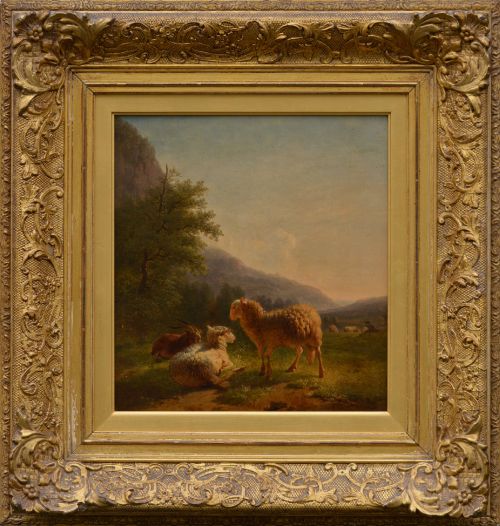
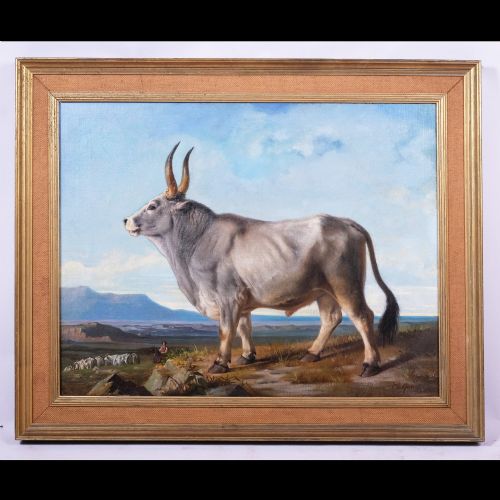
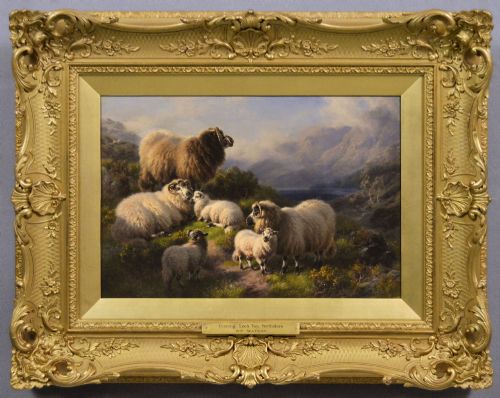
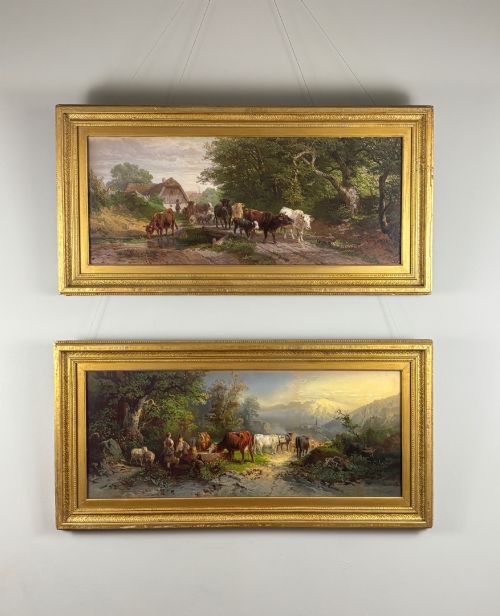
A framed livestock oil canvas depicts farmyard scenes, cattle, sheep, and horses set within pastoral landscapes or stables. These works span from the eighteenth century through the Victorian era into the early twentieth century, reflecting agrarian priorities and rural portraiture.
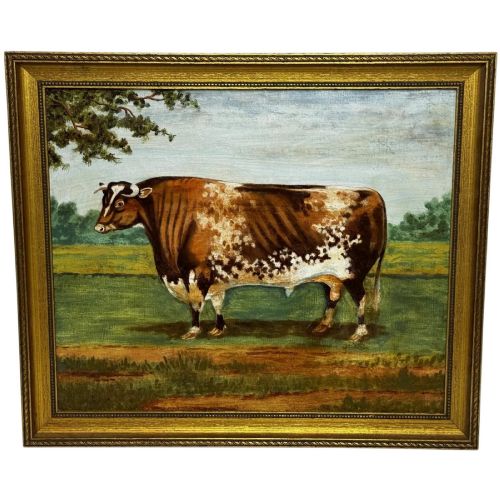
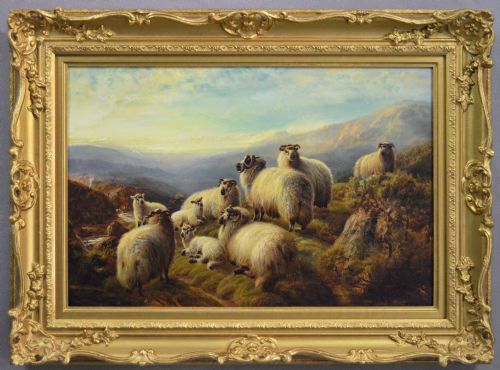
The version most commonly encountered on this page originates in the nineteenth century, often presenting detailed studies of shorthorn bulls, highland cattle, or sheep flocks resting by rivers and in pastures. Painters from British, Belgian, Dutch, and German schools dominate the selection.
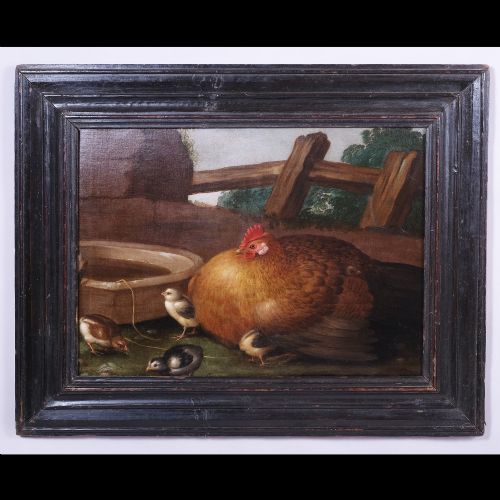
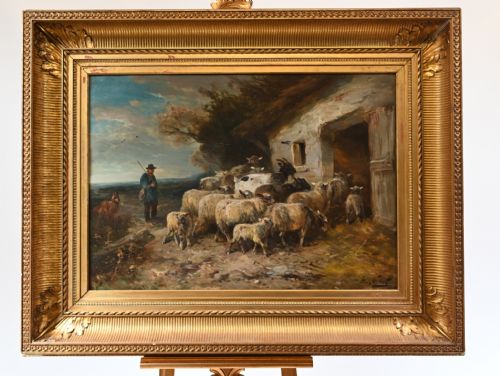
Compositions range from intimate portrayals of individual prize animals to expansive farmyard scenes populated by figures, poultry, and multiple species of livestock. Each piece relies on the interplay of animal anatomy and atmospheric rural backdrops.
Materials and Technique
Artists painted primarily with oil paint upon stretched canvas, utilising the slow drying time of oils to blend tones and achieve realistic textures in animal coats and pastoral light. Support structures consist of wooden stretchers housed inside heavy wooden frames.
Many historical frames incorporate applied gesso ornaments finished with gold leaf or giltwood, framing the canvas to project the status of the depicted prize animals. The physical layering of pigment on canvas allows for depth in landscape and shadow.
Subject matter ranges from solitary shorthorn bulls to bustling farmyard scenes populated by ducks, chickens, ponies, and shepherds.
Qualities of Distinction
Anatomical precision and the rendering of light upon animal hides separate accomplished animal portraiture from more naive or formulaic workshop production. Master painters capture the muscular structure of cattle and the woolly texture of sheep with keen observation.
The preservation of the original giltwood or gesso frame contributes significantly to the integrity of the object, as period surrounds complement the oil canvas they enclose. Brushwork confidence and the handling of atmospheric perspective in the surrounding landscape further elevate specific works.
Eugène Verboeckhoven·William Watson Jnr·Thomas Sidney Cooper·Heinrich Harder·Edgar Hunt
The Framed Livestock Oil Canvas Glossary
- Canvas
- A heavy woven fabric, usually linen or cotton, stretched tightly across a wooden frame to serve as the foundation for oil paintings.
- Giltwood
- Wood that has been carved and covered with a thin layer of gold leaf or gold paint, frequently used for nineteenth-century picture frames.
- Gesso
- A plaster mixture applied to wooden frames as a smooth base before gilding or painting.
- Pastoral
- A genre of art that idealises rural life, featuring shepherds, flocks, and idyllic farm landscapes.
Framed Livestock Oil Canvas: Frequently Asked Questions
What periods do these paintings date from?
The works span from the eighteenth century through the Victorian period into the early twentieth century. Most examples cluster in the nineteenth century, reflecting the peak of pastoral animal painting.
Dates are established through artist signatures, stylistic markers, and period framing techniques recorded in the inventory.
How were these artworks originally displayed?
These paintings hung in country houses, farm offices, and domestic parlours to display prized agricultural assets and a connection to the land. Wealthy landowners commissioned portraits of specific prize-winning bulls and sheep.
The heavy giltwood frames were designed to project status and suit formal nineteenth-century interior decoration.
How do I care for an oil on canvas?
Keep the canvas away from direct sunlight and dramatic shifts in temperature or humidity to prevent the paint and fabric from cracking. Dust the surface gently with a soft, dry brush.
Avoid using water or chemical cleaners on either the oil paint or the giltwood frame.
How do I distinguish regional schools?
British, Dutch, and Belgian artists approached pastoral scenes with distinct palettes and framing choices that reflect their local academic traditions. British works frequently focus on highland cattle and shorthorn bulls in distinct regional landscapes.
Signatures, framing styles, and recorded provenance help identify the origin of each canvas.