





Pastoral Animal Artwork
These pastoral animal artwork pieces capture rural life and domestic creatures through oil paint and watercolour.
Pastoral Animal Artwork
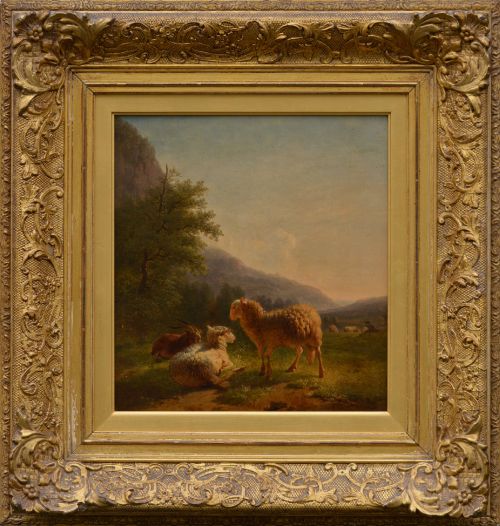
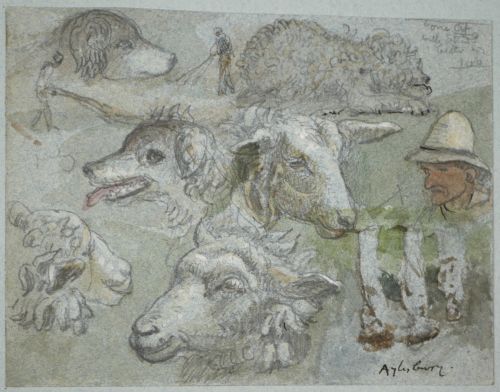
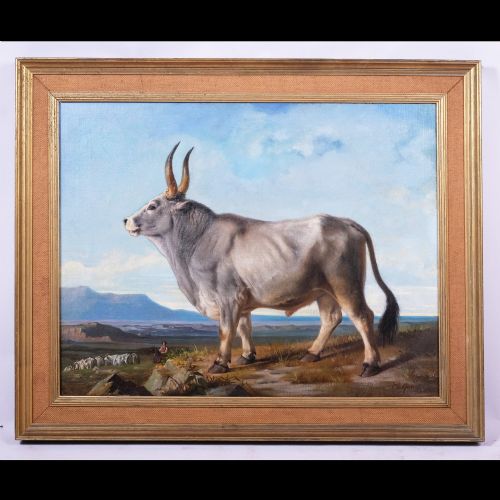
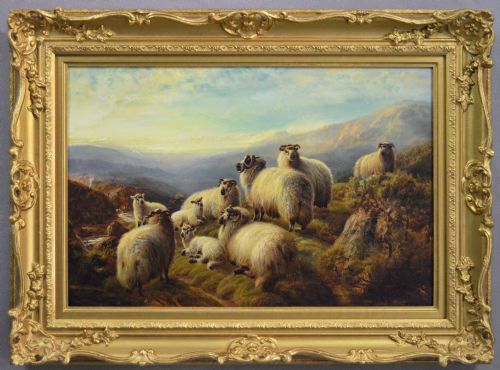
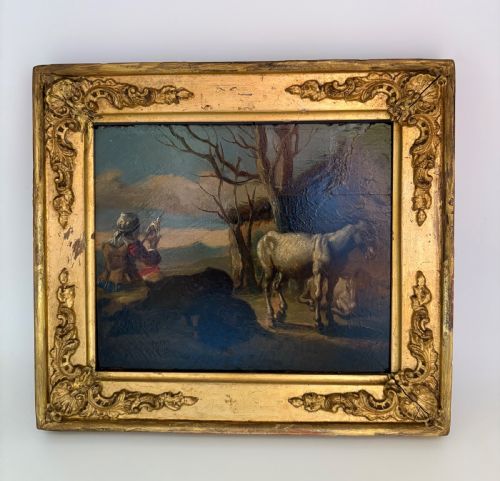
When buyers search for pastoral animal artwork, they encounter nineteenth-century British and European paintings focusing on livestock and rural scenes. The selection on this page relies heavily on Victorian oil on canvas works alongside watercolours depicting cattle, sheep, and horses.
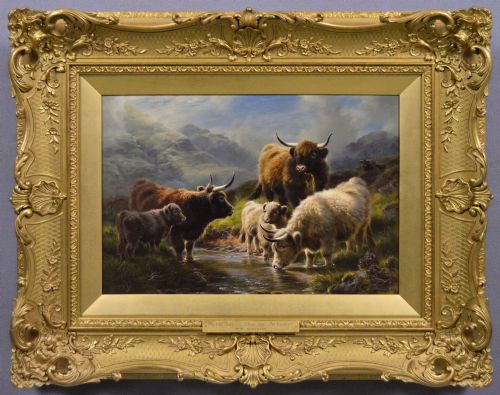
Most pieces combine landscape settings with domestic animals, ranging from Highland cattle in Scottish glens to sheep resting near coastal cliffs. These works reflect a rural aesthetic that dominated nineteenth-century fine art.
Common formats include framed oil paintings and watercolours executed on canvas, paper, or oak panels. The artists often place farm animals in tranquil countryside settings, prioritising naturalistic detail.
Materials and Technique
Artists painted these works primarily with oil paint on canvas or wooden oak panels, utilising traditional layering techniques to build depth. Watercolours on paper also appear frequently among the nineteenth-century selections.
Frames often consist of giltwood and gesso, decorated with gold leaf to finish the presentation. These materials reflect the standard framing practices of the Victorian period.
Listings span from the seventeenth to the twentieth century, with a strong concentration of Victorian oil paintings on canvas.
Quality Variations
Quality in these paintings depends on the anatomical precision of the animals and the handling of light within the landscape. Master artists render livestock with distinct character and accurate proportions rather than formulaic shapes.
The integration between the animal subjects and their surrounding environment separates finer works from standard decorative pieces. Superior brushwork creates convincing textures in wool, hide, and foliage.
Eugène Verboeckhoven·James Smetham·William Watson Jnr·Robert Watson·John Emms·Margaret Maitland Howard·William Henry Mander·Thomas Sidney Cooper·Franz van Severdonck·Philipp Peter Roos·Samuel Joseph Clark·Eugene Joseph Verboeckhoven·Helena Maguire·James de Rijk·Pierre Emmanuel Dielmans·Basil Bradley·Claude Cardon·John W Morris·GW Horlor·W.A. Clark·Henry Brittan Willis·J L VAN Leemputten·Henry Cheadle·William Sidney Cooper·George Smith RSA
The Pastoral Animal Artwork Glossary
- Oil on Canvas
- A painting medium where pigments suspended in drying oil are applied to stretched canvas fabric. This method allows for rich colour blending and textured brushwork.
- Giltwood
- Wood carved and covered with a thin layer of gold leaf or gold paint. It serves as the primary material for ornate antique picture frames.
- Gesso
- A plaster-like mixture applied to wood panels or canvases as a base before painting or gilding. It provides a smooth surface for finishing details.
- Watercolour Painting
- Artwork created using water-soluble pigments on paper. This technique produces transparent washes of colour.
- Oak Panel
- A rigid wooden support used historically for oil paintings before canvas became standard. These panels offer a stable foundation for early works.
Pastoral Animal Artwork: Frequently Asked Questions
What subjects appear in pastoral animal artwork?
These pieces predominantly feature farm animals such as cattle, sheep, and horses situated within rural landscapes. Painters often included shepherds, farm workers, or coastal scenery alongside the livestock.
Domestic fowl and working dogs also feature in specific rural scenes, reflecting nineteenth-century agricultural life.
How do I identify a Victorian animal painting?
Victorian works usually feature realistic depictions of livestock set against British or European landscapes. The style prioritises naturalism and narrative charm over abstract interpretation.
Artists from this era signed their work or left inscriptions indicating the specific breed of cattle or the geographical location.
How should I frame and display these paintings?
Antique oil paintings suit traditional giltwood and gesso frames that complement the period of the artwork. Proper placement away from direct sunlight protects the oil paint and canvas from degradation.
Maintaining stable room humidity preserves both the wooden stretcher bars and the canvas substrate over time.
What is the difference between oils and watercolours here?
Oil paintings utilise heavy pigments on canvas or panels, offering rich textures and deep colour saturation. Watercolour works use transparent pigments on paper, presenting a lighter finish.
Oils typically require protective frames with giltwood mouldings, whereas watercolours need glass covering to prevent moisture damage.