

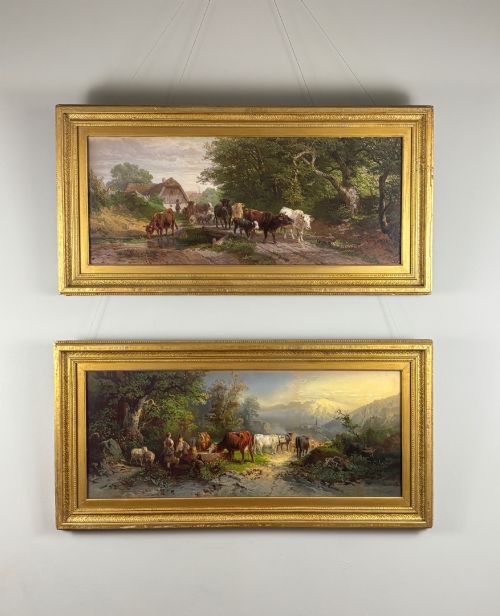
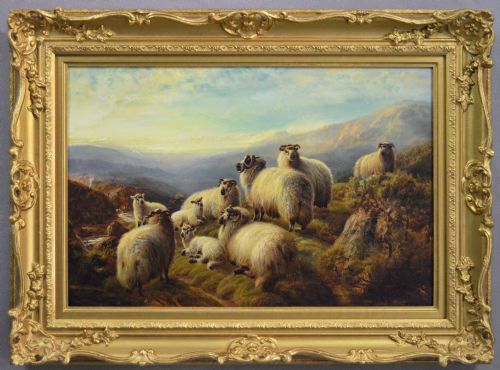
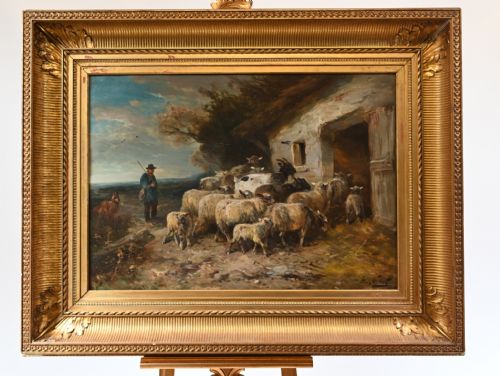


Framed Livestock Canvas Painting
A framed livestock canvas painting brings the grounded reality of historical agriculture and pastoral life directly onto the wall through oil and canvas.
Framed Livestock Canvas Painting
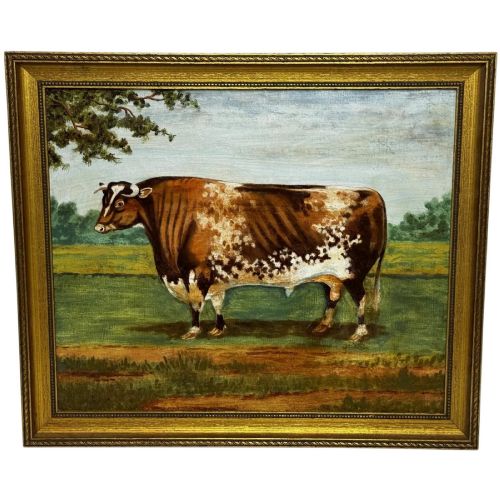
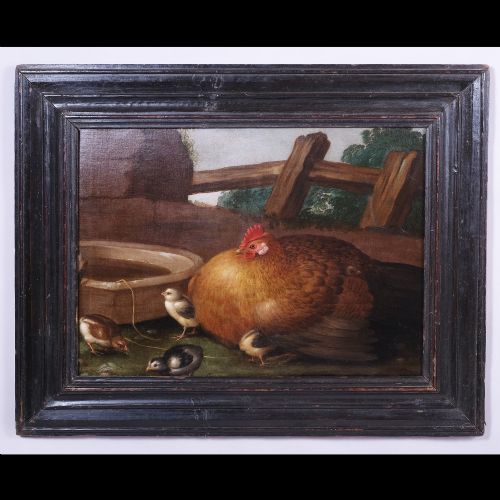
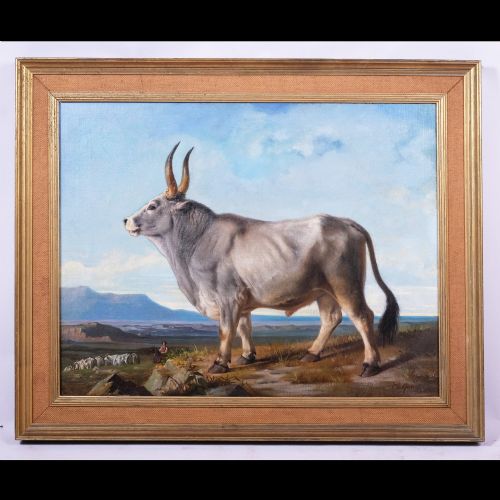
A framed livestock canvas painting captures the traditional relationship between rural communities, pastoral landscapes, and domestic animals across centuries. These works record prized farm animals, working dogs, and domestic fowl within British, Scottish, and continental European settings.
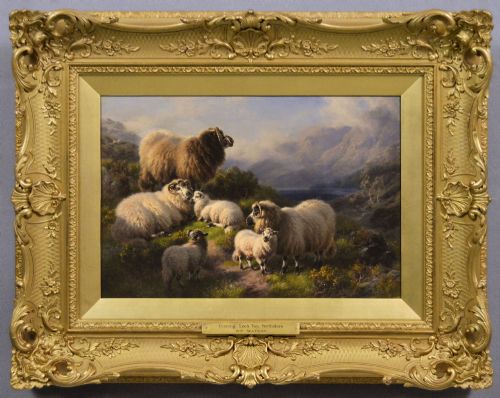
Most examples encountered here belong to the nineteenth century, ranging from Victorian pastoral scenes to detailed animal portraits and broader farmyard landscapes. The subjects stretch from individual shorthorn bulls to flocks of sheep resting by lochs and rivers.
The aesthetic embraces both formal academic realism and more naive interpretations of rural life, reflecting shifting artistic approaches to agriculture and nature. Each piece serves as a visual document of historic breeds and regional farming practices.
Materials and construction
The primary medium across these works is oil paint applied to stretched canvas, utilising the rich texture and layering capabilities of oil to render animal coats and landscape lighting. Pigments capture the varied tones of wool, hide, and pasture.
Many canvases are housed within their period frames constructed from wood, embellished with gesso and finished in gold leaf or giltwood. These frames provide structural support and historical context that complement the visual weight of the oil paintings.
Several canvases faithfully preserve the stern gaze of prize-winning bulls alongside remarkably fluffy Highland sheep.
Distinctions in craftsmanship
Quality separates through the anatomical precision in rendering livestock, the handling of light across pastoral landscapes, and the depth achieved in the oil medium. Finer works display meticulous attention to animal musculature and texture.
The integration of the subject animal with its surrounding environment marks another division, where superior pieces balance individual portraiture of cattle or sheep with cohesive atmospheric perspective in the background.
Eugène Verboeckhoven·William Watson Jnr·Johann Friedrich Voltz·Robert Watson·Henry Schouten·A M Gauci·William Henry Mander·Thomas Sidney Cooper·Andre de Moller·James de Rijk·Julius Caesar Ibbetson·Charles Jones·Arthur Charles Dodd·Claude Cardon·John W Morris·W.A. Clark·Henry Brittan Willis·Edgar Hunt·Henry Cheadle·William Sidney Cooper·Ernest Higgins Rigg·Owen Bowen
The Framed Livestock Canvas Painting Glossary
- Canvas
- A heavy woven fabric used as a surface for oil painting, typically stretched tightly over a wooden frame. It provides a stable and textured ground for the application of oil pigments.
- Giltwood
- Wood carved and coated with gold leaf or a gold-coloured finish. This material is standard for traditional antique picture frames.
- Gesso
- A plaster-like mixture applied to wood frames as a base for moulding ornamental details and gilding. It provides a smooth surface for finishing touches.
- Pastoral Realism
- An artistic style focusing on the accurate depiction of rural life, agricultural scenes, and farm animals in natural settings. This approach prioritises truthful observation over romantic idealisation.
- Shorthorn
- A prominent breed of cattle frequently featured in nineteenth-century agricultural art due to its economic importance and distinct physical conformation.
Framed Livestock Canvas Painting: Frequently Asked Questions
What subjects appear in these paintings?
These works feature farm animals such as cattle, sheep, goats, ponies, and poultry placed within rural landscapes, farmyards, or stables. The focus often rests on prized livestock or flocks tended by shepherds and agricultural workers.
Scenes range from solitary portraits of bulls to expansive valleys populated by grazing sheep under varying weather conditions.
How do I date a canvas painting?
Dating relies on stylistic clues, framing techniques, signatures, and the physical condition of the canvas and stretcher bars. Nineteenth-century works often exhibit specific clothing, agricultural implements, and framing styles typical of the Victorian era.
Inscriptions on the reverse of the canvas or stretcher occasionally supply precise dates or location details left by the artist.
Where were these pastoral scenes painted?
The works originate from British, Scottish, and continental European locations, reflecting the rural priorities of different regions. Scottish landscapes frequently highlight Highland cattle and sheep near lochs, while English pieces often depict pastoral scenes in Kent, Wales, or rural farmyards.
Artists frequently travelled to specific agricultural hubs or estates to observe livestock directly from life.
How should I care for an oil painting?
Protect the canvas and original frame by avoiding direct sunlight, high humidity, and rapid temperature fluctuations. Keep the surface clean using a soft, dry brush to gently remove dust without applying pressure to the paint layer.
Avoid chemical cleaning agents or moisture on both the oil surface and the giltwood frame to preserve the integrity of the materials.