




Framed Lake District Painting
A framed lake district painting brings the topography of northern fells and waters indoors through historic media.
Framed Lake District Painting
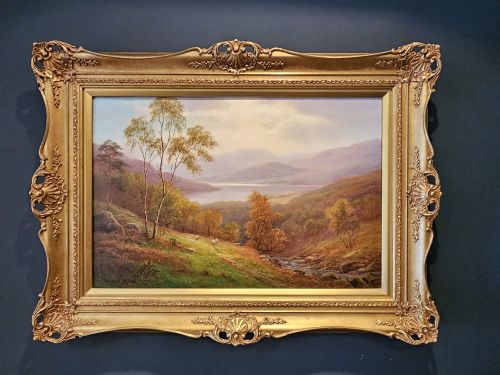
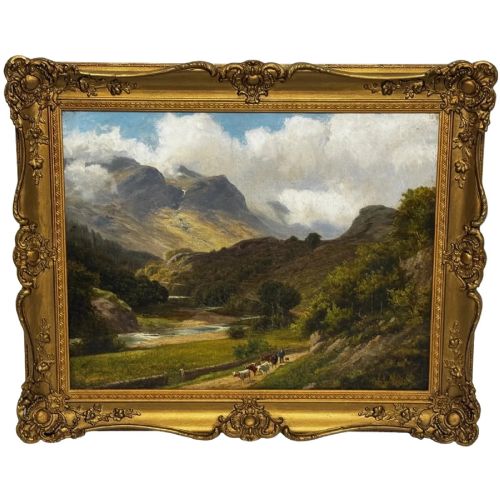
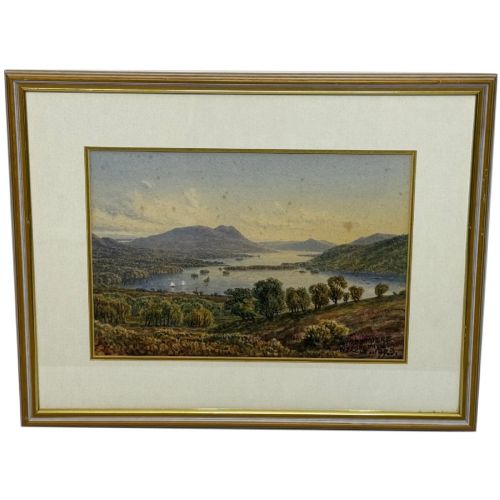
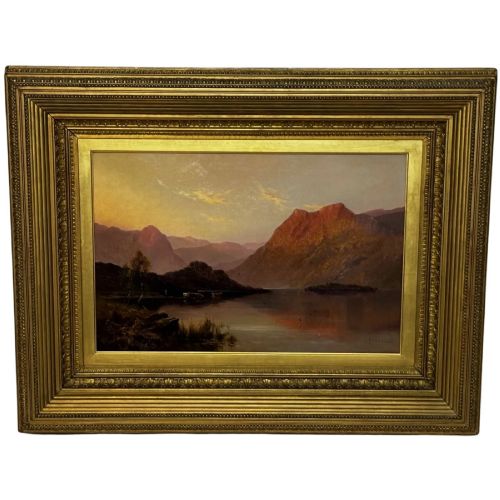
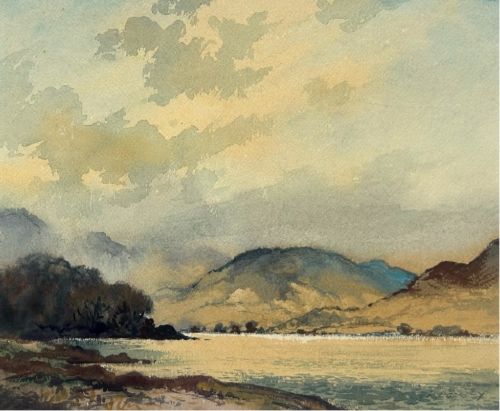
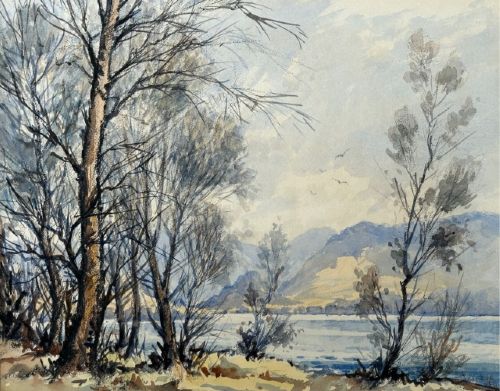
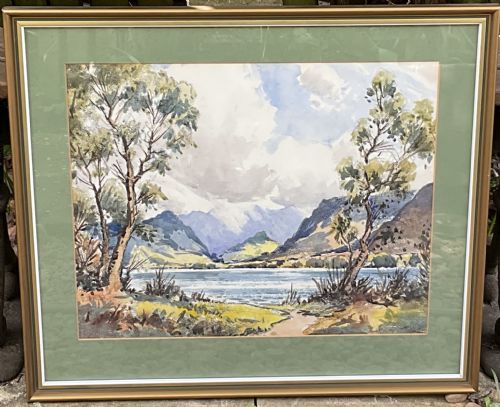
A framed lake district painting captures recognizable Northern topography, from Windermere to Borrowdale, rendered across the nineteenth and twentieth centuries. These works appear in watercolours on paper and oil paints on canvas, enclosed by period frames that complete the presentation.
Buyers encounter Victorian watercolours, Edwardian watercolours, and mid-century impressionist views on this page. The subjects range from mountain fells and tarns to specific rivers and estuaries across Cumberland, Westmorland, and Lancashire.
Most pieces document particular topographical locations such as Coniston Water, Ullswater, or the Langdale Pikes. The surviving works demonstrate how different generations of artists interpreted the same Cumbrian landscape.
Materials and technique
Artists utilised watercolour on paper and oil paint on canvas to record atmospheric light and mountain textures. Many watercolours are glazed beneath protective glass within wooden frames, while oil paintings often feature moulded gesso frames.
Impasto techniques appear in mid-century works, building physical texture onto the canvas to capture sunlight and shadow across estuaries and fells. Earlier works rely on transparent washes of watercolour or smooth application of oil paint to define topographical detail.
Cattle occasionally wander into Lake District views, reminding viewers that fells were working farms long before tourists arrived.
What varies in quality
The strength of a framed lake district painting lies in the artist's handling of changing Cumbrian light and topographical accuracy. Stronger examples demonstrate confident brushwork or delicate washes that define the structure of fells and the surface of water.
Framing also contributes to the overall standard of the piece, with original or period-appropriate wood and gesso frames enhancing the visual weight of the painting. The relationship between the painted landscape and its enclosure dictates the visual balance.
William Taylor Longmire·Alfred Fontville de Breanski Jr·Robert Leslie Howey·Helen Layfield Bradley·James Gunson Atkinson·Edward Horace Thompson·Joseph Farrington·Stephen Enoch Hogley·Claude Muncaster·T.B. Garvie·Sidney Richard Percy·Cornelius Pearson·Tom Dudley·William Mellor·Percy Lancaster·Charles Pettitt
The Framed Lake District Painting Glossary
- Impasto
- Paint applied in thick layers that stand out from the surface. This technique creates a textured finish that catches light.
- Topographical
- Representing specific physical locations accurately. These works record identifiable lakes, fells, and rivers.
- Gesso
- A plaster-like mixture applied to wood frames before gilding or painting. It provides a smooth base for decorative mouldings.
- Watercolour
- Pigments suspended in water-based solution applied to paper. This medium creates translucent washes and delicate effects.
- Estuary
- The tidal mouth of a large river where the tide meets the stream. Several paintings record these coastal transition points.
Framed Lake District Painting: Frequently Asked Questions
How do I hang a heavy oil painting safely?
Heavy oil paintings require picture hooks secured directly into wall studs or appropriate cavity fixings. The weight of the wood and gesso frame demands proper support to prevent wall damage.
Ensure the hanging wire or cord on the reverse is strong and securely fastened to the frame structure. Professional picture-hanging hardware distributes the load evenly.
Should watercolours be kept out of direct sunlight?
Watercolour pigments on paper are sensitive to ultraviolet light and can fade over extended periods. Position these framed pieces away from windows receiving direct sunlight.
Using conservation glass with UV-filtering properties offers additional protection for sensitive works on paper. Regular rotation of displayed watercolours also limits exposure.
How do I identify the period of a frame?
Frame styles often align with the date of the artwork, utilising period mouldings, joinery techniques, and finishes. Victorian and Edwardian frames frequently feature distinct gesso ornamentation.
Examining the reverse of the frame reveals corner construction methods and backing materials. Original backing boards and old framer labels help confirm the period.
What is the difference between watercolour and oil paintings?
Watercolours use water-soluble pigments on paper and require glass protection against moisture and dust. They offer a transparent, luminous quality suited to atmospheric weather effects.
Oil paints consist of pigments bound in drying oils applied to canvas or panel. They produce heavier textures, richer colour depths, and generally do not require glass.