

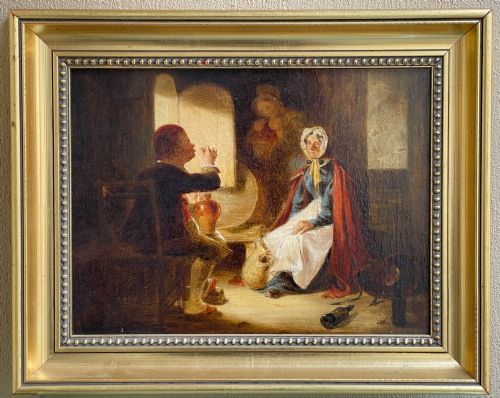

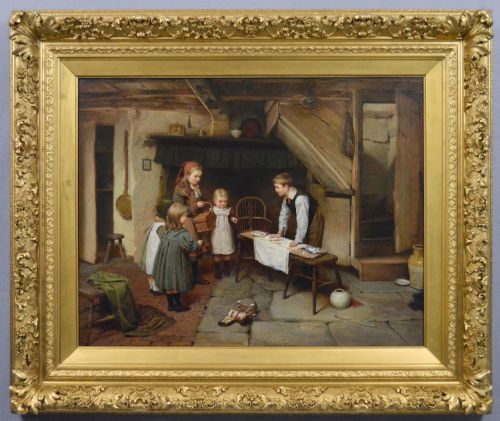
Framed Interior Genre Scene
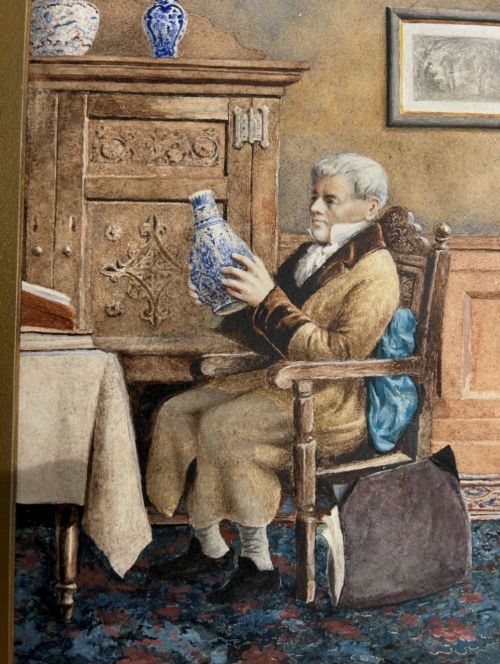
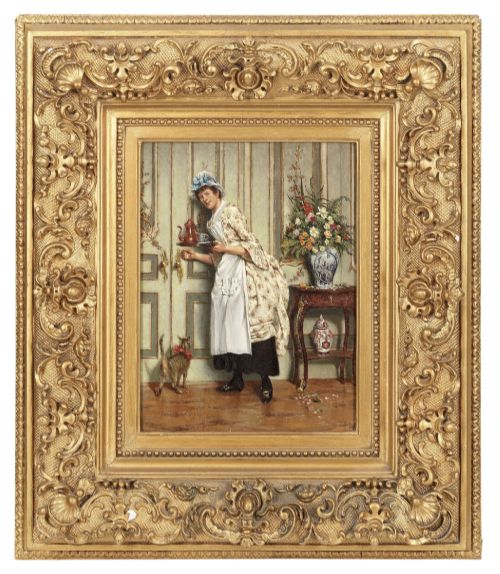
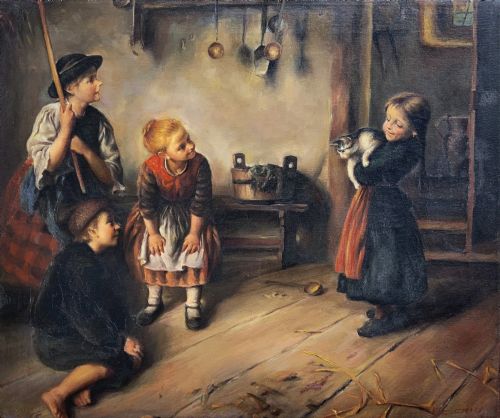
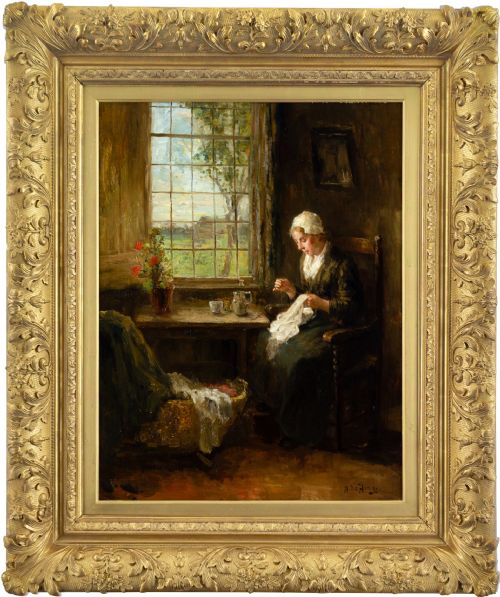
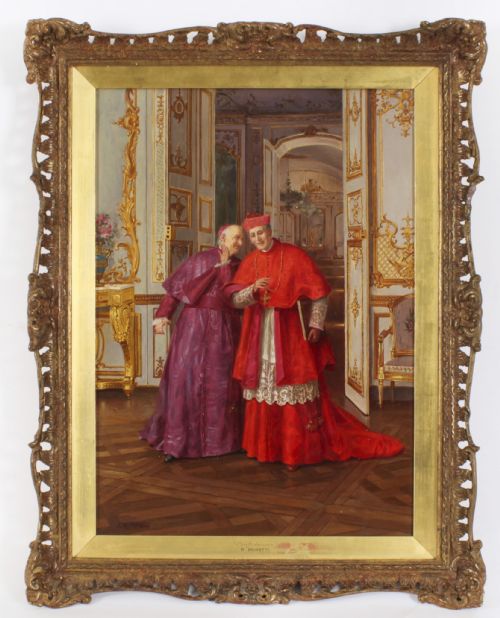
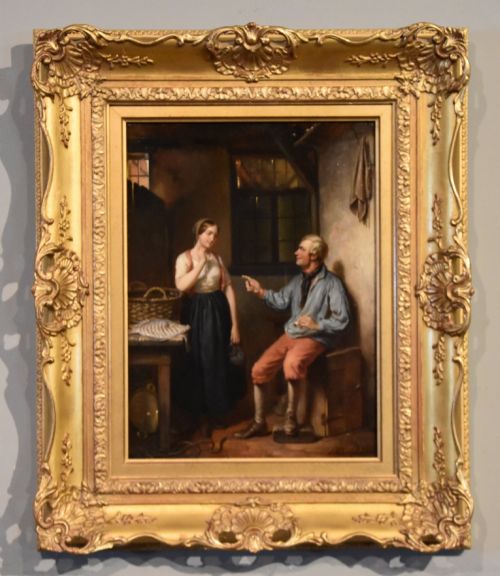
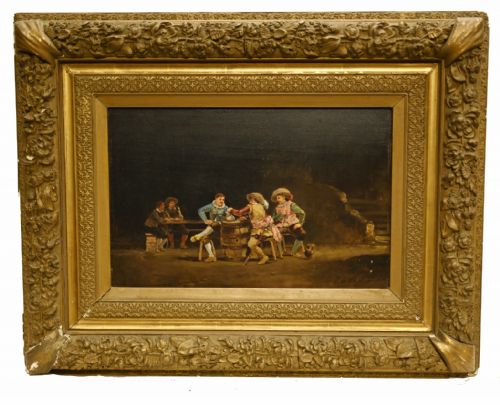
A framed interior genre scene brings domestic life, taverns and parlours of past centuries onto the wall through detailed oil and watercolour painting.
Framed Interior Genre Scene
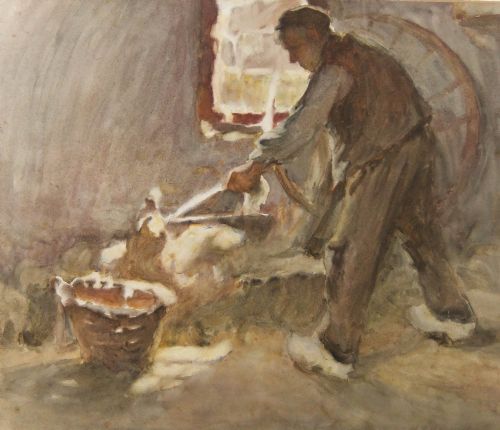
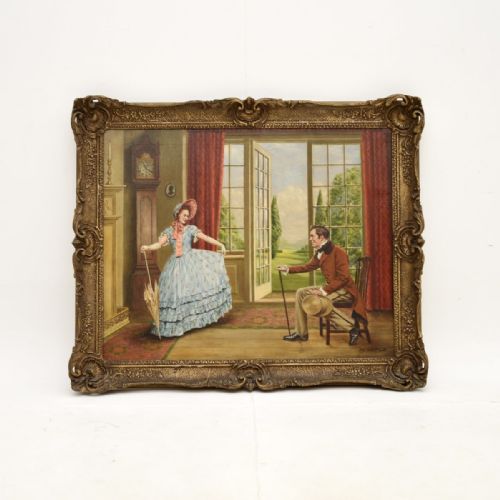
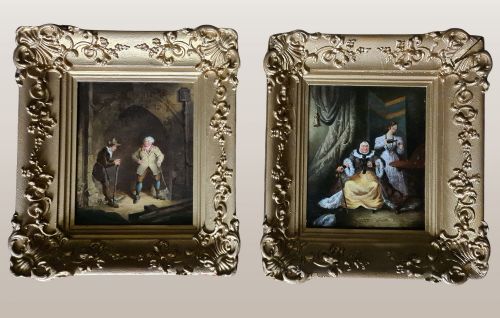
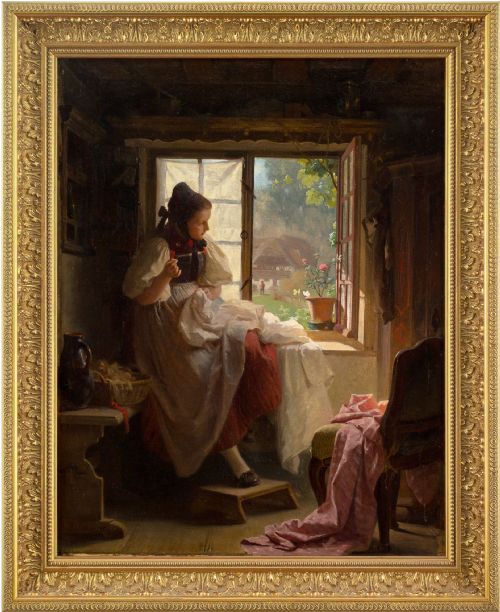
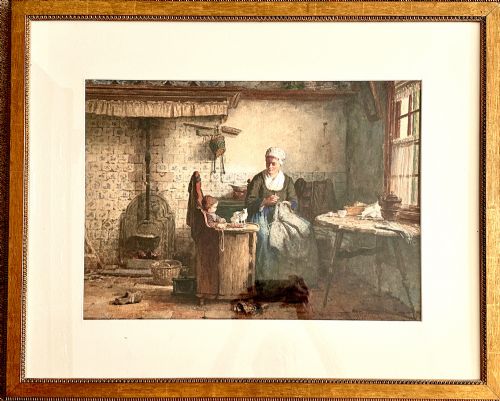
A framed interior genre scene depicts everyday domestic life, cottage interiors, and tavern gatherings captured by artists predominantly during the nineteenth century. These artworks present intimate narratives involving figures at tea, by the fireside, or engaged in quiet household tasks.
The versions most commonly met on this page include Victorian oil paintings on canvas and nineteenth-century watercolours set within decorative wooden frames. Subjects range from Dutch-inspired tavern rooms to refined country house drawing rooms.
Makers and painters represented span academic realists, followers of the Dutch school, and exhibitors at the Royal Academy. Each composition relies on observational detail to record the dress, furnishings, and social interactions of historical interiors.
Materials and construction methods
Surrounds frequently incorporate applied gesso ornaments finished with gold leaf or metallic paint to frame the pictorial space. Panels utilise seasoned oak or other timber supports prepared with grounds suited to fine brushwork.
The selection includes academic realism, Rococo Revival, and Dutch School influences applied to domestic and tavern interiors.
Distinctions in quality
The standard of execution is defined by the precision of brushwork, the handling of light and shadow, and the psychological depth of the figures within the interior space. Academic realism and accomplished handling of chiaroscuro elevate compositions above formulaic workshop output.
Material preservation dictates standing, particularly the stability of the paint layer upon canvas or panel, the retention of original gilding on the frame, and the absence of disfiguring repainting or heavy varnish yellowing.
Stephen Samuel Lewin·Henry Silkstone Hopwood·Alfred Lyndon Grace·Max Kaltenmoser·Hendrik Valkenberg·Bernard De Hoog·David Teniers The Younger·Renato Moretti·Jacob Akkersdijk·Harry Brooker·Alexander Rosell·Benjamin Eugene Fichel·John Arthur Lomax·Haynes King·James Kyd·Robert Alexander Hillingford·George Smith·Edwin Hughes·William Henry Knight·Thomas Couture·Quirijn Van Brekelenkamp·Ludolf de Jongh·Henry Spernon Tozer·Rolinda Sharples·Gustav Goemans
The Framed Interior Genre Scene Glossary
- Genre painting
- A pictorial representation of ordinary people engaged in secular, everyday activities rather than historical or mythological subjects. These scenes focus on domestic interiors, market stalls, and taverns.
- Chiaroscuro
- An artistic technique employing strong contrasts between light and dark to give a three-dimensional volume to figures and objects within an interior. This method defines form and creates dramatic mood.
- Gesso
- A traditional paint mixture consisting of a chalk, gypsum, and binder used to prepare wood surfaces or to mould decorative relief details on frames. It provides a smooth base for subsequent gilding.
- Giltwood
- Timber that has been coated with gold leaf or gold paint for decorative effect. It forms the primary material for ornate picture frames from the nineteenth century and earlier.
- Academic realism
- A style of painting produced under the influence of European academies of art, characterised by strict standards of drawing, smooth brushwork, and lifelike depiction of subjects.
Framed Interior Genre Scene: Frequently Asked Questions
What defines a genre scene?
A genre scene depicts everyday life and ordinary people in domestic, occupational or social settings. Rather than portraying historical events or portraits of specific dignitaries, these works focus on common activities like sewing, dining or gathering by a fire.
In these listings, the category includes cottage interiors, tavern interactions and drawing room moments captured by nineteenth-century painters.
How can I date an interior painting?
Dating relies on stylistic evidence, artist signatures, costume details and framing materials. Victorian and nineteenth-century works often bear specific dates or can be attributed through recorded exhibition histories.
Panel supports and canvas types also offer clues, alongside signatures or inscriptions left by the artist on the reverse of the work.
Where were these paintings displayed?
These artworks were created primarily for domestic display within middle-class and country homes during the nineteenth and early twentieth centuries. They suited drawing rooms, libraries and parlours where narrative art provided conversational focal points.
The inclusion of heavy giltwood or gesso frames reflects the Victorian preference for ornate wall decoration.
How do I care for an antique oil painting?
Protection from direct sunlight, stable humidity levels and avoidance of extreme temperature fluctuations maintain the stability of canvas and oil paint. Dusting should be undertaken gently with a soft, dry brush without applying moisture or cleaning agents.
Frames require similar care to prevent the drying and cracking of historical gesso and giltwood ornamentation.