

Framed Highland Landscape Art
Framed highland landscape art brings mountain views and lochs indoors through nineteenth and early twentieth century oils and watercolours.
Framed Highland Landscape Art
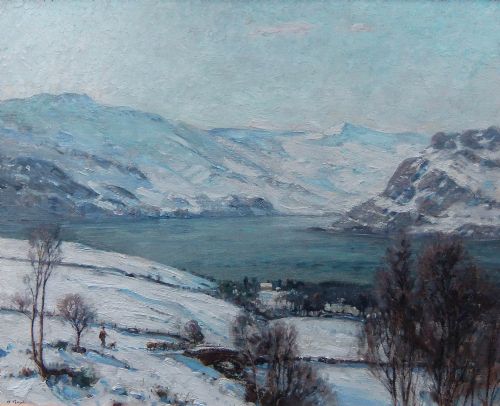
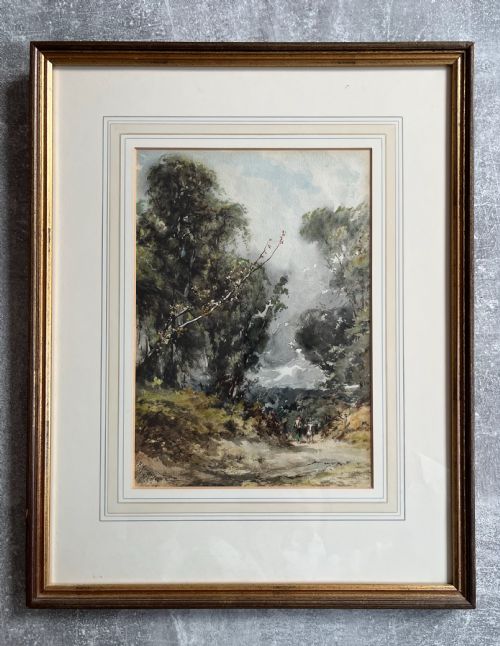
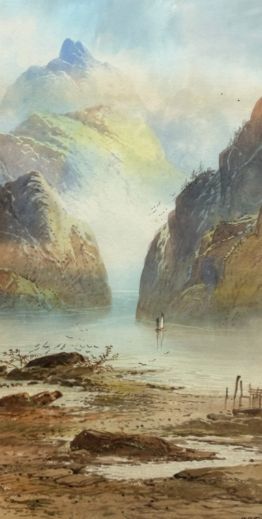
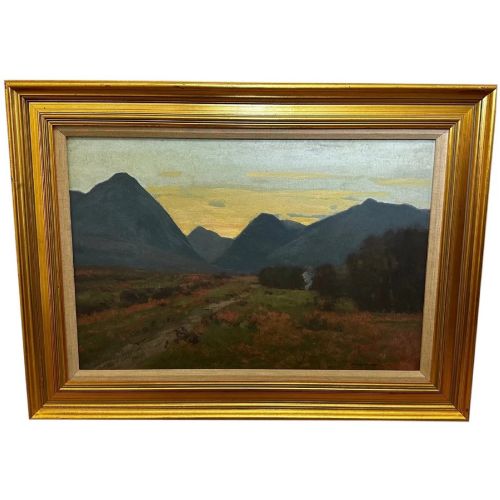
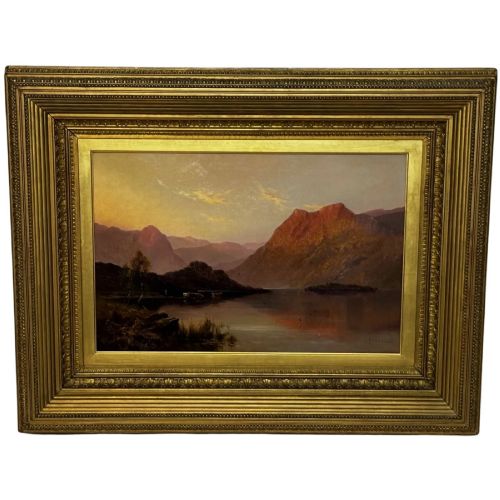
Buyers seeking framed highland landscape art encounter nineteenth and early twentieth century works depicting Scottish and British mountain terrain, lochs, and rural valleys. The selection relies heavily on Victorian and Edwardian periods, featuring watercolours and oil paintings on canvas or wood panel.
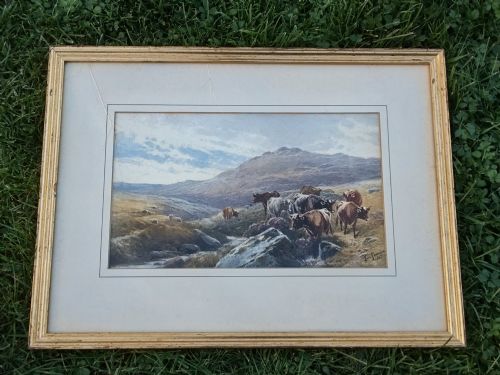
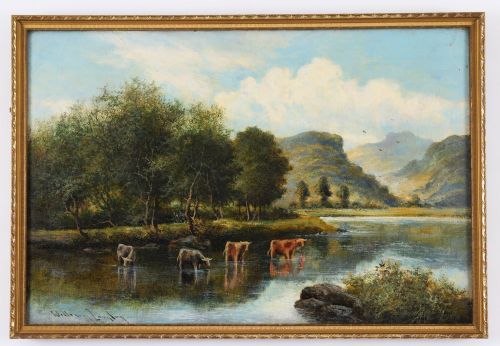
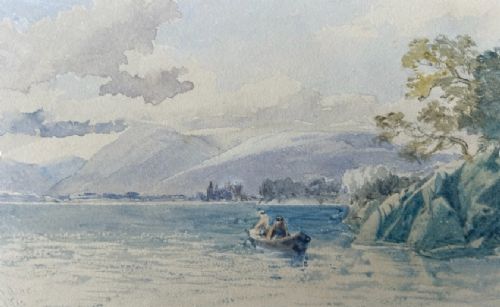
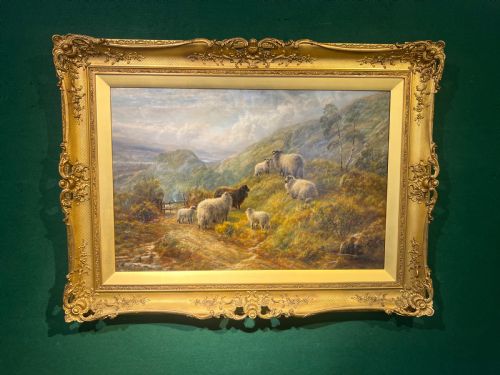
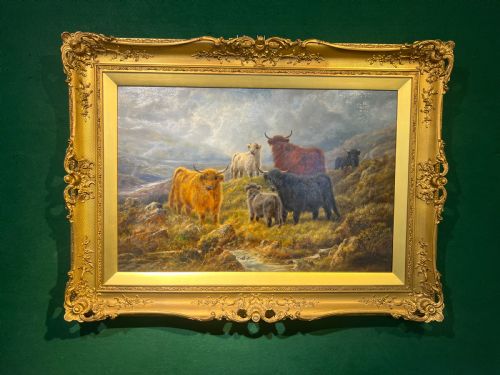
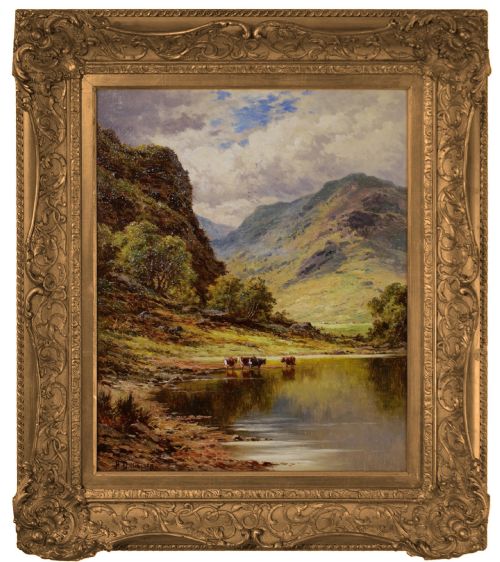
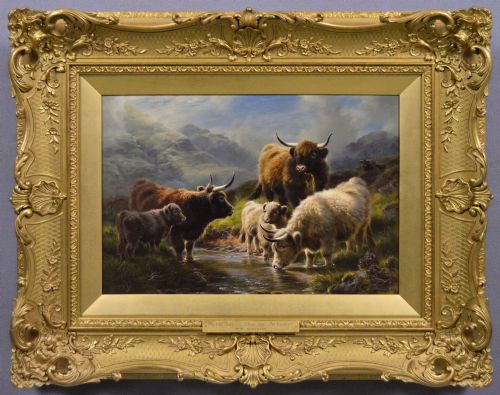
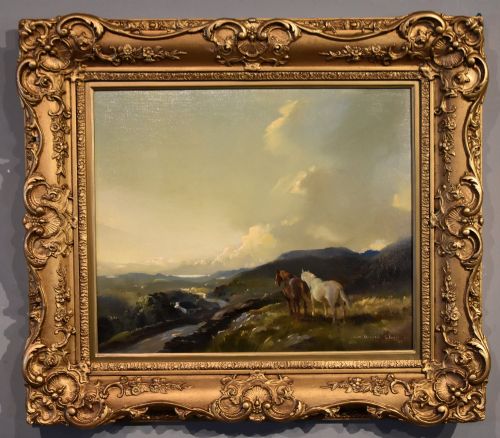
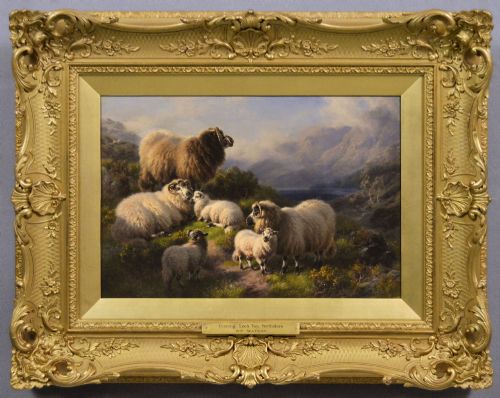
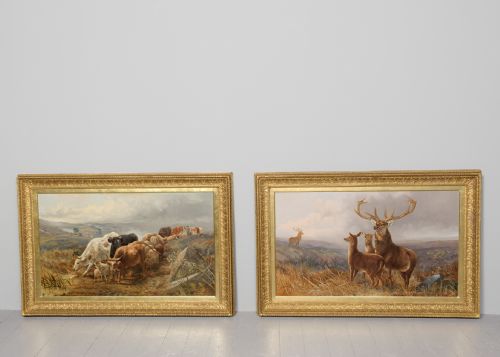
Most pieces on display capture open vistas featuring Highland cattle, sheep, and misty expanses of water such as Loch Lomond and Loch Tay. These works span distinct regional styles, ranging from detailed Victorian realism to Scottish impressionism.
Materials and construction
Artists painted primarily using oil on canvas, oil on wood panel, or watercolours on paper, applying pigments to capture changing light across mountainous terrain. Canvas and panel supports provided a durable foundation for layered oil paint, while watercolours offered fluid transparency for atmospheric effects.
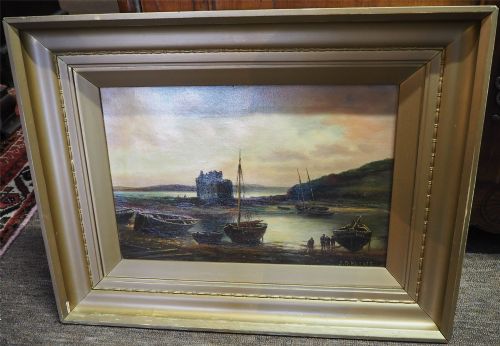
Frames utilise wood, often embellished with moulded gesso and finished with gold leaf or gilding to complement the dark tones of the paintings. These period frames range from simple wooden surrounds to ornate Victorian mouldings.
Framed Highland Landscape Art Retail Price Guide 2026
Typical asking prices for framed highland landscape art among the pieces listed under this phrase on Sellingantiques today, from the lower quarter to the upper quarter. They describe what is for sale here now, not the wider market.
The selection includes rural subjects featuring Highland cattle and sheep resting near Scottish lochs and rivers.
Factors that separate examples
Quality depends on the artist's ability to render atmospheric depth, shifting weather, and natural light across mountain ranges and lochs. Superior works demonstrate precise brushwork and balanced composition, distinguishing them from formulaic studio pieces.
The condition and authenticity of the original period frame influence the overall integrity of the piece. Intact nineteenth-century giltwood and gesso frames preserved alongside the canvas elevate the presentation and historical value.
William Beattie-Brown·George Fotherly Hargitt·Thomas Miles Richardson Jnr·William Henry Earp·Alfred Fontville de Breanski Jr·George Houston·Henry H. Parker·Robert Watson·William Watson Jnr·Robert Cleminson·Douglas Cameron·Charles Leslie·Vernon DeBeauvoir Ward·Everett Watson Mellor·Joseph Knight·William George Tennick·Archibald Kay·Henry Robinson Hall·William Henry Mander·Henry Hillier Parker·W.E. Evans·H Wallace·William Grant Murray·Tom Seymour·James Bell Anderson
The Framed Highland Landscape Art Glossary
- Giltwood
- Wood carved and coated with gold leaf or gold paint. This finish creates a reflective metallic border that defines the edge of the artwork.
- Gesso
- A plaster-like mixture applied to wooden frames and moulded into decorative reliefs before gilding. It provides a smooth base for ornamental details.
- Oil on Canvas
- Pigment mixed with drying oils applied to a stretched woven fabric support. This technique allows for rich colour blending and textured brushwork.
- Watercolour Painting
- Pigments suspended in a water-soluble binder applied to paper. This medium produces translucent washes suited for capturing atmospheric skies and distant hills.
- Scottish Impressionism
- A painting approach focusing on light, colour, and brushwork rather than rigid detail. Artists working in this style recorded the fleeting effects of northern weather.
Framed Highland Landscape Art: Frequently Asked Questions
How do I identify a Victorian highland painting?
Victorian highland paintings typically display naturalistic details of cattle, sheep, and rugged terrain under dramatic skies, often painted in oil on canvas.
Clues lie in the clothing of any figures, the subject matter of remote Scottish lochs, and the presence of heavy period giltwood frames.
What is the difference between oil and watercolour highland art?
Oil paintings use thick pigments on canvas or wood panels, allowing for rich textures and deep tones that capture moody weather and misty glens.
Waterworks utilise fluid paints on paper, offering delicate transparency and light washes well suited for gentle atmospheric effects.
Are these frames original to the artwork?
Many nineteenth-century paintings retain their original frames, which were specifically chosen or made to house the canvas during the Victorian era.
Original frames frequently feature moulded gesso and gold leaf finishes that show appropriate signs of age and wear consistent with the period.
Where were these landscape scenes usually painted?
Artists travelled directly to remote regions such as the Scottish Highlands, Perthshire, and the Lake District to sketch and paint landscapes from observation.
Popular locations included Loch Lomond, Loch Tay, and Glen Tilt, where pastoral scenes featuring cattle and sheep unfolded against mountain backdrops.