
Framed Genre Scenes
Framed genre scenes capture everyday moments of human life through nineteenth-century painting and watercolour.
Framed Genre Scenes
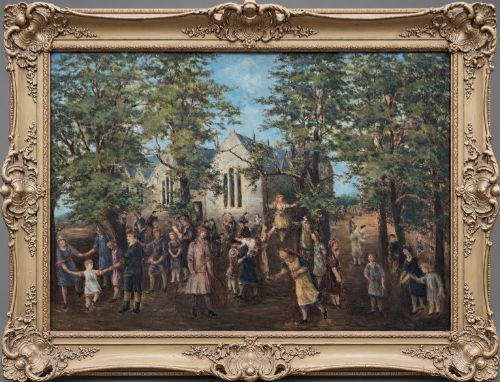
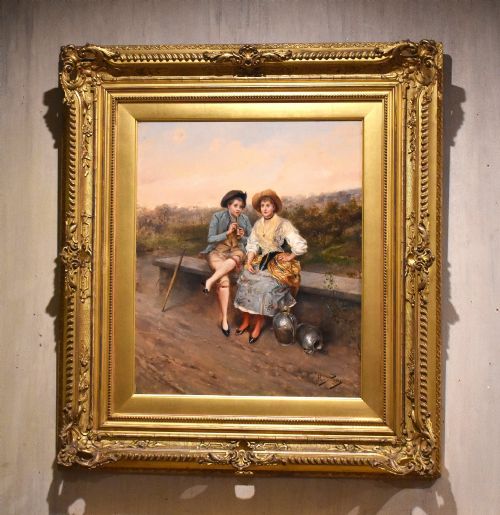
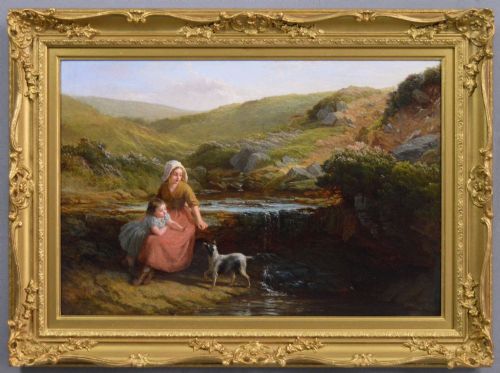
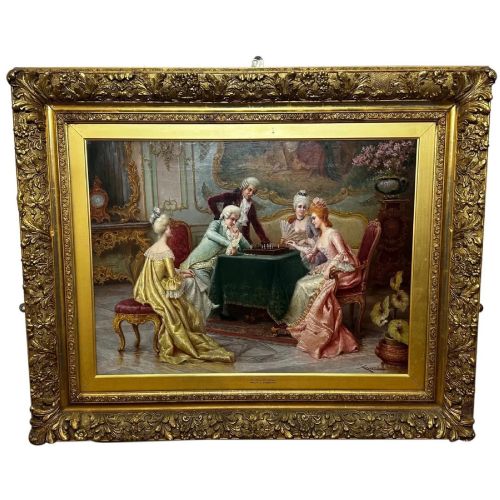
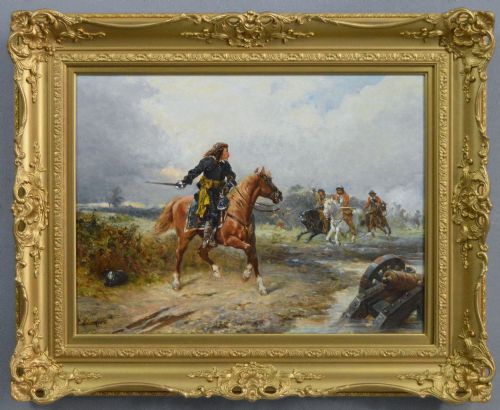
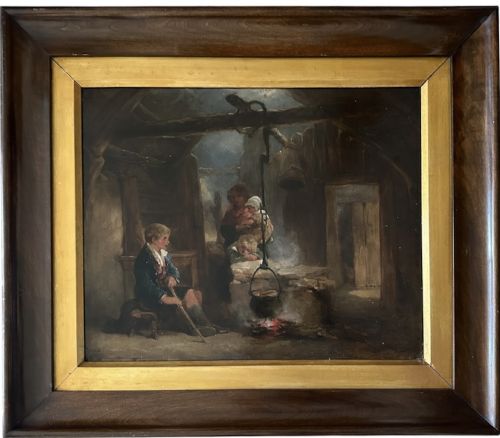
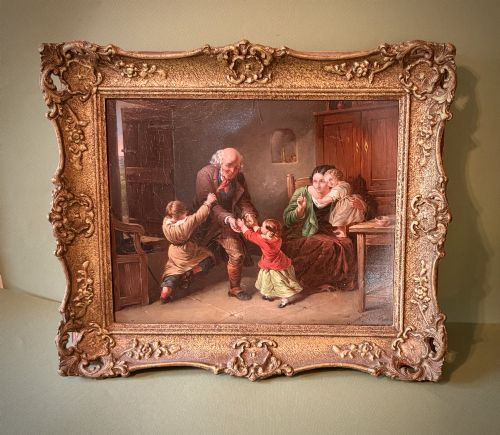
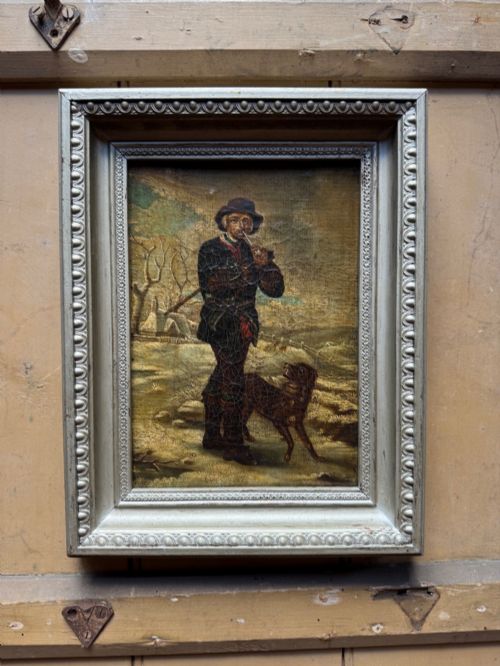
Framed genre scenes portray daily human activities, domestic interiors and outdoor gatherings set within nineteenth-century life. You will frequently find oil paintings on canvas and detailed watercolours depicting figures at rest, at work or in social settings.
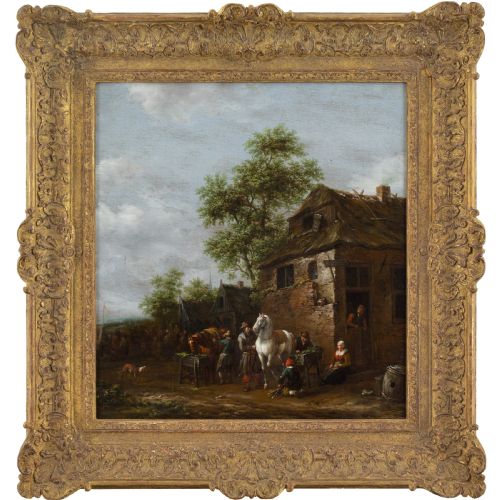
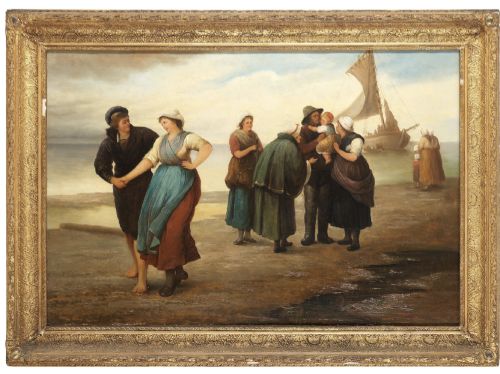
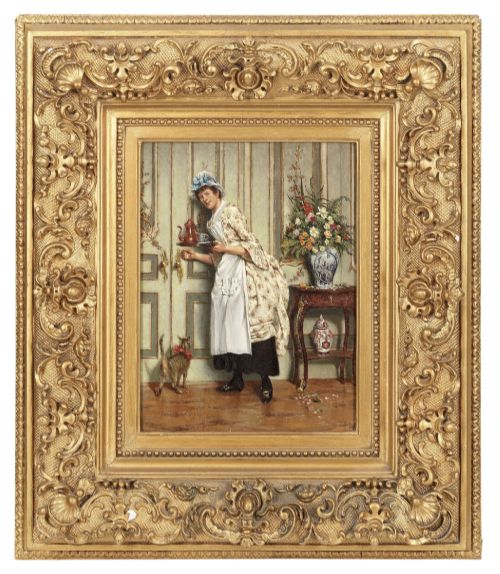
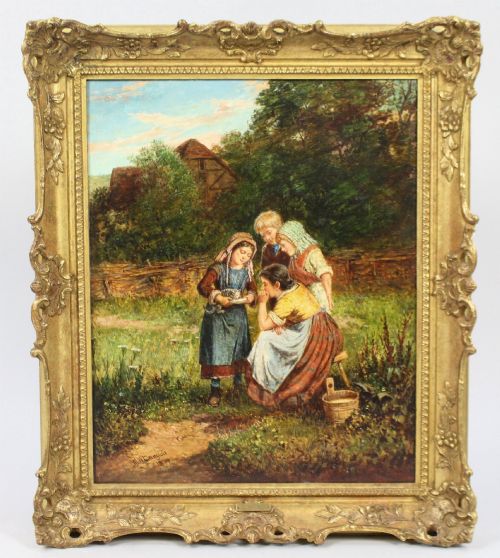
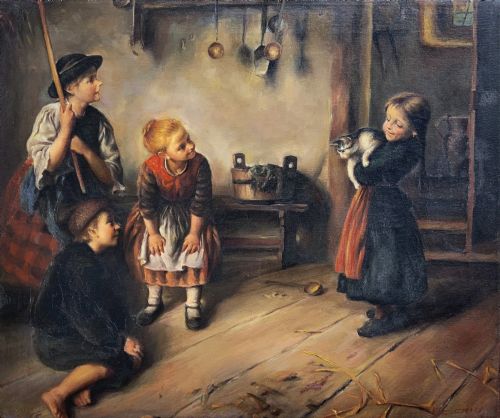
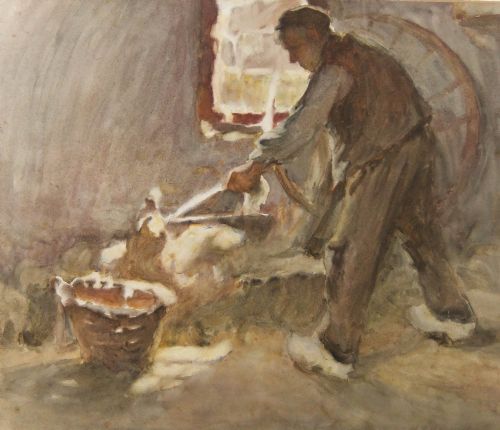
The subjects range from quiet interior domestic moments with children and tea tables to tavern scenes and outdoor coastal labour. These works offer a window into social history through painted narratives of ordinary people.
How they were made
Artists painted primarily in oil on canvas or applied watercolour on paper, often framing the finished pieces in wood with gold leaf and gesso. Gilt wood frames provide the traditional border structure for these historic works.
Techniques span academic realism and freer brushwork, utilising oil paint and watercolours to capture light within interiors and pastoral settings. The framing materials preserve the paper and canvas components across decades.
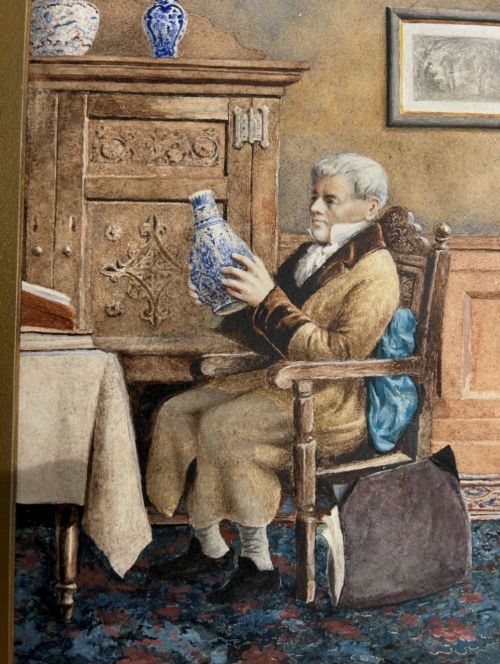
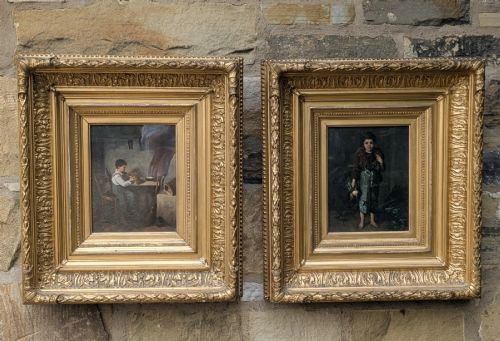
Children feeding kittens and piglets share wall space here with serious gentlemen examining blue vases.
What varies in quality
Quality rests in the precision of the figure drawing, the handling of light and shadow, and the expression captured in human faces. Masterful brushwork distinguishes works with deep narrative engagement from simpler decorative pieces.
The preservation of the original canvas, paper support and gilt wood frame influences the overall integrity of the piece. Stronger examples display accomplished composition and depth within domestic or outdoor settings.
Felix Stone Moscheles·Henry Stacy Marks·Stephen Samuel Lewin·Mark William Langlois·Alfred Lyndon Grace·Howard Helmick·Adelaïde Salles-Wagner·Max Kaltenmoser·George Augustus Holmes·Joseph H Barnes·Frederick Walker·Louis Charles Verwee·Charles Hunt·Hendrik Valkenberg·Joseph Farquharson·Bernard De Hoog·David Teniers The Younger·J. C. Dollman·Carlo Ferranti·Renato Moretti·Jacob Akkersdijk·Delapoer Downing·Godfried Schalcken·Miles Birkett Foster·Albert Ludovici Jnr
The Framed Genre Scenes Glossary
- Genre painting
- Art depicting scenes from ordinary life, typically domestic interiors, street scenes or social gatherings. These works focus on narrative moments rather than formal portraiture or landscape.
- Gesso
- A plaster-like mixture applied to wood frames before gilding. It provides a smooth surface for laying gold leaf.
- Chiaroscuro
- The use of strong contrasts between light and dark to give a sense of volume to figures and objects. This technique is often seen in interior tavern scenes.
- Watercolour
- Pigments suspended in a water-based solution applied to paper. It allows for translucent washes and delicate detail.
- Oil on canvas
- Pigment bound in an oil medium applied to a stretched fabric support. It remains a primary medium for nineteenth-century figurative art.
Framed Genre Scenes: Frequently Asked Questions
What is a genre scene?
A genre scene depicts ordinary people engaged in daily activities rather than historical events, mythologies or formal portraits. These works illustrate domestic life, labour, leisure and community interactions.
Such paintings provide a direct visual record of past social conditions, clothing and interior decoration.
Are these works painted on canvas or paper?
The pieces utilise both oil on canvas and watercolour on paper depending on the medium chosen by the artist. Canvas supports are typical for larger oil paintings, whilst watercolours rely on paper.
Both formats require framing behind glass or in open gilt wood mounts to protect the surface.
How do I date these paintings?
Dating relies on stylistic evidence, artist signatures, framing materials and nineteenth-century dress codes depicted within the scene. Many works carry specific dates or reflect the academic and realist styles of the Victorian era.
Comparative study of recorded works by listed artists helps narrow the period of creation.
Where were these scenes usually set?
Settings include domestic cottage interiors, country houses, rural landscapes, coastal villages and European taverns. Artists painted surroundings that reflected local trades and everyday domestic routines.
These locations ground the human narrative in specific cultural and regional contexts of the period.