



Framed Forest Painting
A framed forest painting brings the quiet depth of woodland light and ancient timber directly into a room.
Framed Forest Painting
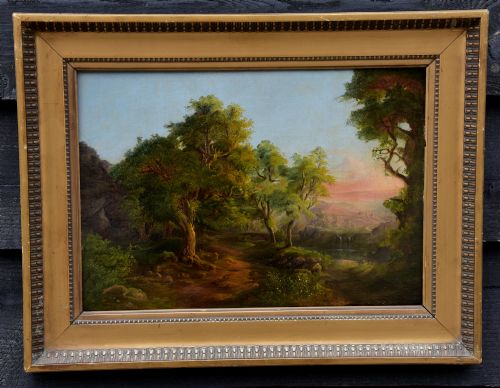
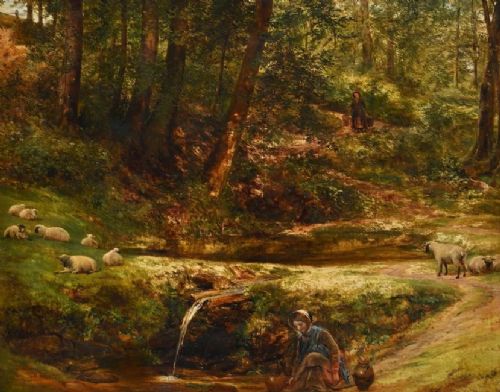
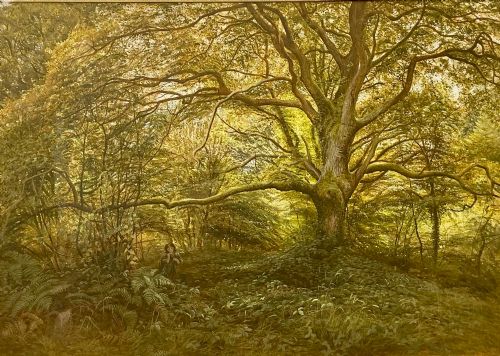
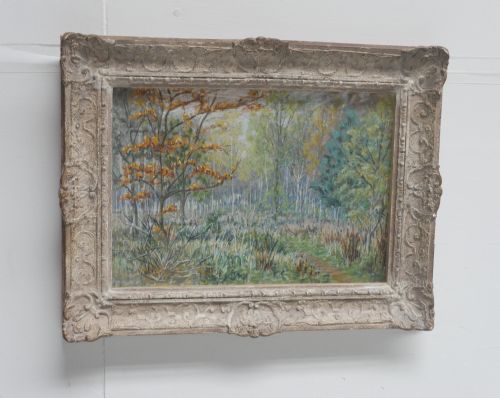
A framed forest painting captures trees, glades and woodland paths through the lens of nineteenth and twentieth-century observation. These works range from intimate watercolour studies of bluebell woods to grand oil paintings on canvas depicting cattle resting under canopy shade.
Most examples encountered on this page belong to the Victorian and Edwardian periods, stretching into mid-century interpretations. They record specific British landscapes, Dutch forest scenes and continental views held within period wood frames.
How they were made
Artists built these images using oil paint or watercolour applied to canvas, wood panels or paper supports. Oil paint allowed for rich, layered textures that caught the light on forest floors, whilst watercolour created translucent washes for misty morning trees.
The finished works were secured within timber frames, often moulded and gilded, which provided structural support and completed the presentation of the landscape.
Several woodland scenes feature hidden cattle, sheep or solitary wanderers waiting quietly among the ancient trees for the observant buyer to find.
What varies in quality
Quality rests in the artist's handling of light filtering through branches and the convincing depth of the woodland recession. Stronger works demonstrate confident brushwork or delicate pigment control that brings movement to leaves and shadow.
The harmony between the painting and its original wood frame further distinguishes the piece, as a well-matched period moulding complements the painter's palette and protects the artwork.
William H Myers·Thomas W Lascelles·Richard Redgrave·Frederick Golden Short·William Mellor
The Framed Forest Painting Glossary
- Canvas
- A heavy woven fabric stretched across a wooden frame to serve as a foundation for oil paint. It provides a flexible yet durable surface favoured by landscape painters.
- Watercolour
- A paint consisting of pigment suspended in a water-soluble binder, typically applied to paper. It yields transparent colours well suited to atmospheric woodland scenes.
- Impressionism
- A style of painting that focuses on the accurate depiction of light and its shifting qualities. Practitioners prioritised open brushwork over rigid academic detail.
- Board
- A rigid flat sheet of wood or compressed material used as an alternative to canvas. Artists frequently painted smaller outdoor studies directly onto panel supports.
Framed Forest Painting: Frequently Asked Questions
How do I date a forest painting?
Dating relies upon stylistic markers, costume in any figures, stretcher construction, and the type of wood frame used. Victorian works often show darker palettes and narrative detail, while later pieces embrace impressionist light.
Signatures, inscriptions on the reverse, and exhibition labels also help place the work within a specific decade.
Are these paintings on canvas or board?
The works utilise both stretched canvas and rigid board surfaces for oil paintings, alongside paper supports for watercolours. Canvas allows for larger compositions, whilst board was often chosen for smaller plein-air studies.
Examining the edges where the picture meets the frame usually reveals the underlying material.
Where should I hang a woodland landscape?
These pieces suit rooms with natural light, where the painted greens and browns harmonize with wooden furniture and plants. Avoid placing them in direct sunlight to protect the pigments from fading.
A neutral wall allows the period frame and the depth of the forest scene to command attention.
How do I care for an antique oil painting?
Keep the artwork away from extreme temperature fluctuations and damp environments that could harm the canvas or panel. Dust the surface gently with a soft, dry brush without applying pressure.
Leave deeper cleaning and varnish maintenance to professional conservators.