


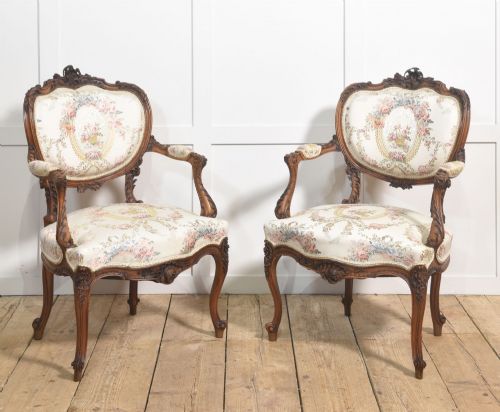
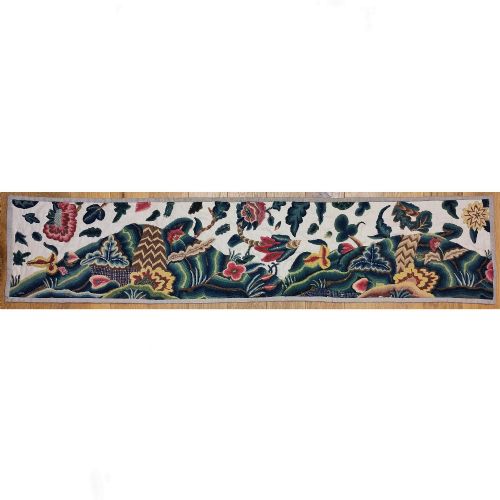


Framed Floral Tapestry
Framed floral tapestry works bring centuries of textile art onto the wall, offering rich colour and tactile depth to any room.
Framed Floral Tapestry
A framed floral tapestry or needlework panel captures botanical and floral motifs worked in wool, silk, and linen across several centuries. Buyers searching for framed floral tapestry will find wall art, needlework pictures, and embroidered panels spanning the seventeenth century through to the twentieth century.
The selection ranges from early English crewelwork and Italian embroidery to Victorian floral needlework pictures and French-influenced wall hangings. These pieces preserve historic textile techniques within period wood frames.
Most examples originate from the nineteenth and eighteenth centuries, often presenting floral subjects mounted behind glass in mahogany, walnut, or rosewood frames.
Materials and construction
These works rely on foundational textiles of linen, wool, and silk stitched with coloured threads to form intricate botanical patterns. Makers utilised needlepoint, petit point, and crewelwork techniques to build dense floral imagery.
Framed Floral Tapestry Retail Price Guide 2026
Typical asking prices for framed floral tapestry among the pieces listed under this phrase on Sellingantiques today, from the lower quarter to the upper quarter. They describe what is for sale here now, not the wider market.
Distinctions in quality
Quality rests upon the fineness of the needlework and the complexity of the botanical design. Finer stitches yield greater detail in petals and leaves, separating ambitious pictorial needlework from simpler domestic work.
The preservation of the original fibres and the integrity of the period frame contribute significantly to the standing of each piece.
The Framed Floral Tapestry Glossary
- Petit point
- A form of needlepoint worked on fine canvas using small, uniform stitches that allow for intricate detail and shading in floral designs. This technique is often seen in Victorian pieces.
- Crewelwork
- Embroidery executed with wool yarn on a linen or cotton twill fabric, producing textured floral and foliate patterns. It appears in English works from earlier centuries.
- Needlework picture
- A pictorial textile composition stitched with wool or silk threads, designed to be framed and hung as art. These panels depict botanical scenes and floral arrangements.
- Tapestry
- A form of textile art woven on a loom or worked by hand with needle and thread, depicting pictorial or decorative motifs. Historic examples frequently feature floral borders and central botanical subjects.
Framed Floral Tapestry: Frequently Asked Questions
How do I date an old needlework panel?
Dating relies upon the materials of the backing fabric, the types of dye used in the wool or silk threads, and the construction of the enclosing frame. Examining the style of the stitching and the botanical arrangement helps narrow the period.
Comparative study of seventeenth, eighteenth, and nineteenth-century textile art provides further context for specific technical characteristics.
Should framed tapestries hang in direct sunlight?
Direct sunlight causes natural wool and silk fibres to fade and weakens the structural integrity of historic textiles. Placing these works away from bright windows preserves the original colouration.
Glass fronts offer protection against dust and atmospheric moisture, helping maintain the condition of the panel.
What is the difference between crewelwork and needlepoint?
Crewelwork traditionally uses wool yarn to embroider scrolling floral designs onto a linen twill ground, creating varied surface textures. Needlepoint involves stitching across a uniform grid canvas to cover the entire background.
Both techniques produce durable botanical imagery but employ distinct foundational cloths and stitch methods.
How are antique textile panels cleaned?
Historic textiles require minimal intervention and should only be dusted gently with a soft brush while kept behind glass. Professional textile conservators handle deeper cleaning if fibres become unstable.
Removing the frame without specialist knowledge risks damaging the aged fabric and stitching.