







![Pen and Ink Sketch - Female Nudes by William Edward Frost [1810-1877]](https://www.sellingantiques.co.uk/photosnew/dealer_kendallhouse/dealer_kendallhouse_full_1758970795762-8493507346.jpg)
Framed Female Figure Painting
When you search for a framed female figure painting, you enter a diverse world of portraits and nudes rendered across multiple centuries.
Framed Female Figure Painting
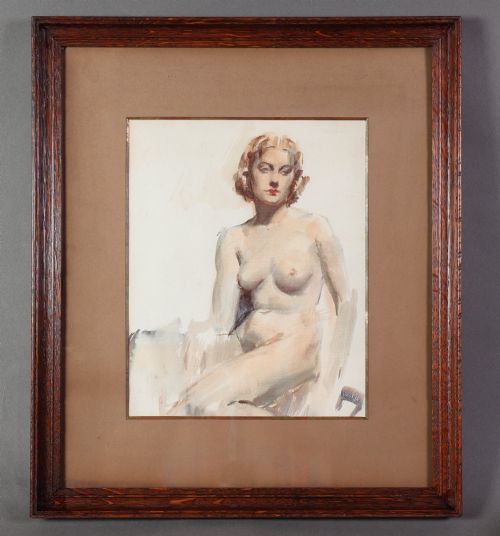
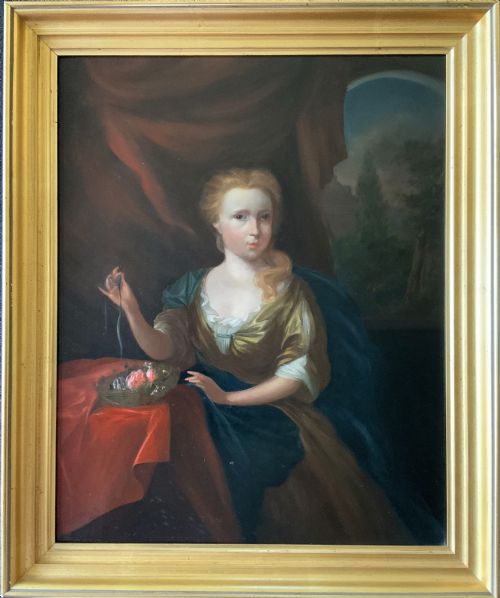
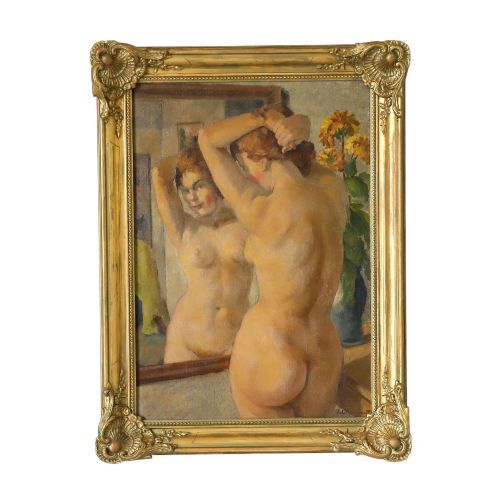
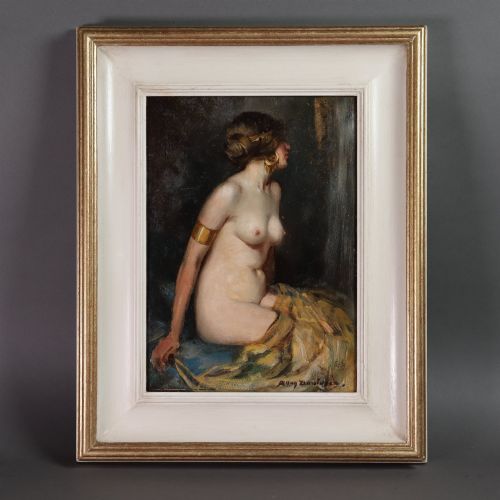
A framed female figure painting captures women either through formal portraiture or intimate nude studies. These works span from Georgian elegance and Regency refinement through to twentieth-century modernism and mid-century abstraction.
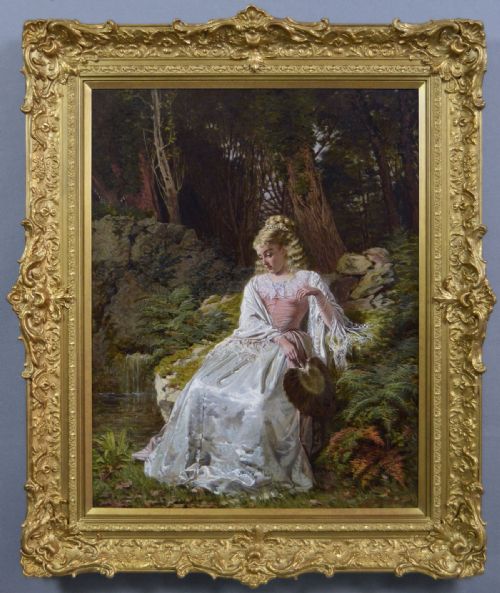
The selections on this page range from grand eighteenth-century classical depictions and Victorian portraiture to avant-garde British and European school compositions. You will encounter oils on canvas, panels, and works on paper housed in period surrounds such as giltwood frames.
Subjects vary widely from seated models and literary figures like sibyls to casual scenes of sunbathing and quiet domestic moments. Each piece reflects the aesthetic priorities of its specific era, whether academic precision or loose impressionist brushwork.
Materials and Technique
Artists relied primarily on oil paint applied to stretched canvas or wooden board, occasionally turning to pastel or watercolour on paper. Oil mediums allowed for rich layering and subtle tonal gradation in skin tones and drapery.
Mounting often involved traditional wooden stretchers enclosed within decorative gilt wood or moulded frames under protective glass for works on paper. These housings played a crucial role in preserving the integrity of the fragile surfaces over generations.
One canvas captures a sleepy feline keeping company with a reclining nude model.
Distinctions in Execution
Quality rests in the handling of anatomy, light, and expression by the artist rather than the sheer scale of the canvas. Superior examples demonstrate a confident command of proportion and brushwork that brings depth and vitality to the subject.
The harmony between the artwork and its period frame alters the overall integrity of the piece. Well-matched giltwood surrounds complement the visual weight of the painting without overpowering the composition within.
Eric Robertson·Philippe de Rougemont·Jean-Baptiste Greuze·Tony Giles·Gaetan Dumas·Allan Douglas Davidson·Thomas Edward Roberts·Albin R Burt·William Edward Frost·Jean Hippolyte Marchand·Pinchus Krémègne·Guiseppe Mazzolini·Yetta Kane·Raymond Arthur Roadnight·Frank Dobson·Muriel Metcalfe·Bernard Meninsky·Gaston Bouy
The Framed Female Figure Painting Glossary
- Giltwood
- Wood that has been coated with gold leaf or gold paint. This technique was frequently applied to ornate frames during the eighteenth and nineteenth centuries.
- Sibyl
- A prophetic female figure from ancient mythology. Artists often depicted these figures in classical robes with symbolic attributes.
- Nereid
- A sea nymph in Greek mythology. These figures frequently appeared in academic nineteenth-century compositions involving mythological narratives.
- Avant-Garde
- Art that pushes cultural boundaries and experiments with new visual forms. Examples include early twentieth-century cubist and modernist interpretations.
- Impressionism
- A style focused on accurate depiction of light and fleeting moments. Artists utilised rapid, visible brushstrokes rather than smooth academic blending.
Framed Female Figure Painting: Frequently Asked Questions
What defines a framed female figure painting?
These artworks focus on women as the primary subject, encompassing formal likenesses, mythological characters, and figure studies.
They offer a direct window into how different historical eras viewed femininity, beauty, and artistic expression.
How do I date an antique portrait?
Dating relies on clothing styles, hair arrangement, painting technique, and the construction methods of the canvas stretcher and frame.
Signatures, exhibition labels on the reverse, and biographical details of the sitter or artist also provide reliable chronological markers.
Where should I hang these paintings?
These works suit traditional living spaces, studies, or hallways where lighting can be controlled to prevent direct sun damage.
Ensure the room maintains stable humidity levels to protect both the wooden stretcher and the fragile paint layers.
What is the difference between an oil and a watercolour?
Oils use pigment suspended in drying oil, allowing for thick impasto and deep, blendable colour fields on canvas or board.
Watercolours use water-soluble pigments on paper, creating translucent washes that require protective glass framing.