



Framed Farmyard Animal Pictures
Framed farmyard animal pictures capture the rustic charm of rural life, bringing classic agricultural scenes and domesticated livestock directly into your home.
Framed Farmyard Animal Pictures
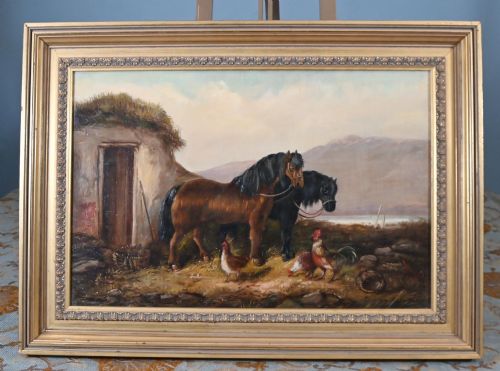
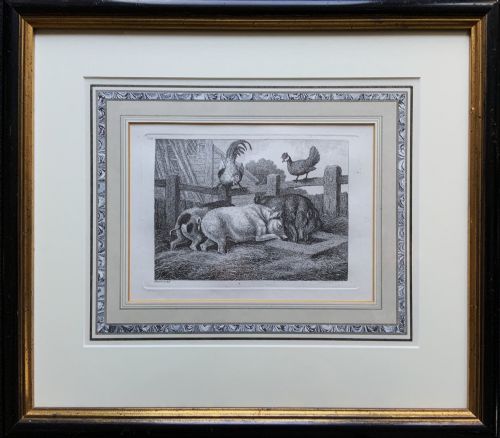
Framed farmyard animal pictures encompass a distinct body of nineteenth and early twentieth-century artwork dedicated to rural subjects and agricultural life. When you browse framed farmyard animal pictures, you encounter oil paintings on canvas or board, alongside delicate watercolour paintings depicting familiar creatures.
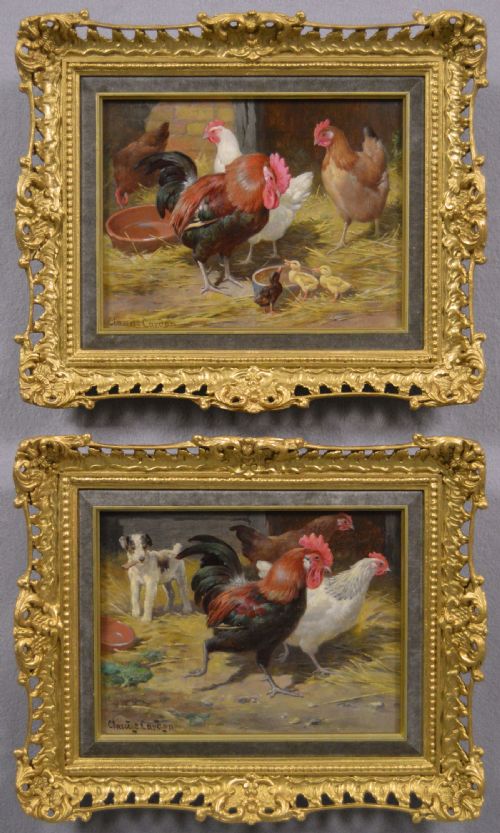
The selections available span several distinct periods, including Victorian, Edwardian, and early twentieth-century eras. Common subjects range from poultry such as cockerels, hens, and chicks to horses, calves, and ducks, often rendered in realistic styles.
You are most likely to meet pieces aligned with Victorian Realism, Victorian Rural Realism, and Edwardian Pastoral movements. These works capture everyday rural tranquility through the focused portrayal of farm animals within their traditional environment.
How they were made
Artists of these rural scenes utilised traditional mediums, primarily applying oil paint to canvas or prepared wooden board. Watercolours on paper also appear, offering a lighter alternative to the richer texture of oil paintings.
Surviving works typically retain their period framing, frequently housed within decorative giltwood and gesso surrounds that complement the pastoral subject matter. These materials reflect standard framing practices of the nineteenth and early twentieth centuries.
Framed Farmyard Animal Pictures Retail Price Guide 2026
Typical asking prices for framed farmyard animal pictures among the pieces listed under this phrase on Sellingantiques today, from the lower quarter to the upper quarter. They describe what is for sale here now, not the wider market.
Listings feature works spanning the Victorian and Edwardian periods, utilising oil on canvas, board, and paper.
What varies in quality
Quality in these rural works rests upon the precision of the brushwork and the anatomical accuracy of the animals depicted. Master painters capture feather textures and animal postures with convincing realism, distinguishing accomplished works from simpler decorative pieces.
The handling of light and background atmosphere also dictates overall merit. Stronger compositions integrate the livestock naturally into detailed agricultural settings rather than placing them against flat or generic backdrops.
Claude Cardon·John Frederick Herring Jnr·Percival Glenfern·Helena Maguire·Edgar Hunt·J L Van Leemputten·R Lauritsch
The Framed Farmyard Animal Pictures Glossary
- Oil on canvas
- Pigment bound in drying oil applied to stretched fabric. This medium allows for deep colour saturation and layered blending.
- Giltwood
- Wood carved and covered with a thin layer of gold leaf. It provides a bright, reflective border popular for framing traditional artwork.
- Gesso
- A paint mixture consisting of a binder mixed with chalk, gypsum, or pigment. It creates a smooth surface for gilding or moulding decorative frame details.
- Watercolour painting
- Art created using water-soluble pigments on paper. This technique yields translucent washes and delicate tonal gradations.
- Animalier
- Art focusing primarily on the realistic representation of animals. The term often describes nineteenth-century sculptors and painters specialising in wildlife and livestock.
Framed Farmyard Animal Pictures: Frequently Asked Questions
What subjects appear in these pictures?
These works focus primarily on domesticated farm animals such as chickens, cockerels, hens, chicks, ducks, horses, and calves. Human figures occasionally appear engaged in daily agricultural tasks like feeding livestock.
Scenes frequently capture quiet moments in yards, pastures, and farm buildings, reflecting the traditional rural environment of the nineteenth and early twentieth centuries.
How do I identify a Victorian piece?
Victorian works often display the detailed realism characteristic of nineteenth-century rural art movements. Look for traditional painting techniques on canvas or board accompanied by period giltwood framing.
Pictorial styles from this era typically emphasise accurate animal anatomy and naturalistic lighting within pastoral settings.
Are watercolours common in this category?
Watercolour paintings on paper do appear alongside traditional oil works. These pieces offer a different visual texture while maintaining the same rural subject matter.
Watercolours from the period are generally displayed behind glass within protective frames to preserve the paper and pigments.
How should I display them at home?
These pictures suit traditional interior settings, particularly dining rooms, kitchens, or studies where rustic themes complement the decor. Pairing complementary works, such as matching pairs of animal paintings, creates a balanced wall display.
Keep framed pieces away from direct sunlight and excessive moisture to protect both the painted surface and the original giltwood frames.