
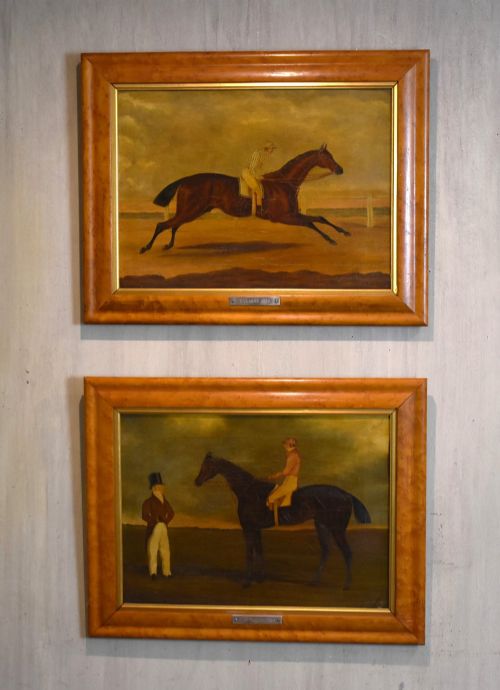


Framed Equestrian Sporting Print
A framed equestrian sporting print captures the speed, pageantry, and tradition of the turf and the field through historic imagery.
Framed Equestrian Sporting Print
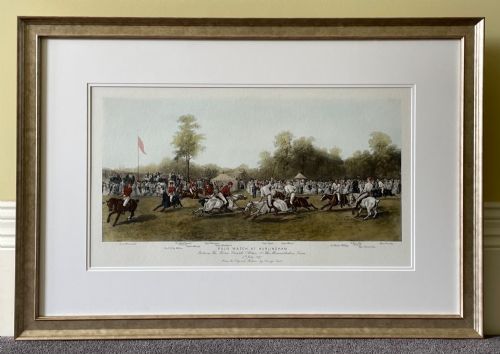
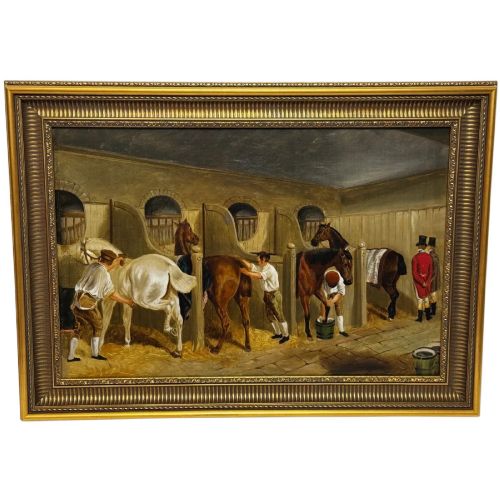
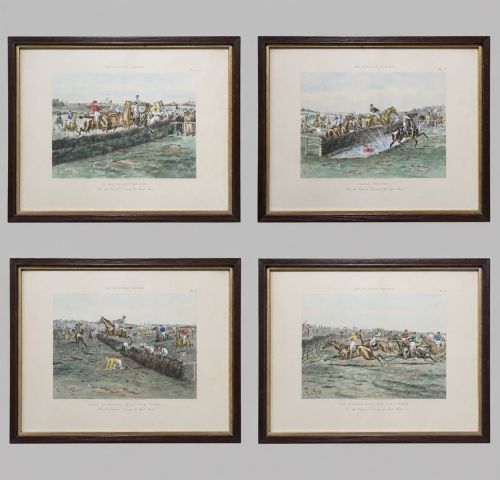
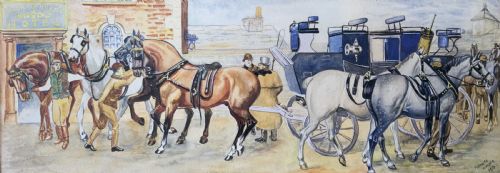
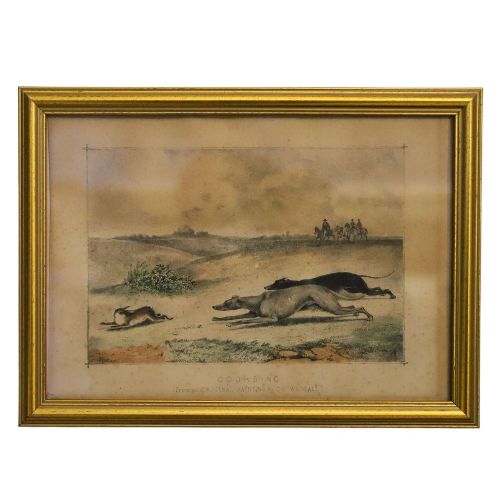
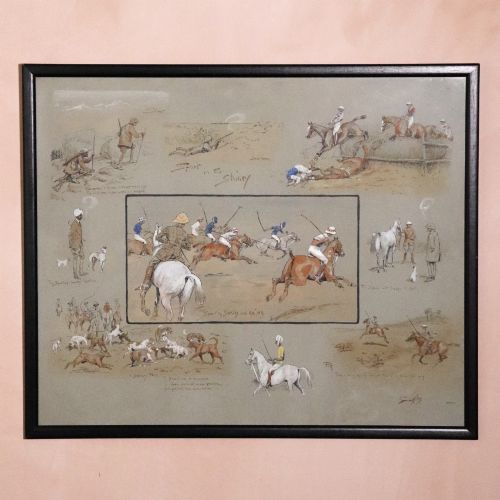
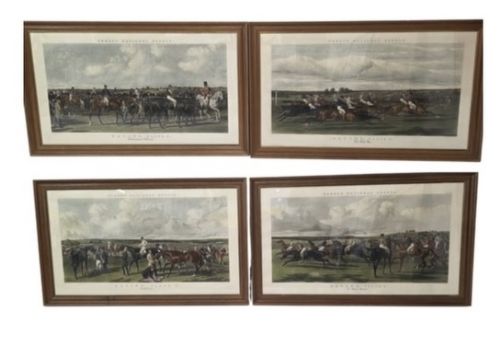
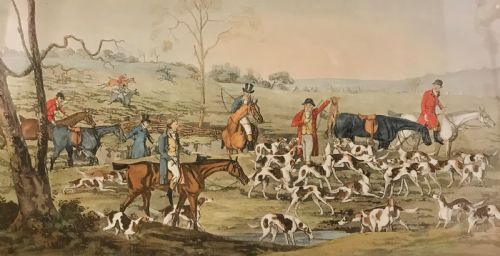
A framed equestrian sporting print is a visual record of horse racing, fox hunting, polo, and coaching from the Georgian, Victorian, and Edwardian eras. These works document historic meets, renowned racehorses, and field sports through centuries of changing graphic techniques.
Most examples found here emerge from the nineteenth and early twentieth centuries, spanning lithographs, engravings, aquatints, and watercolours. They reflect a period when equestrian culture dominated British social life and sporting art flourished.
How they were made
Makers produced these works using paper, ink, and watercolour, often employing hand-colouring to bring vibrancy to engraved or lithographed lines. Printers relied on metal plates or stone slabs to transfer detailed images before mounting them behind glass.
Framing typically involves wood and gilt wood surrounds, sometimes incorporating specialist techniques like eglomise glass. The physical construction preserves delicate paper surfaces from environmental moisture and handling.
The inventory records British sporting art, Victorian, Edwardian, and Georgian stylistic traditions.
What varies in quality
Quality rests upon the crispness of the original impression and the accuracy of the draughtsmanship captured by the artist or publisher. Early print runs yield sharper lines and deeper tonal contrast than later impressions.
The preservation of original hand-colouring and the integrity of the period frame influence the overall character of the piece. Works retaining their initial margins and authentic framing materials command greater attention from collectors.
George Finch Mason·C H Weigall·John Frederick Herring Snr·Abraham Cooper·Alfred Wheeler·John Atkinson·Isaac Cullin·Charles Johnson Payne Snaffles
The Framed Equestrian Sporting Print Glossary
- Aquatint
- A printmaking technique that produces tonal areas resembling watercolour washes. It was widely used in sporting art to render atmospheric skies and rolling landscapes.
- Lithograph
- A planographic printing method based on the repulsion of oil and water. It allowed publishers to produce detailed multi-coloured sporting scenes efficiently.
- Chromolithograph
- A colour lithograph produced using multiple stones, one for each colour applied. This technique achieved rich, painterly hues without requiring manual hand-colouring.
- Engraving
- A method of cutting design lines directly into a metal plate with a burin. It delivers exceptional linear precision suited to detailed depictions of horses and riders.
- Eglomise
- A process of applying gold or silver leaf to the reverse side of glass combined with painting. It creates a reflective, decorative border often found on historical picture frames.
Framed Equestrian Sporting Print: Frequently Asked Questions
How do I date a sporting print?
Dating relies on publisher imprints, paper watermarks, and the clothing styles depicted in the scene. Costume details and typographical styles on the lower margin provide reliable chronological clues.
Period framing styles also offer corroborating evidence. Original wooden or gilt frames frequently match the manufacturing decade of the print within.
Are these prints hand-coloured?
Many nineteenth-century sporting works combine mechanical printing lines with delicate watercolour applied by hand. Workshops employed teams of colourists to tint coats, jackets, and landscapes.
Close inspection under magnification reveals brushstrokes over the printed ink. This distinguishes genuine period hand-colouring from later digital or offset facsimiles.
How should I hang these framed works?
Hang prints away from direct sunlight to prevent the fading of watercolour pigments and coloured inks. Stable indoor humidity protects both the paper substrate and the wooden frame.
Use professional picture hooks suited to the weight of the gilt wood and glass. Ensure the wall structure supports the hardware securely without shifting.
What is the difference between an engraving and a lithograph?
Engravings feature sharp, incised lines pressed into paper from metal plates, creating a distinct plate mark around the image. They excel at fine, precise detail.
Lithographs rely on chemical adherence on a flat stone surface, producing softer tonal gradations. They became the dominant method for mass-producing colourful sporting illustrations later in the century.