



Framed English Sports Painting
Framed english sports painting captures the energy of the field, the stable, and the track through traditional portraiture and landscape.
Framed English Sports Painting
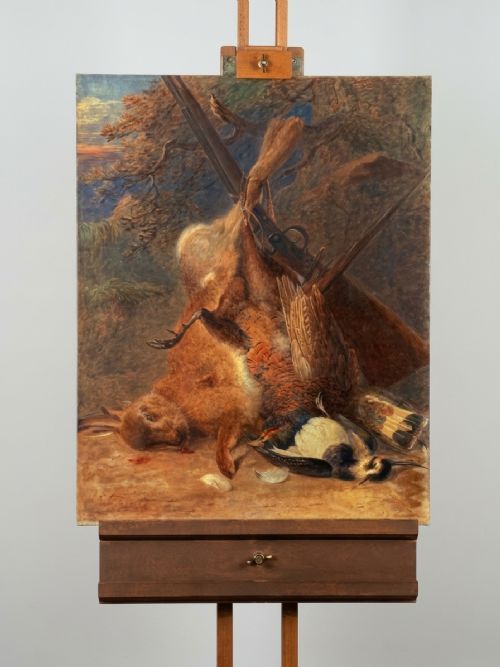
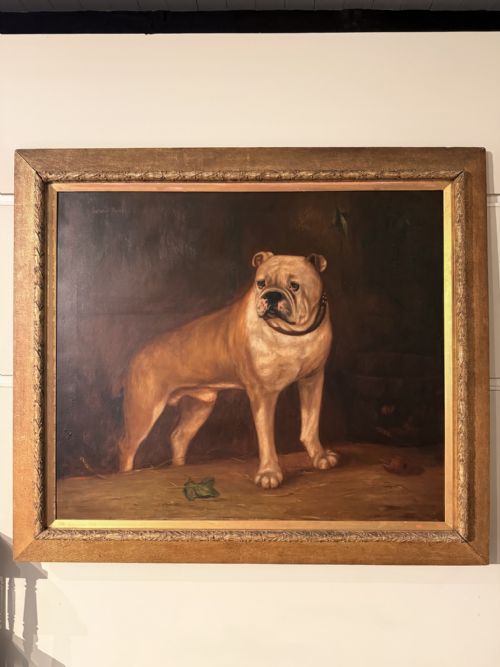
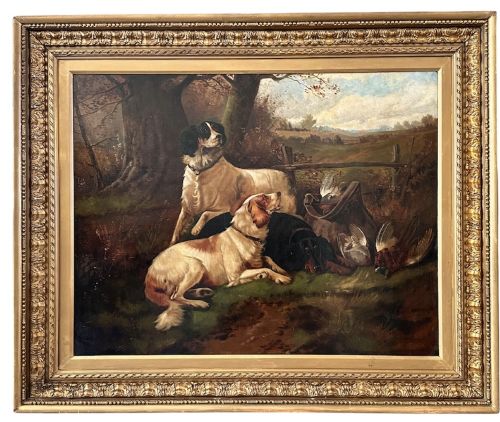
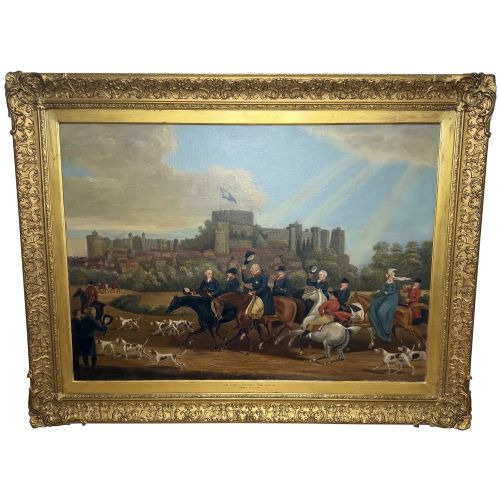
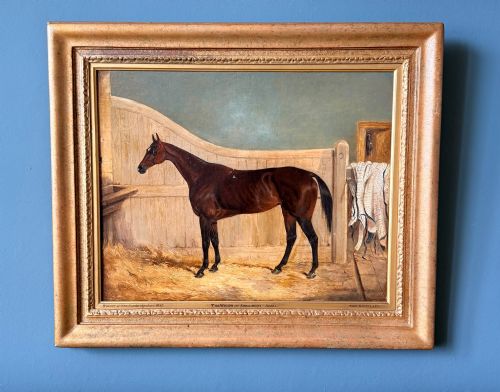
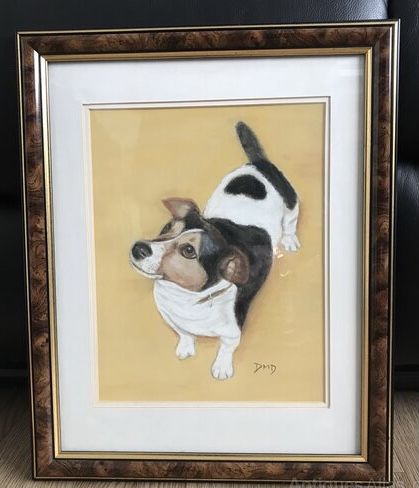
A framed english sports painting presents subjects rooted in rural pursuits, horse racing, coaching scenes, and canine portraiture. These works range from large nineteenth-century canvases depicting hunts and racehorses to smaller watercolours of gundogs and country gentlemen.
The material spans Victorian oil paintings on canvas, board, and panel, alongside watercolours and pastels protected beneath glass. Many pieces arrive housed in original giltwood or gold leaf frames that complement the traditional subjects.
How They Were Made
Artists built these compositions primarily using oil paint on stretched canvas or wooden board, applying rich layers to render the musculature of horses and the textures of animal coats. Watercolours on paper utilised bodycolour to achieve opacity and fine detail in depictions of game and sporting dogs.
Makers finished the pieces with decorative wooden mouldings finished in gold leaf or giltwood, creating substantial frames designed to isolate the rural landscape or stable interior from the domestic wall.
Several pieces capture horses with remarkably human expressions of exhaustion after particularly long gallops across muddy moors.
What Varies in Quality
The hierarchy of quality depends upon the artist's command of anatomy, posture, and light within the landscape. Works by established nineteenth-century sporting painters display precise handling of horses and hounds, whereas lesser studio pieces rely on rigid formulas and stiff proportions.
The framing contributes significantly to the integrity of the object, with period giltwood mouldings adding depth that mass-produced replacements lack. The preservation of the original canvas and unblemished paint layers distinguishes superior examples.
George Sydney Shepherd·John Sargent Noble·Thomas Walker Bretland·John Frederick Herring Senior·Benjamin Blake·John Rattenbury Skeaping·John Arthur Lomax·Arthur Wardle·Gertrude Halsband·Samuel Raven·Edward Lloyd of Ellesmere·Colin Graeme Roe·Samuel Spode·Charles Faulkner·Clifton Tomson·Paul Jones·Samuel Henry Alken·John Charles Tunnard·Henri Schouten·John Atkinson·John Charles Maggs·John Emms·Isaac Cullin·George Goodwin Kilburne·Thomas Blinks
The Framed English Sports Painting Glossary
- Oil on Canvas
- A painting medium where pigments bound in drying oil are applied to woven fabric stretched across a wooden frame. This technique allowed artists to achieve deep tonal gradations and rich textures in large sporting scenes.
- Giltwood
- Wood carved and coated with a thin layer of gold leaf or gold paint to create a decorative, reflective surface. It frequently frames nineteenth-century paintings to enhance their presence.
- Bodycolour
- Watercolour paint mixed with a white pigment to make it opaque rather than transparent. It was often employed by artists to add highlights and solid areas of colour to paper works.
- Sporting Art
- A genre of painting dedicated to horses, hunting, shooting, racing, and dogs. These works record prized animals and specific events within rural English society.
Framed English Sports Painting: Frequently Asked Questions
What subjects appear in these paintings?
The compositions focus on rural pursuits, featuring horse portraits, hunt meets, coaching scenes, and detailed studies of hounds and gun dogs. Many works place these animals within expansive English countryside landscapes or stable interiors.
Human figures also feature prominently, including country gentlemen, stable grooms, and riders participating in historical hunts and race meetings.
How do I identify the period?
Dating relies heavily on the style of clothing, the design of the framing, and documentation of known artists active during the eighteenth, nineteenth, and mid-twentieth centuries. Victorian works often display rich, dark palettes and heavy giltwood frames.
Signatures, inscriptions on the reverse, and stylistic markers such as Regency attire provide further chronological anchors for unsigned canvases.
Were these works always framed?
Paintings executed on canvas or wooden panel typically received a wooden frame soon after completion to protect the edges and complement the domestic interior. Many nineteenth-century pieces retain their original giltwood or gold leaf surrounds.
Works on paper, such as watercolours and pastels, required framing behind glass from creation to shield the delicate surface from moisture and dust.
How should I care for a framed painting?
These artworks require stable environmental conditions away from direct sunlight and excessive humidity to prevent the canvas from sagging and the paint from cracking. Dusting the giltwood frame gently with a dry, soft cloth preserves the metallic finish.
Works under glass should be kept in rooms with minimal temperature fluctuation to protect the underlying paper and prevent condensation.