


Framed English Pastoral Painting
A framed english pastoral painting brings quiet fields, rivers and rural life directly onto the wall.
Framed English Pastoral Painting
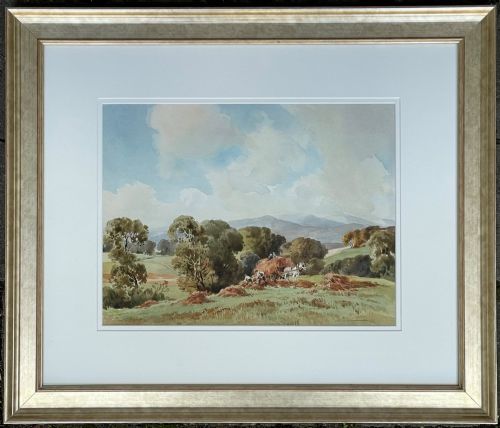
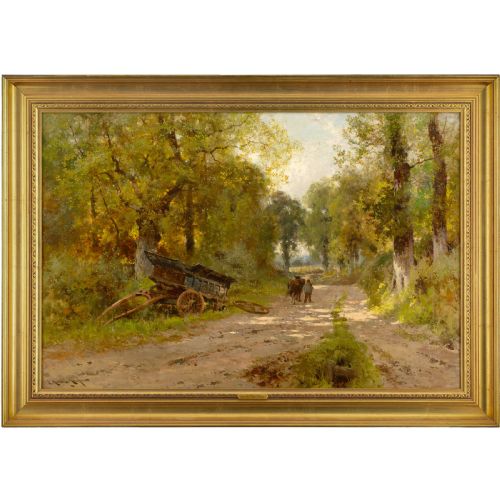
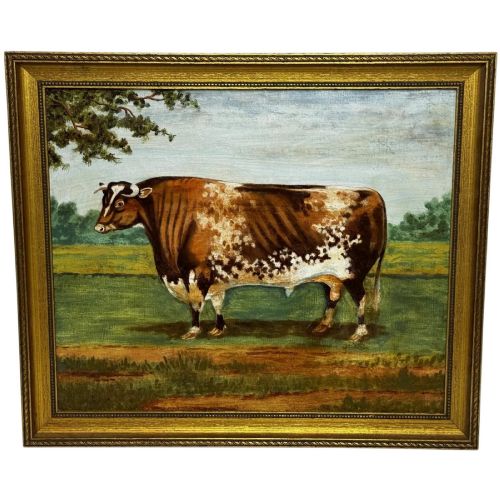
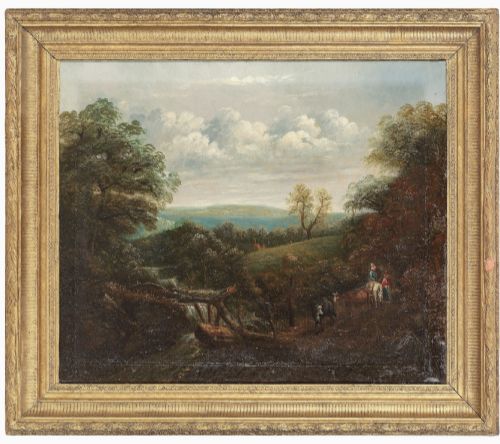
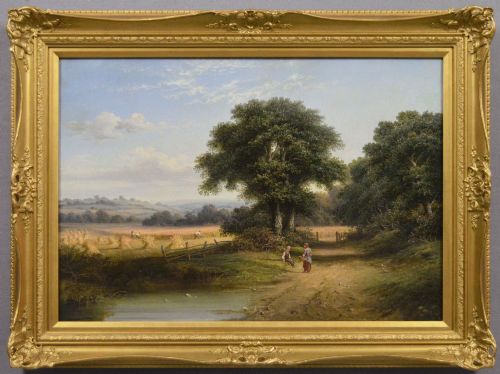
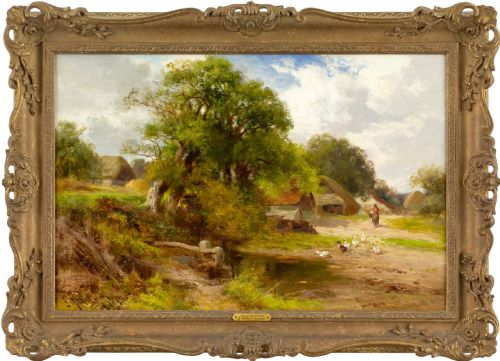
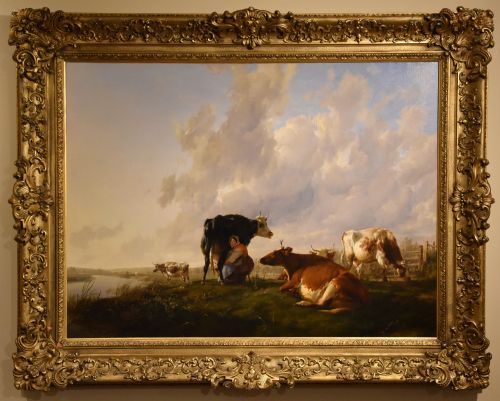
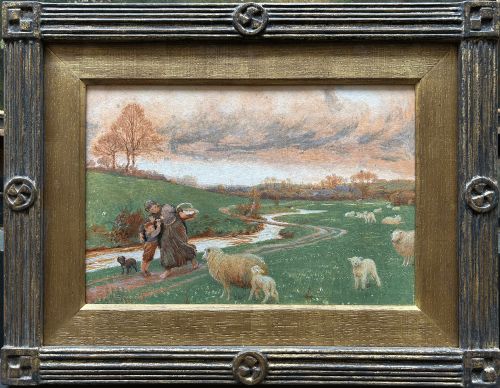
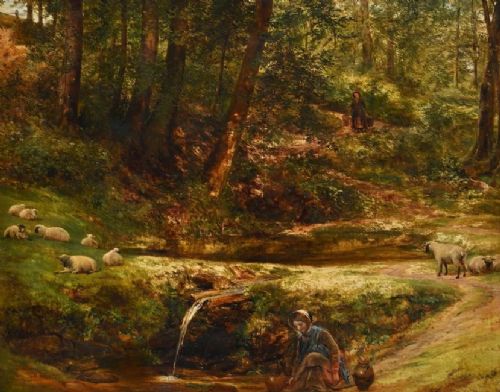
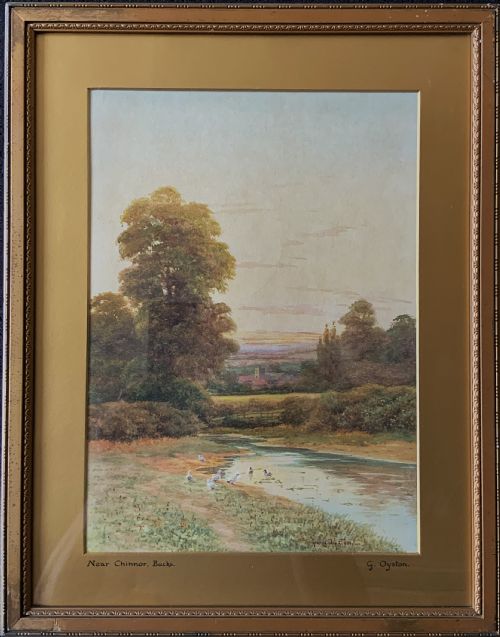
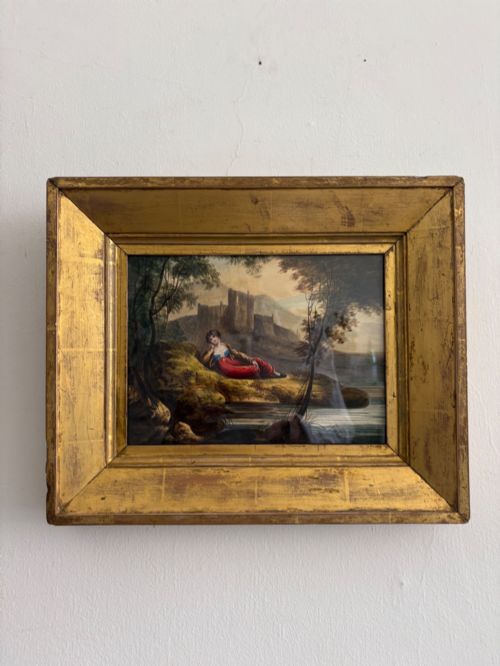
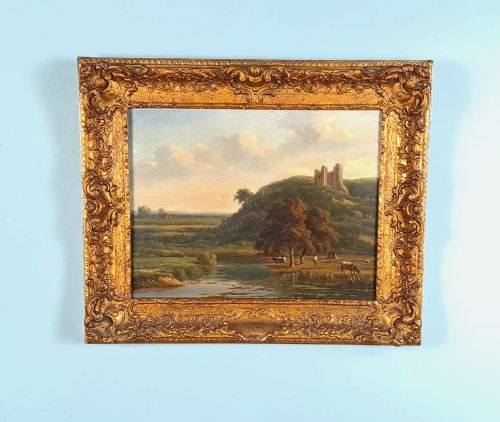
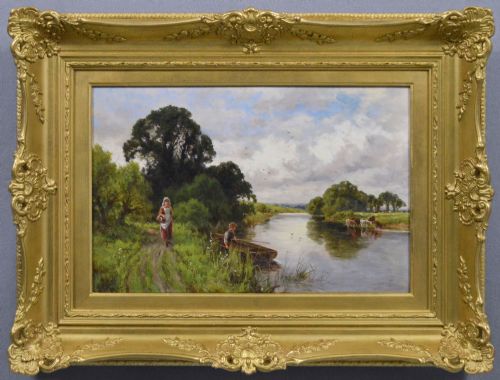
A framed english pastoral painting captures the traditional countryside, depicting rivers, harvest fields, cottages and livestock under calm skies. The pieces on this page span the Victorian era, the Edwardian period and the early twentieth century, reflecting a sustained fascination with rural life.
Most examples meet the viewer in oil paint on canvas or board, alongside delicate watercolours on paper. These works celebrate the British landscape through the eyes of named artists and the wider British School, prioritising tranquil scenes of agriculture and nature.
Materials and Construction
Painters utilised oil on canvas, oil on board, and watercolour on paper, often framing the completed work in traditional gilt wood and gesso frames. These materials ground the artwork in authentic period craftsmanship.
Canvases stretch over wooden frames while watercolours sit behind glass, preserved alongside wood and gesso mouldings that define the visual boundary of the landscape.
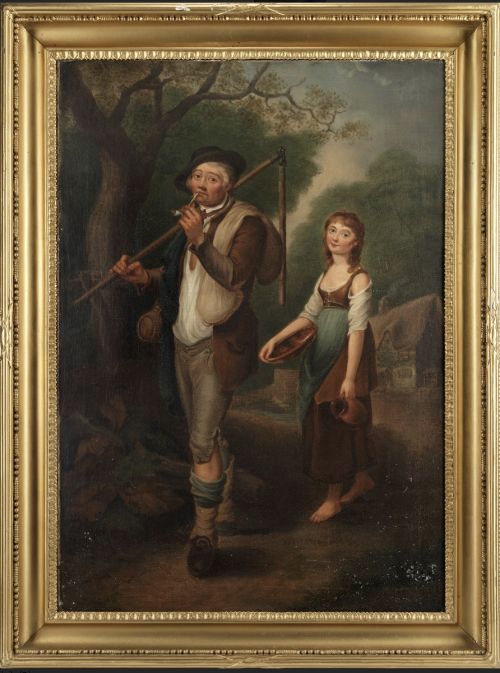
Pan occasionally steps out of ancient myth to play his panpipes right alongside grazing sheep and milkmaids.
Assessing Quality
Quality rests upon the handling of light, atmospheric depth and the naturalism of figures and animals within the landscape. Finer works display confident brushwork and balanced composition that draw the viewer into the scene.
The integrity of the original frame, particularly period gilt wood and gesso moulding, adds significantly to the overall presence and historical completeness of the piece.
George Graham·Percy Lancaster·John Horace Hooper·Thomas Sidney Cooper·Frederick Walker·Richard Redgrave·George Oyston·Henry H Parker·Miles Birkett Foster·Charles Henry Slater·George Morland·Philip Richard Morris·Margaret Maitland Howard·Henry Charles Fox·Thomas Baker·Henry John Kinnaird·James William Booth·Frederick Septimus Lewis·William Sydney Cooper·Samuel Joseph Clark·Thomas Hunn·Owen Bowen·George Vicat Cole·James Hardy Junior
The Framed English Pastoral Painting Glossary
- Pastoral
- An artistic style celebrating rural life, shepherds, cattle and agricultural landscapes. It evokes a peaceful, idealized view of the countryside.
- Gesso
- A plaster-like mixture applied to wooden frames before gilding or painting. It provides a smooth surface for intricate decorative mouldings.
- British School
- A term for artists trained or working within Britain during a shared period. It groups together painters influenced by similar national traditions.
- Watercolour
- A paint consisting of pigment suspended in a water-soluble vehicle, typically applied to paper. It offers luminous, translucent washes of colour.
Framed English Pastoral Painting: Frequently Asked Questions
What defines an English pastoral painting?
These works focus on rural scenery, agriculture, rivers and livestock across the British countryside. They reflect a nineteenth and early twentieth-century desire to capture traditional rustic life.
Artists used oil and watercolour to portray quiet moments such as harvests, shepherds tending flocks and cattle resting by water.
How do I date these landscape paintings?
Dates appear through artist lifespans, stylistic shifts like Victorian realism or Edwardian impressionism, and framing materials. Signatures and gallery inscriptions also offer clues.
Examining the canvas type, wooden stretcher bars and the composition helps place the work within the nineteenth or early twentieth century.
Are watercolours as durable as oil paintings?
Watercolours utilise paper and pigment protected behind glass, requiring stable light levels to prevent fading. Oil paintings on canvas or board are more robust but still benefit from controlled indoor environments.
Both mediums survive well when kept away from damp conditions and direct sunlight.
How should I hang a framed pastoral scene?
Select a wall with indirect light to protect both the painted surface and the gilt wood frame. Ensure the hanging fixings match the weight of the wooden frame.
Grouping smaller watercolours together or giving a large oil painting central placement allows the landscape to anchor the room.