
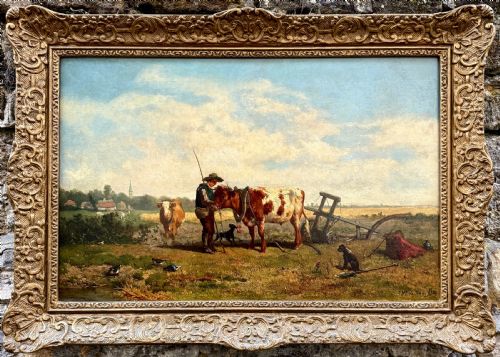


Framed Cow Painting
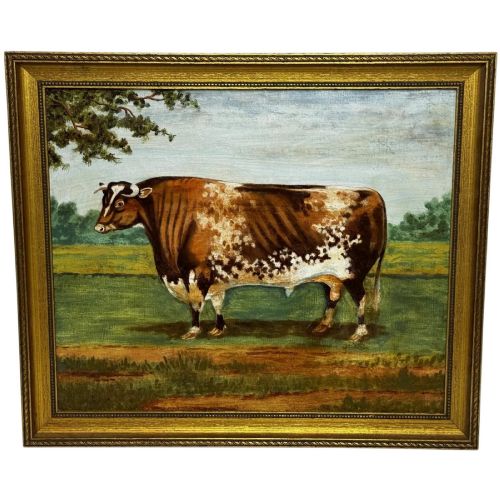
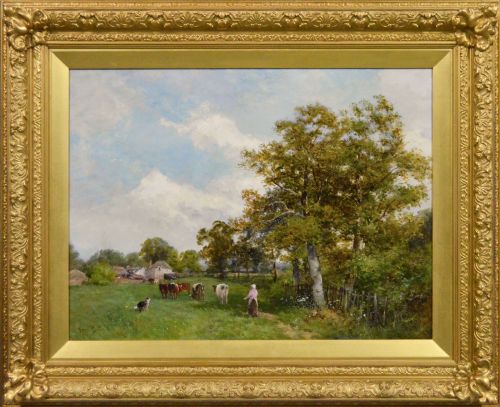
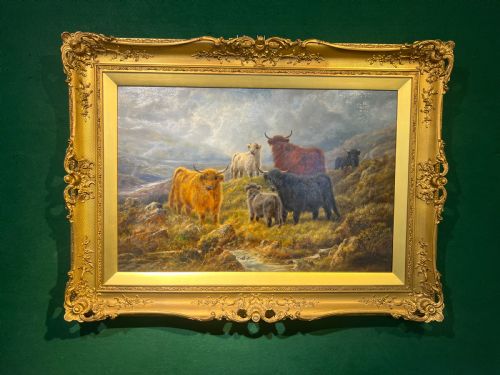
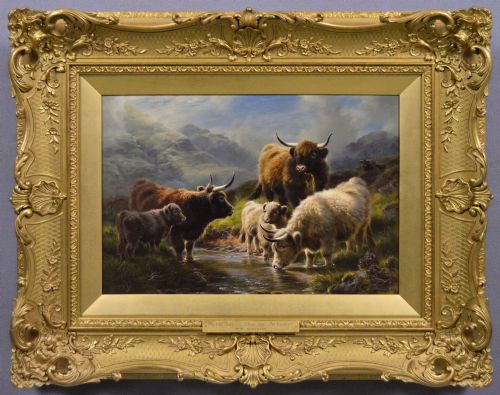
A framed cow painting brings the quiet weight of nineteenth-century pastoral life directly onto your wall, anchored by heavy giltwood and oil on canvas.
Framed Cow Painting
A framed cow painting captures rural subjects through nineteenth-century and Edwardian lenses, ranging from realistic Highland cattle scenes to quiet riverbank watering views. You will frequently encounter works set within Scottish landscapes, pastoral realism, and British school traditions.
These pieces encompass both oil on canvas and delicate watercolour paintings. They document agricultural life, farmyard scenes, and dramatic loch vistas through the hands of named artists and regional painters.
Materials and Techniques
Artists relied primarily on oil on canvas and watercolour pigments applied to paper. Canvases were stretched across wooden supports and frequently housed within heavy giltwood frames embellished with gesso moulding.
The framing often matches the period of the artwork, utilising gold leaf and timber to provide a substantial architectural border around the pastoral subject matter.
Materials recorded in these listings include oil on canvas, watercolour, giltwood, gesso, glass, gold leaf, and paper.
Evaluating Quality
Quality rests in the handling of light across the landscape and the anatomical precision of the cattle. Master painters render the texture of heavy coats and atmospheric mist with distinct conviction.
The integrity of the original frame matters immensely, particularly when gesso ornamentation and gold leaf retain their original surface without heavy restoration.
David Bates·Robert Watson·William Watson Jnr·Johannes de Haas·Henry Robinson Hall·Thomas Sidney Cooper·Robert Thorne Waite·Ernest Higgins Rigg·George Turner·John W Morris·Joseph Kirkpatrick·Gustave De Brianski·Henry Cheadle·Sir Ernest Albert Waterlow·George Smith RSA·Charles Jones·Owen Bowen
The Framed Cow Painting Glossary
- Giltwood
- Wood that has been coated with gold leaf or a gold-coloured finish. It provides a reflective, ornate border common in period frames.
- Gesso
- A plaster-like mixture applied to wood frames as a base for moulding and gilding. It allows for intricate decorative relief work.
- Pastoral Realism
- An artistic style focusing on rural subjects and agricultural life depicted with naturalistic detail. It forms the core aesthetic of these pastoral scenes.
- British School
- A classification for artworks produced by artists working within Britain. It groups regional traditions across the nineteenth and early twentieth centuries.
Framed Cow Painting: Frequently Asked Questions
What periods do these paintings come from?
The works span the nineteenth century and the Edwardian era, with significant representation from the 1880s through to the 1920s.
Victorian pastoral traditions dominate the selection, capturing rural life just before the onset of modern industrial landscapes.
Are these works painted on canvas or paper?
You will find both oil on canvas and watercolour paintings on paper within this category.
Oils typically demand a more substantial wooden and gilt frame, while watercolours are frequently preserved behind glass.
Where were most of these landscapes set?
Many of the scenes focus on Scottish highlands, riverbanks, and pastoral English pastures.
Artists frequently travelled to locations like Glen Tay and Loch Lomond to paint cattle grazing in natural terrain.