
Framed Country Scene
A framed country scene brings the quiet of fields, farms and rivers indoors through the hand of an artist working in oil, watercolour or paper.
Framed Country Scene
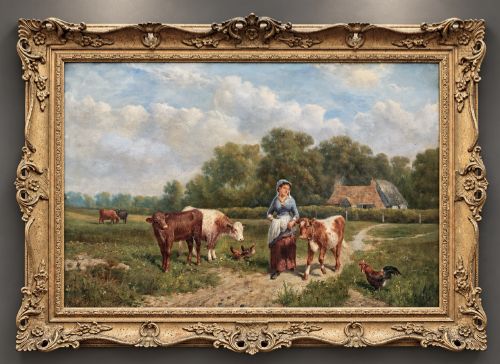
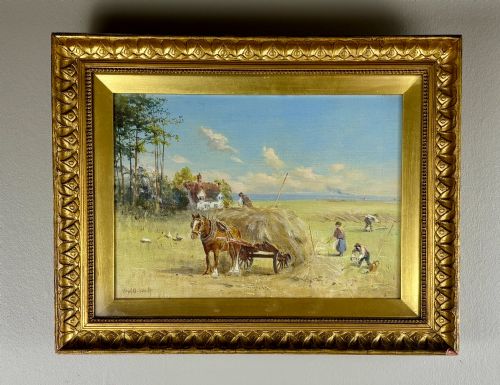
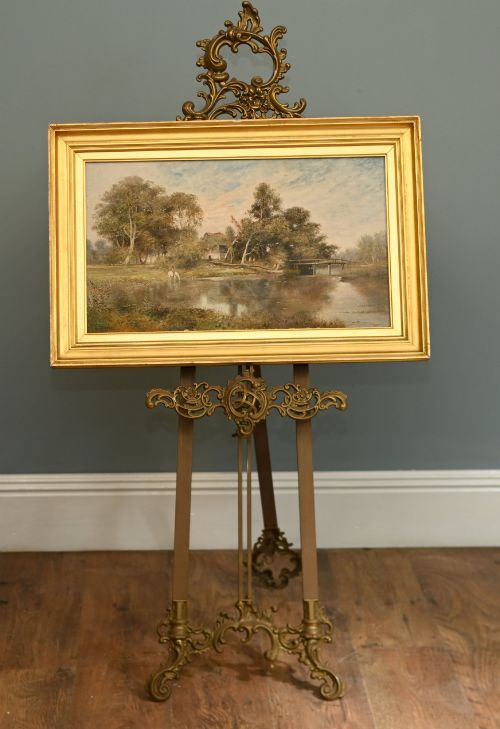
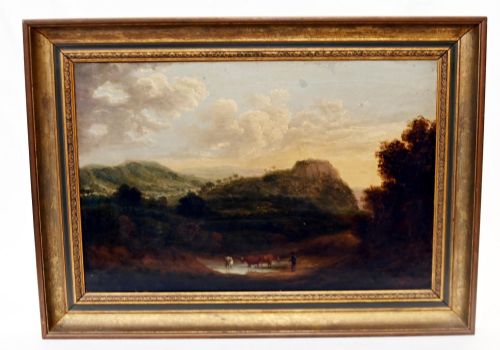
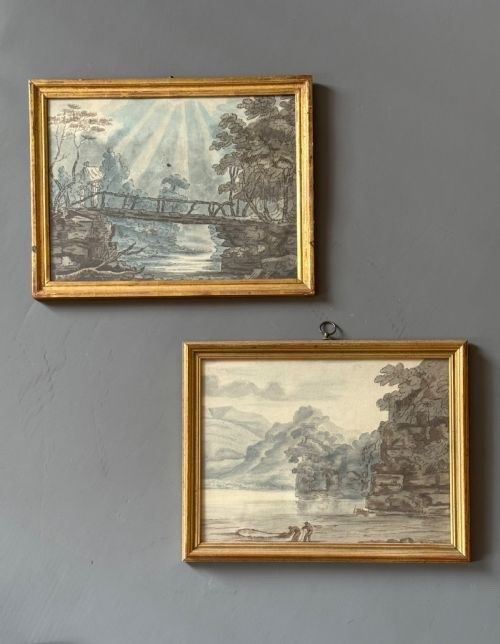
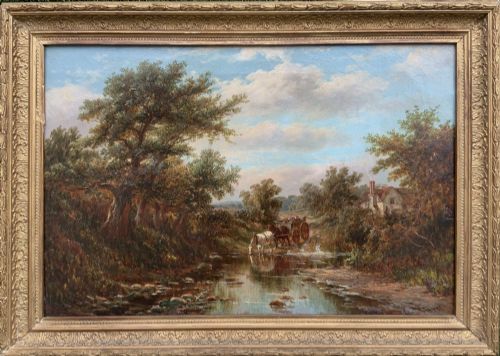
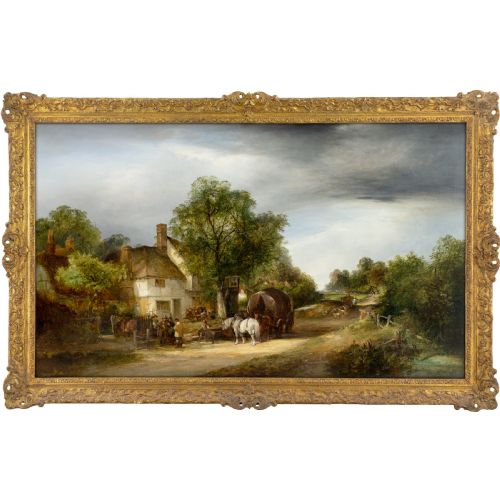
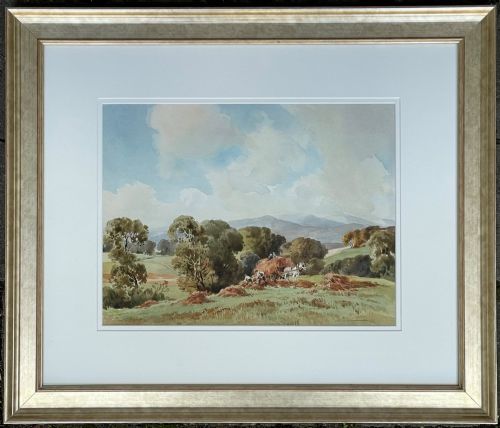
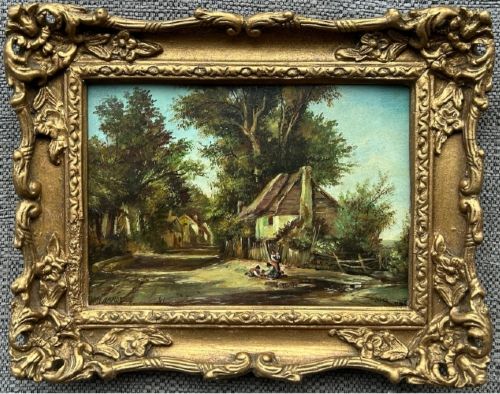
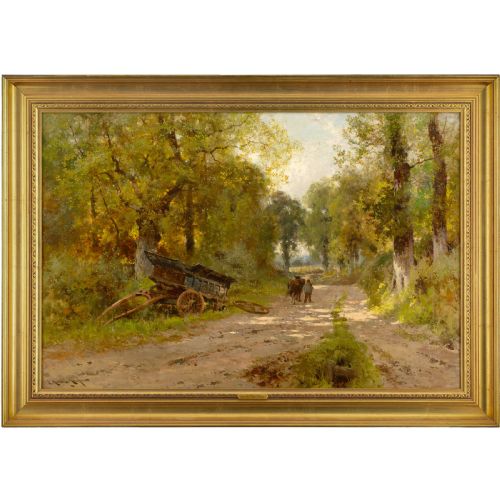
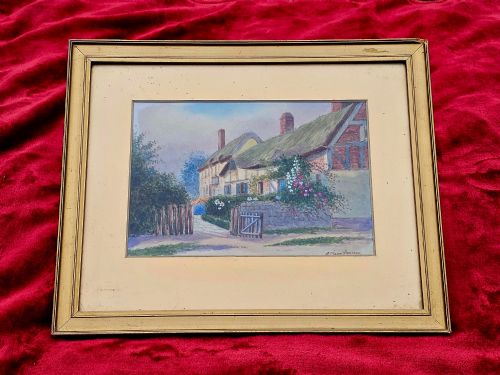
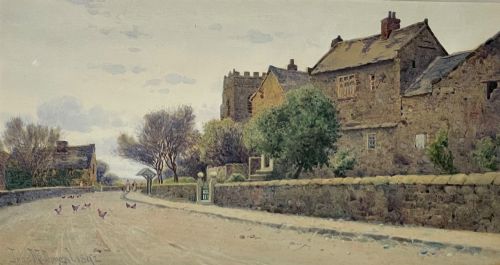
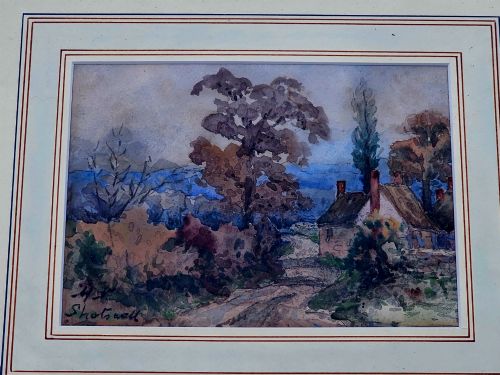
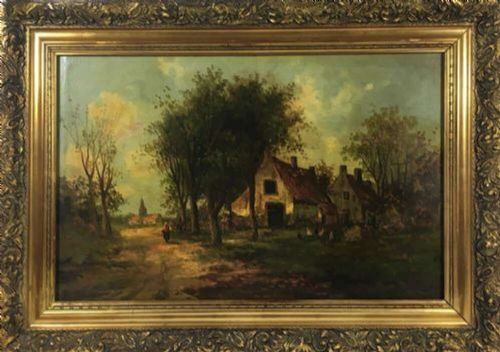
A framed country scene captures the rural landscape, farmyards, cottages and working animals of Britain and Europe across the nineteenth and twentieth centuries. These works record pastoral life through oils on canvas, panel or board, alongside watercolours and ink drawings on paper.
Buyers meet works spanning the Victorian and Edwardian eras, with examples stretching from the early nineteenth century into the mid-twentieth century. Subjects range from ploughing horses and shepherds with flocks to cottage exteriors and riverside views.
The assortment includes signed original paintings by named British and continental artists, alongside works by uncredited regional schools. Frames in giltwood, gesso and wood enclose the art, matching the period of creation.
How They Were Made
Artists painted these rural views using oil pigments on canvas, wooden panel, card or board, or applied watercolours and inks onto paper. Canvases were stretched across wooden frames and secured within decorative moulded surrounds of giltwood and gesso.
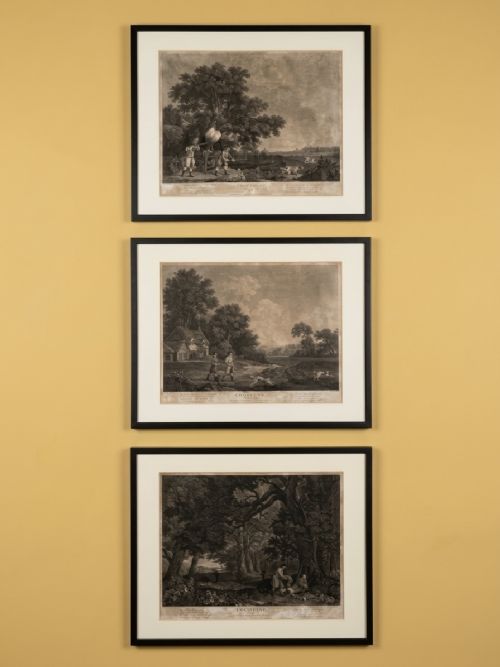
Mediums varied according to the desired texture and setting, with heavy oils capturing the sheen of horses and cattle, while fluid watercolours rendered soft skies and river landscapes. Etchings and lithographs offered printed alternatives on paper.
Makers housed these pieces in protective glazed or open frames constructed from timber, often finished with applied ornamentation and gilt layers to accent the artwork within.
Pigs, piglets and poultry frequently share the canvas with farmworkers, adding lively rural noise to quiet pastoral interiors.
What Varies in Quality
The standard of a framed country scene rests upon the dexterity of the brushwork and the precision with which light and anatomy are rendered. Skilled hands capture the movement of livestock and the depth of a landscape with convincing proportion.
The integration between the artwork and its period frame alters the visual impact, as original giltwood and gesso surrounds complement the painting style. Condition of the pigment, paper and canvas surface determines the clarity of the original composition.
Percy Lancaster·John McDougal·Stephen Samuel Lewin·Henry Silkstone Hopwood·Robert John Hammond·Robert W Macbeth·Fred Lawson·Howard Helmick·George Augustus Holmes·Thomas Sidney Cooper·Joseph H Barnes·Raymond Booth·Frederick Walker·Frederick James Kerr·Edgar Hunt·Herbert Royle·Johann Friedrich Voltz·T C Hofland·Henry H Parker·Thomas Walker Bretland·Henry Schouten·Pamela Hughes
The Framed Country Scene Glossary
- Giltwood
- Wood that has been coated with a thin layer of gold leaf or metallic gilt. It provides a reflective border common on nineteenth-century frames.
- Gesso
- A plaster-like mixture applied to wooden frames before gilding or painting. It creates a smooth surface for intricate moulded details.
- Watercolour
- A paint consisting of pigment suspended in a water-based solution applied to paper. It yields translucent washes suited to rural skies and rivers.
- Etching
- A printmaking technique where lines are bitten into a metal plate with acid. The resulting plate transfers ink onto paper to form the image.
Framed Country Scene: Frequently Asked Questions
What subjects appear in a framed country scene?
These works depict agricultural life, including ploughing horses, shepherds with flocks, livestock in pastures and figures outside thatched cottages. Riversides, farmyards and rural lanes form the primary backdrops.
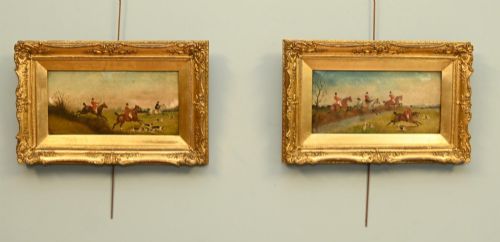
Scenes draw from British and European countryside traditions, capturing domestic animals, hunting subjects and village views across different regional landscapes.
How do I identify the period of a painting?
Dating relies on the costume of depicted figures, the painting style and the framing materials used by the maker. Victorian and Edwardian pieces often display distinct realism or early impressionist brushwork.
Backings, canvas stamps and inscriptions on the reverse of panels or stretchers provide further clues to the date of execution.
Are these works painted on canvas or board?
Artists used several supports including stretched canvas, wooden panels, card and board for oil compositions. Watercolours and drawings were executed on paper.
The choice of support often relates to the period and whether the artist worked indoors in a studio or outdoors on location.
How should I hang and care for these pieces?
Keep framed works away from direct sunlight and damp environments to protect oil pigments, watercolours and paper from fading or moisture damage. Stable room temperatures preserve both the artwork and the wooden frame.
Dust frames gently with a dry cloth and avoid chemical cleaners on giltwood or glazed surfaces.