



Framed Cornish Seascape Art
Framed Cornish seascape art brings the dramatic light and rugged harbours of the West Country into a room through historic oil paintings and watercolours.
Framed Cornish Seascape Art
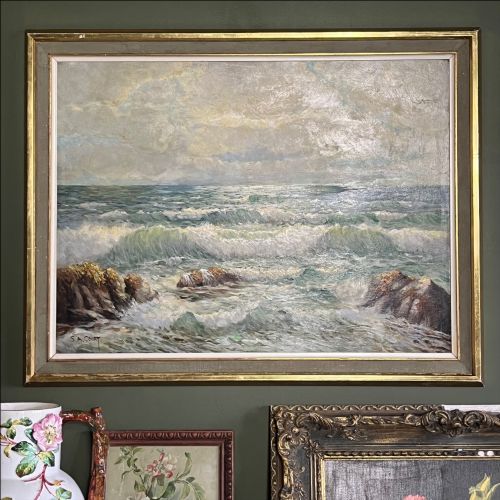
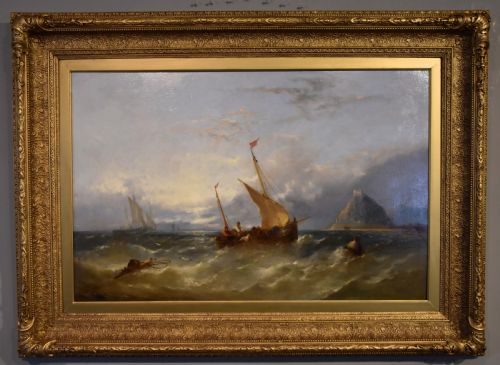
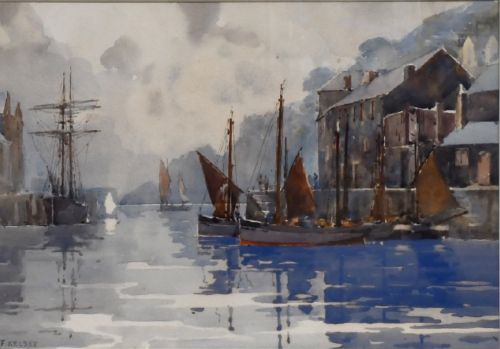
Framed Cornish seascape art encompasses paintings that capture the harbours, fishing boats, and coastal tides of the region from the Victorian era through the mid twentieth century. These works frequently depict specific locations such as St Ives, Polperro, and Mevagissey, painted by artists who worked locally or visited the coast.
Buyers will most commonly encounter framed oil paintings on canvas and watercolours on paper housed in original or period gilt wood frames. The selection spans nineteenth century maritime scenes to twentieth century British school and post impressionist interpretations of the Cornish shore.
Materials and construction
These works rely primarily on oil paint on canvas or watercolour applied to paper, capturing the variable light and atmosphere of the sea. Artists often worked en plein air directly on the coast to record immediate weather and tidal conditions.
The paintings are housed in wooden frames, frequently finished in gilt, which complement the maritime subject matter and protect the edges of the canvas or paper from damage over time.
Several artists braved the unpredictable Cornish tides to paint harbours at low water, capturing boats resting awkwardly on the mud.
What separates individual works
Quality in these coastal works rests on the artist's ability to handle light, water, and atmospheric perspective rather than the mere recording of a topographical view. Stronger examples demonstrate confident brushwork, particularly in the rendering of turbulent water, shipping vessels, and harbour architecture.
The preservation of the paint surface and the condition of the accompanying period frame also influence the overall standard of a piece. Works that retain their original unlined canvas and harmonious framing offer a more complete historic object.
William Banks Fortescue·William Henry Williamson·Charles Napier Hemy·Richard Harry Carter·Gyrth Russell·George Turland Goosey·Charles Sim Mottram·Ernest F Hill·Frederick Stuart Richardson·S J Lamorna Birch·William Edward Webb
The Framed Cornish Seascape Art Glossary
- En plein air
- Painting out of doors to capture direct observations of natural light and weather. This method was widely used by artists working along the Cornish coast.
- Watercolour
- A paint consisting of pigment suspended in a water-based solution, applied to paper. It is frequently employed here for lighter, translucent coastal studies.
- Gilt wood
- Wood carved or moulded and coated with a thin layer of gold leaf or metallic paint. Many nineteenth and early twentieth century marine paintings are found in these decorative frames.
- British Impressionism
- A painting style that developed in the late nineteenth and early twentieth centuries focusing on loose brushwork and natural light. Several works in this selection reflect these techniques applied to West Country subjects.
Framed Cornish Seascape Art: Frequently Asked Questions
What periods do these seascapes date from?
The works span from the Victorian period through the Edwardian era and into the mid twentieth century. They reflect the changing artistic movements that drew painters to the Cornish coast over several decades.
Most pieces date between the late nineteenth century and the nineteen fifties, encompassing styles from traditional maritime painting to early British impressionism.
Which Cornish locations appear most often?
St Ives and Mevagissey are frequently recorded in the titles, alongside Polperro, Looe, and Penzance. Artists also painted specific coastal landmarks such as St Michael's Mount and Trebarwith Strand.
These sites were chosen for their active fishing harbours, rugged cliffs, and distinct tidal shifts which provided varied subjects for marine artists.
Are the frames original to the paintings?
Many works retain their period wooden or gilt frames, which help date the piece and complement the artwork. However, some paintings have been reframed over the years to suit changing tastes or to better preserve the canvas.
Examining the rabbet and the back of the frame often reveals clues about its age in relation to the painting it holds.
How should I hang and care for oil and watercolour?
Oil paintings on canvas and watercolours on paper both require protection from direct sunlight and excessive humidity to prevent fading and warping. Watercolours are especially sensitive to light and should be displayed behind glass away from direct beams.
Maintaining a stable indoor climate helps preserve both the paint layers and the historic wooden frames.