

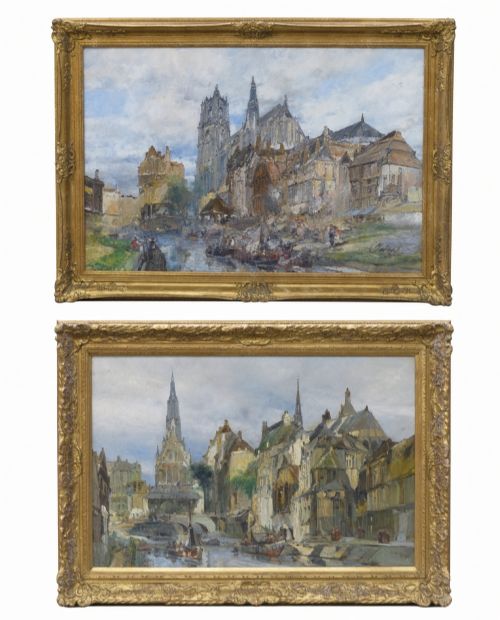
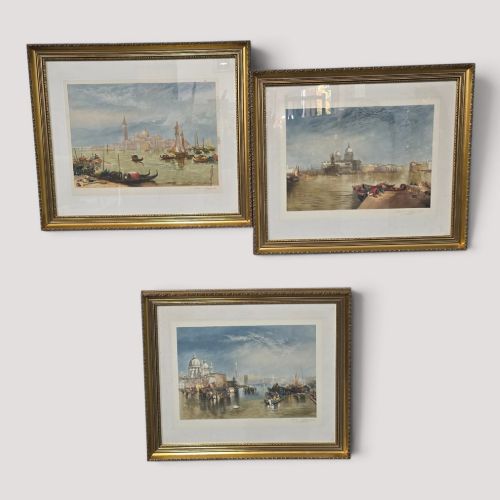
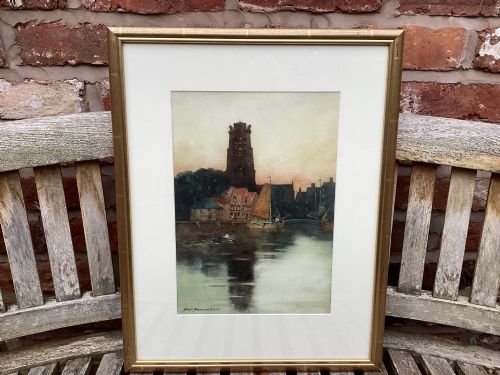
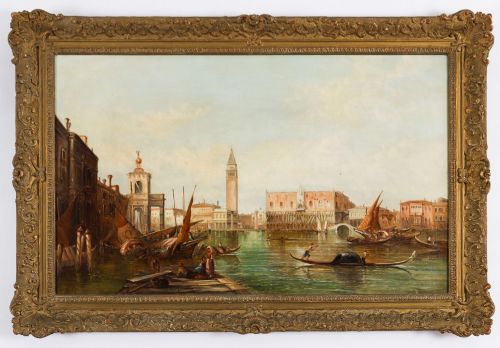
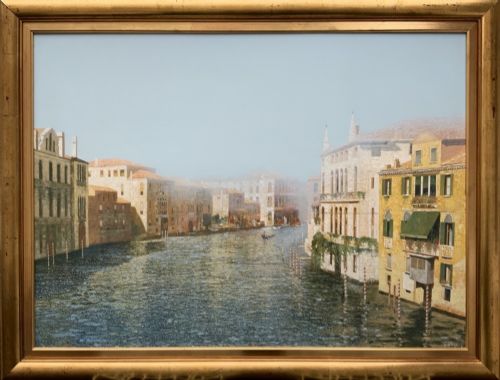
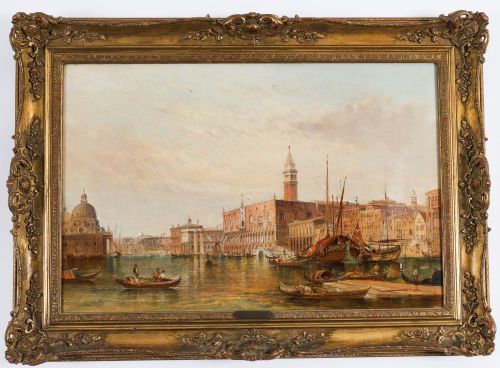
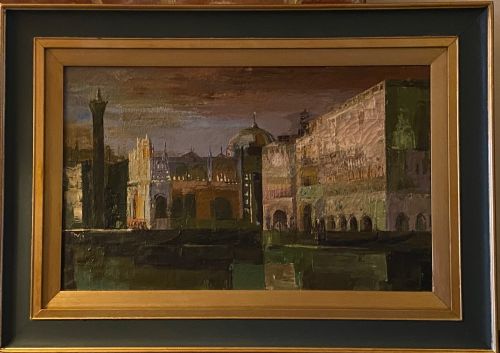
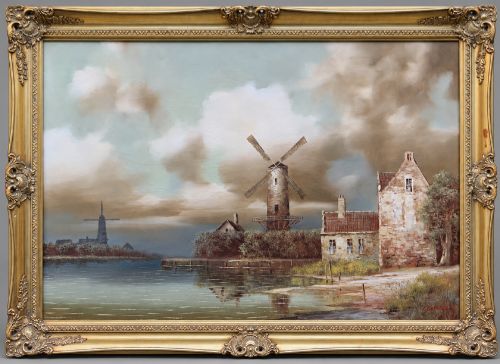

Framed Canal Artwork
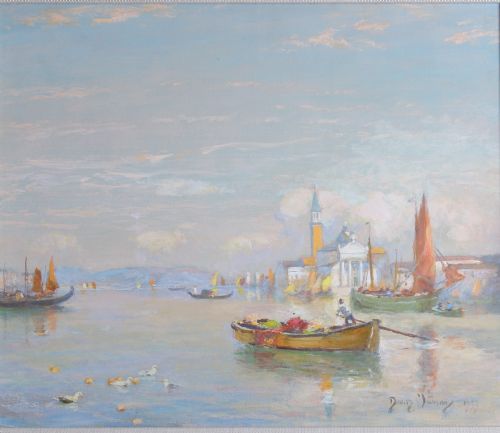
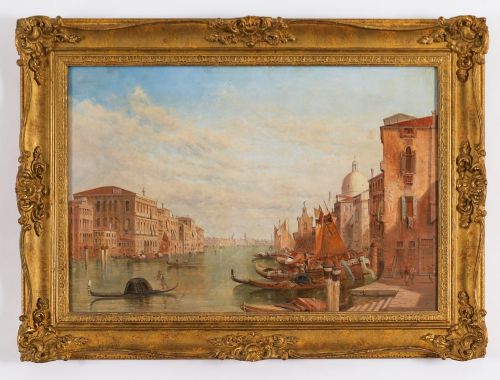
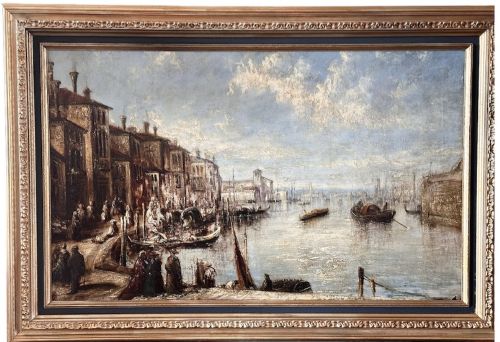
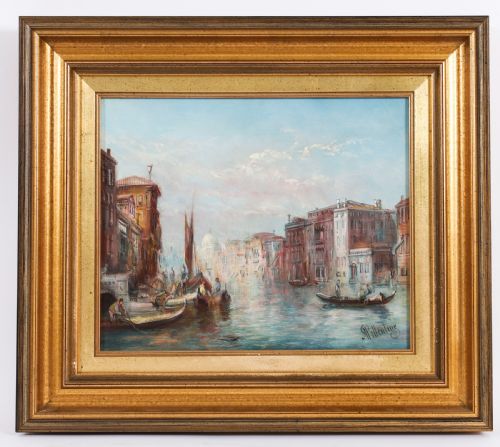
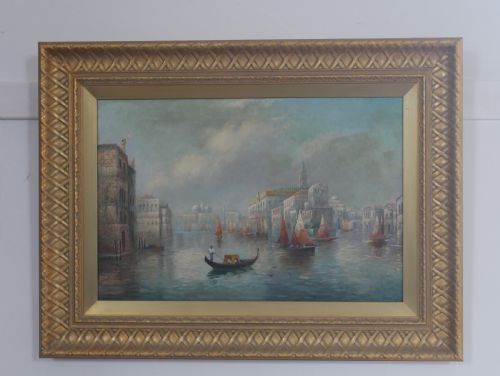
Framed canal artwork captures busy waterways and Venetian lagoons, offering buyers classic views rendered in oils and watercolours.
Framed Canal Artwork
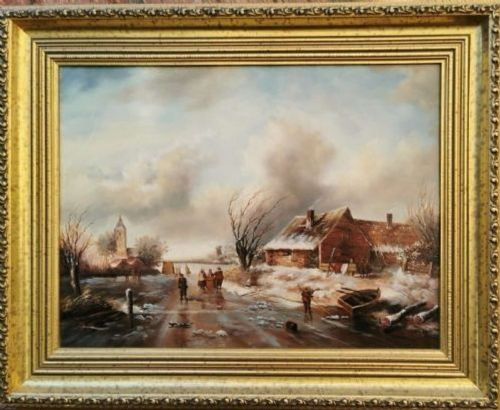
Buyers seeking framed canal artwork encounter oil paintings and watercolours depicting urban waterways, grand palaces, and quiet locks. These pieces originate from the nineteenth century through the mid-twentieth century, capturing scenes from Venice, Dutch landscapes, and British rivers.
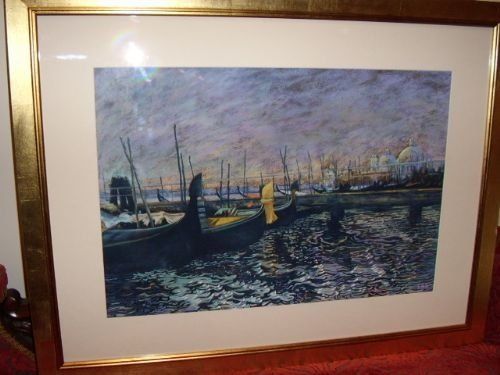
The selection ranges from expansive canvas paintings of the Grand Canal to delicate pastel, gouache, and ink drawings of gondolas. Works by named artists sit alongside anonymous views executed in Dutch and Impressionist manners.
Materials and construction methods
Artists painted these canal scenes primarily with oil paint on canvas or watercolour applied to paper. Support materials include traditional wood stretchers and heavy paper sheets suited to washes and pen work.
Framed Canal Artwork Retail Price Guide 2026
Typical asking prices for framed canal artwork among the pieces listed under this phrase on Sellingantiques today, from the lower quarter to the upper quarter. They describe what is for sale here now, not the wider market.
Listings feature canvases and watercolours spanning the Victorian era through the mid-twentieth century.
Distinctions in artistic execution
Quality rests in the handling of light and water reflections, where skilled brushwork creates movement across the canal surface. Greater depth in architectural rendering and atmospheric sky colour separates masterly compositions from simpler decorative views.
The integrity of the original framing, particularly moulded gilt wood components, contributes significantly to the overall presence and historical completeness of the piece.
Job de Vogel·Hans Jacob Hansen·Antonio Gaymard·Alfred Pollentine·Sir David Murray·Sushila Singh·Francis Moltino·Edwin Lord Weeks·Thomas Baker·Fred Lawson·E A Minardo·Claude Jousset·Hein Hoppmann·Frederick Tully Lott·F.D. Campo·Marc Aldine·Antoine Bouvard Senior·E. Perez Senet·Jane Vivian·William Raymond Dommersen·Vittore Zanetti Zilla·Herbert Royle·Hercules Brabazon Brabazon
The Framed Canal Artwork Glossary
- Oil on Canvas
- Pigment mixed with drying oil applied to a woven fabric stretched across a wooden frame. This medium allows for rich texture and deep colour layering.
- Watercolour
- Paint made from water-soluble pigments applied to paper in translucent washes. It yields bright, luminous effects particularly suited to atmospheric skies and water.
- Gilt Wood
- Timber carved and coated with a thin layer of gold leaf or metallic gilt paint. It provides a traditional decorative border for paintings.
- Impressionism
- A style focused on capturing the visual impression of a moment, with emphasis on shifting light and unblended brush strokes. It appears frequently in twentieth-century continental European works.
- Gouache
- An opaque water-based paint that provides solid colour areas and chalky matte finishes. Artists often combine it with watercolour and ink for added detail.
Framed Canal Artwork: Frequently Asked Questions
What subjects appear in canal artwork?
These works depict bustling Venetian waterways, quiet locks, and Dutch winter scenes with frozen canals. Views often feature historic palaces, gondolas, and bridges.
Compositions range from expansive oil paintings of the Grand Canal to intimate watercolours of European cityscapes.
How do I date a canal painting?
Dating relies on stylistic clues, clothing styles of figures, and framing materials. Signatures and gallery labels on the reverse also offer definitive historical markers.
Nineteenth-century works often employ traditional academic realism, while twentieth-century pieces lean towards Impressionist and Expressionist techniques.
Are these works painted on canvas or paper?
Both mediums are common in this category. Larger coastal and city views were typically executed in oil paint upon stretched canvas.
Watercolours, gouaches, and ink drawings appear on paper sheets, usually protected behind glass within wooden frames.
How should I display framed artwork?
Hang pieces away from direct sunlight and damp environments to protect canvases and watercolours from fading or moisture damage. Ensure the wall fixings safely support the weight of heavy gilt wood frames.
Lighting should be even and neutral to reveal the fine brushwork and colour tones without causing glare on the glass.