




Framed Bronze Wall Plaque
A framed bronze wall plaque brings neoclassical relief and rich historical portraiture directly into a room, offering tactile depth that flat canvas simply cannot match.
Framed Bronze Wall Plaque
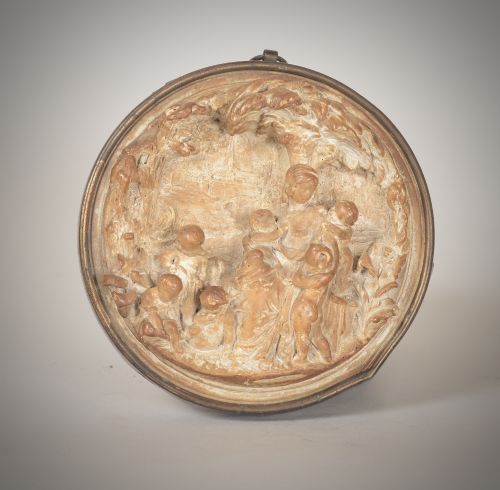
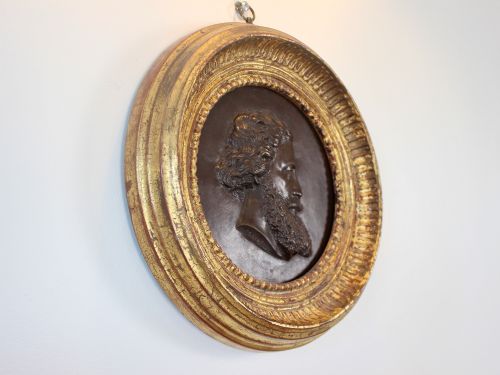
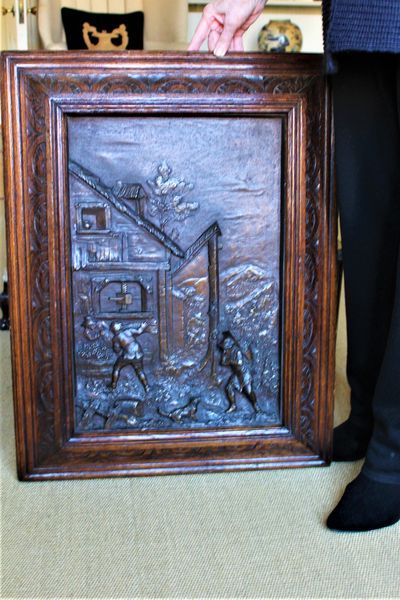
When you search for a framed bronze wall plaque, you encounter pieces spanning the eighteenth, nineteenth, and early twentieth centuries, encompassing wall reliefs, miniature portraits, and commemorative roundels. These works draw upon neoclassical, baroque revival, and French historicism styles, translating grand artistic traditions into intimate interior ornaments.
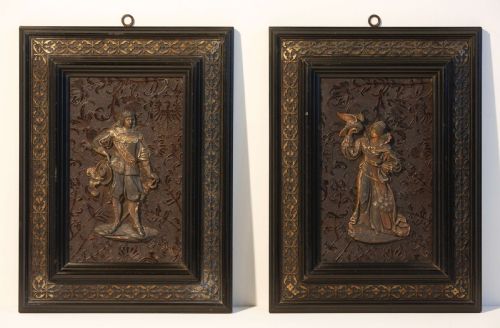
The selections available range from grand tour plaster reliefs and bronzed copper depictions of figures like Diana the huntress to detailed portrait medallions of figures such as Queen Victoria, Napoleon, and Marie-Louise Bonaparte. You also meet architectural subjects, including Milanese relief scenes depicting the Castello Sforzesco alongside heraldic arms.
Many of these objects are housed in period enclosures, including turned mahogany frames, ebonised wood, and brass settings. The materials extend beyond solid cast metal to white metal, gilded bronze, and bronzed plaster, reflecting the diverse ways makers captured sculptural relief for domestic display.
What varies in quality
Quality also depends upon the harmony between the relief plaque and its original frame. Pieces retaining their contemporary turned mahogany or brass surrounds demonstrate a higher level of integrated craftsmanship than those matched with later housings.
Diana the huntress routinely watches over living rooms alongside Queen Victoria and Napoleon, proving that nineteenth-century wall art enjoyed remarkably eclectic company.
Gian Federigo Bonzagna·George Atkinson·Mainfroy
The Framed Bronze Wall Plaque Glossary
- Relief plaque
- A wall-mounted artwork where the sculpted figures project from a flat background. This technique creates a sense of three-dimensional depth within a controlled spatial plane.
- Grand tour
- A cultural journey undertaken by wealthy young Europeans in the eighteenth and nineteenth centuries to study classical art and architecture. Souvenirs from these travels included miniature reliefs and plaques.
- Roundel
- A circular panel used for decorative artwork, frequently applied to portrait medallions and commemorative pieces. They are often set within matching circular wooden frames.
- Ebonised wood
- Timber treated with a chemical stain or finish to imitate expensive ebony. This dark, uniform surface provides a strong visual contrast against gilded or bright bronze metalwork.
- Patination
- The surface coloration and ageing acquired by metal over time or through chemical treatment. It adds tonal variation and highlights the contours of the underlying relief.
Framed Bronze Wall Plaque: Frequently Asked Questions
How do I hang a heavy bronze plaque?
These pieces require secure wall fixings suited to the combined weight of the metal relief and its wooden or brass frame. Wall anchors and appropriate screws ensure the piece remains stable.
Check the integrity of the hanging loops or wire attached to the reverse before mounting. Professional picture hooks rated for the specific weight provide peace of mind.
Are these plaques solid bronze?
The materials vary considerably across the selection, including solid cast bronze, bronzed copper, cast lead, and bronzed plaster. Each method produces a distinct weight and surface character.
Examining the edge or the reverse of the plaque helps reveal the underlying material beneath the patination. Gilding and white metal accents also appear alongside traditional bronze.
How should I clean a bronze plaque?
Dust the surface gently with a soft, dry brush to remove settled particles without disturbing the patina. Avoid abrasive cloths or chemical cleaners that might strip the historic finish.
Preserving the original patination is essential for maintaining the character and historical integrity of the piece. Professional conservation advice should be sought for deep cleaning.
What periods do these plaques represent?
The pieces span from the eighteenth century through the nineteenth century and into the early twentieth century. Styles range from Regency and French Empire to Victorian neoclassical and baroque revival.
Dates are often indicated by the subject matter, such as commemorative jubilee subjects or Napoleonic portraits. The framing materials and casting techniques also offer clues to the era of production.