






Framed Botanical Embroidery Picture
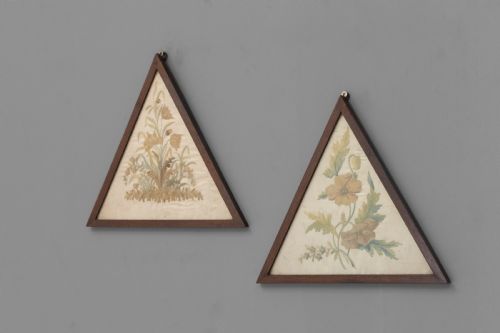
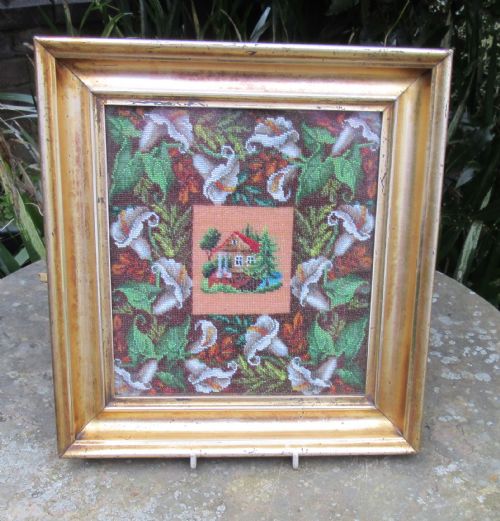
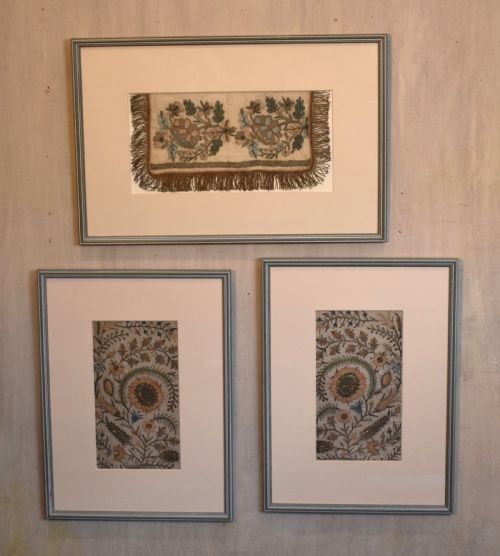
These framed botanical embroidery picture examples bring garden birds, strawberries and floral studies into the room through antique needlework.
Framed Botanical Embroidery Picture
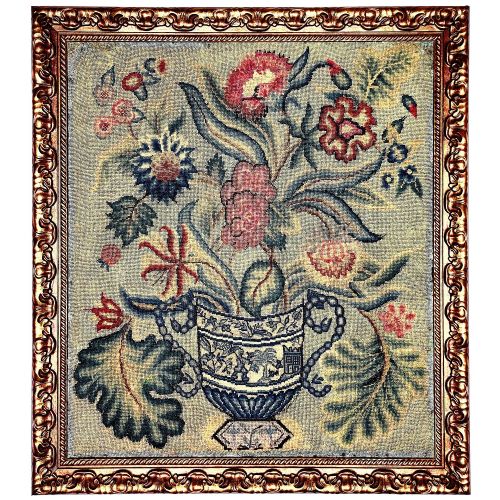
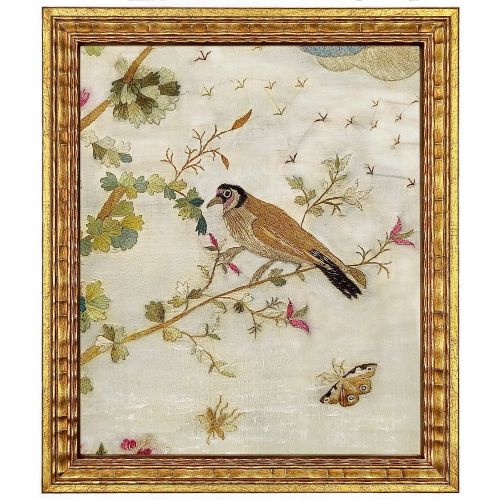
A framed botanical embroidery picture brings together textile art and wall decor across several historic periods. The pieces on this page span the eighteenth century, the nineteenth century, and around nineteen hundred, capturing plant life and garden birds through needlework.
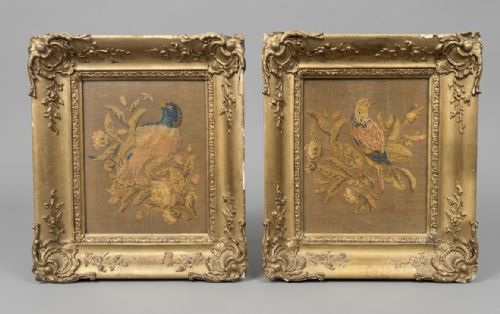
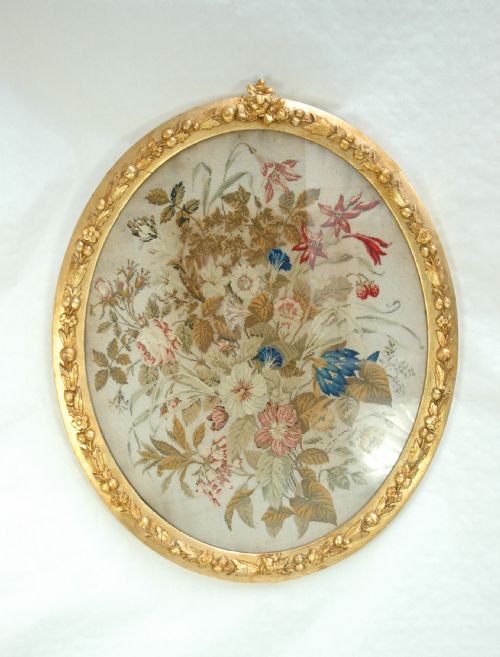
Buyers will encounter various formats including rectangular wall art, oval tapestry pictures, and paired compositions. Styles range from Georgian and Victorian botanical to Chinese export work and English country house aesthetics.
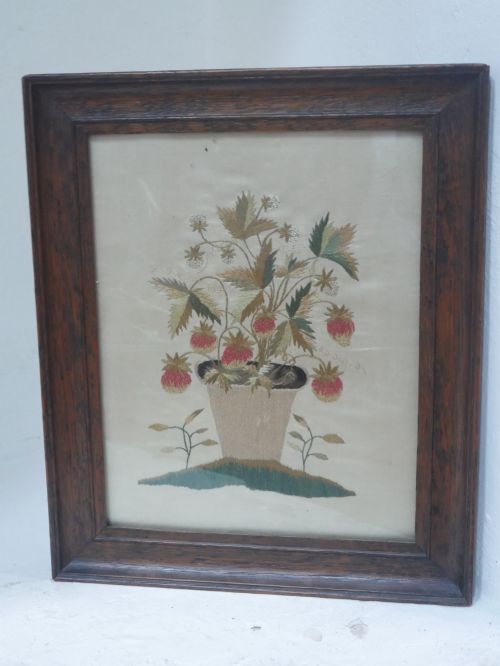
The subjects focus heavily on natural forms, notably pots of strawberries, garden birds, and mandarin ducks. Most items arrive housed in period wooden, giltwood, or gilt wood frames.
How they were made
These works rely on needlework stitched onto textile foundations such as silk, linen, canvas, and wool. Artisans utilised coloured threads and sometimes beads to render the botanical and avian subjects in fine detail.
The completed textiles were then secured behind glass and mounted within bespoke frames. Makers employed wood, giltwood, and gilt wood to construct these protective surrounds, often shaping them into octagonal or oval profiles.
Framed Botanical Embroidery Picture Retail Price Guide 2026
Typical asking prices for framed botanical embroidery picture among the pieces listed under this phrase on Sellingantiques today, from the lower quarter to the upper quarter. They describe what is for sale here now, not the wider market.
Listings feature textile art from the eighteenth century, nineteenth century, and nineteen hundred, using silk, wool, linen, and giltwood frames.
What varies in quality
The standard of a framed botanical embroidery picture rests upon the precision of the needlework and the naturalism of the design. Earlier eighteenth-century examples often demonstrate intricate stitching techniques that define the contours of flora and fauna.
Framing also plays a significant role in the overall integrity of the piece. Original gilt wood or carved wooden frames that complement the age of the textile elevate the character of the artwork.
The Framed Botanical Embroidery Picture Glossary
- Needlework
- Hand-stitched textile art created using yarn or thread upon a fabric ground. This term covers the primary technique seen across these historic wall art pieces.
- Giltwood
- Wood that has been treated with a thin layer of gold leaf or gilt. Many period frames utilise this finish to highlight the artwork.
- Tapestry
- A form of heavy textile art woven or stitched by hand with pictorial designs. Oval examples appear within nineteenth-century wall pieces.
- Georgian
- The period spanning the reigns of the four Georges, noted in these listings for eighteenth-century needlework pictures.
- Victorian
- The period of the nineteenth century encompassing botanical and rococo revival styles in textile art.
Framed Botanical Embroidery Picture: Frequently Asked Questions
What periods do these pictures come from?
The available pieces primarily originate from the eighteenth and nineteenth centuries, with several examples dating around nineteen hundred.
These eras encompass Georgian, Victorian, and early twentieth-century manufacturing traditions.
What materials were used in the embroidery?
Artisans utilised silk, wool, linen, and canvas as the foundation fabrics and stitching threads for these textile works.
Beadwork also appears on select nineteenth-century American pieces to create textured visual effects.
What subjects typically appear on the pictures?
Common motifs include botanical studies, garden birds, mandarin ducks, and pots of strawberries.
These natural subjects reflect popular aesthetic tastes across English country house and Chinese export traditions.