

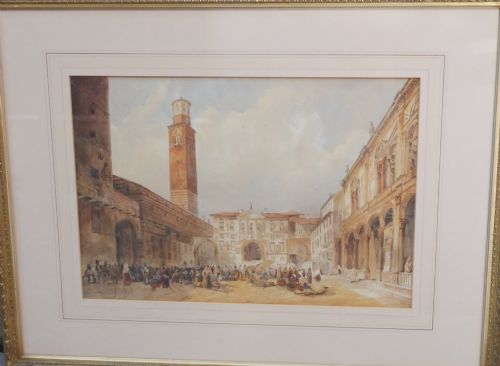
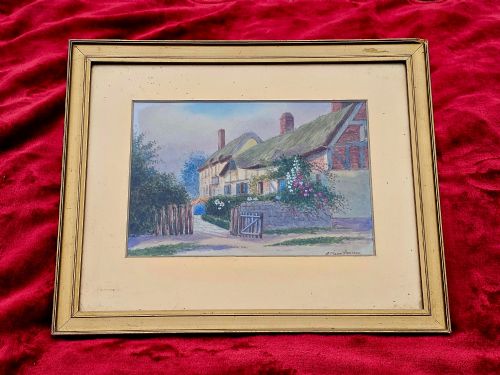
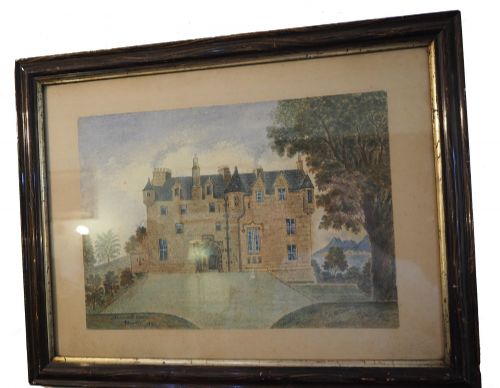


Framed Architectural Watercolour Picture
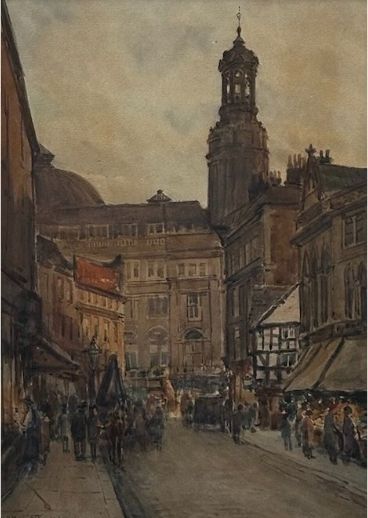
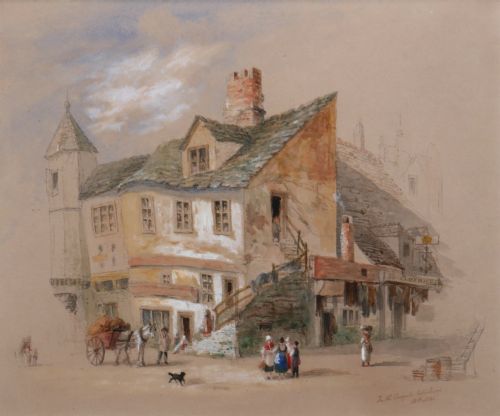
A framed architectural watercolour picture brings the exact stonework, facades and streetscapes of past centuries straight onto your wall.
Framed Architectural Watercolour Picture
A framed architectural watercolour picture captures buildings, street scenes, castles and historic facades through washes of pigment on paper. When searching this phrase, you encounter works spanning the nineteenth and twentieth centuries, produced during periods such as the Victorian, Edwardian and mid-century eras.
The subjects range from Grand Tour Italianate ruins and Venetian canals to English village cottages and London landmarks. Most examples present as finished watercolours housed behind glass within wooden or gilt frames, ready to hang.
Works on this page emerge from distinct regional schools and individual hands, recording topography, domestic dwellings and monumental architecture with varying degrees of precision.
Materials and construction
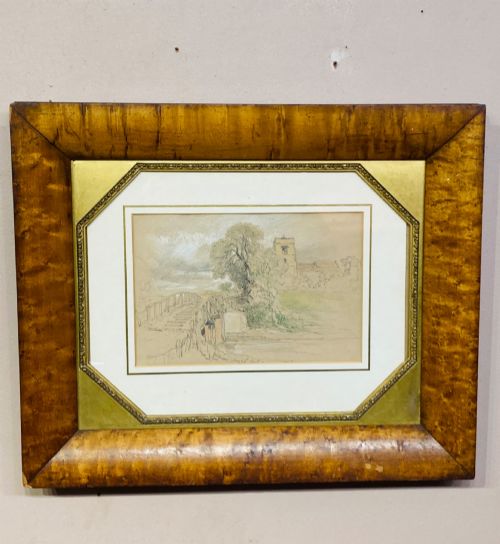
Artists painted these compositions using watercolour pigment and occasionally pencil on paper supports. The sheets were subsequently placed behind protective glass and secured inside timber frames, sometimes finished with gilding.
The physical build relies on traditional framing methods where the watercolour paper sits mounted and glazed to shield the delicate pigments from atmospheric moisture and light degradation over decades of display.
Framed Architectural Watercolour Picture Retail Price Guide 2026
Typical asking prices for framed architectural watercolour picture among the pieces listed under this phrase on Sellingantiques today, from the lower quarter to the upper quarter. They describe what is for sale here now, not the wider market.
Materials recorded across the inventory include watercolour pigment, paper, wood, glass, and gilt wood framing.
Judging quality and execution
Quality rests upon the sureness of the draughtsmanship and the control of the pigment washes. A stronger piece demonstrates confident handling of perspective, light and shadow across stonework and masonry rather than hesitant, muddy application.
The integrity of the preservation also dictates standing, with pristine paper surfaces and well-matched period framing holding greater merit than works marred by heavy foxing or water damage.
Hercules Brabazon Brabazon·Fred Lawson·Tom Dudley·David Law·Wilfred Knox
The Framed Architectural Watercolour Picture Glossary
- Watercolour
- A paint consisting of a colour pigment suspended in a water-soluble binder vehicle. It produces transparent washes that allow the white of the paper to reflect back through the pigment.
- Grand Tour
- A traditional excursion through Europe undertaken by upper-class young men and artists for pleasure and education. It resulted in numerous topographical sketches and paintings of classical monuments.
- Foxing
- Small brownish spots or patches that develop on older paper due to chemical reactions involving iron impurities or fungal growth. It is a common occurrence in antique paper goods.
- Diptych
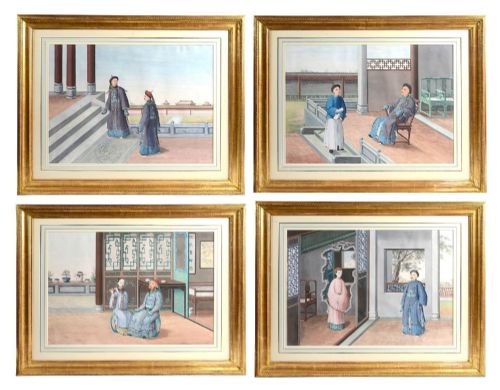
- An artwork consisting of two distinct painted panels hinged or displayed together as a single matched pair. Such pieces often depict complementary views or companion subjects.
- Gilt wood
- Timber framing coated with a thin layer of gold leaf or metallic gilt paint to impart a lustrous metallic finish. This treatment was standard for finer Victorian and Edwardian picture frames.
Framed Architectural Watercolour Picture: Frequently Asked Questions
How do I hang a watercolour safely?
Position the framed picture away from direct sunlight to prevent the watercolour pigments from fading over time. Keep it clear of damp walls and direct heat sources to protect the paper and wooden frame.
Use secure picture hooks rated for the weight of the glazed piece. Ensure the cord or wire at the back is evenly balanced so the frame hangs straight.
Are these architectural watercolours original works?
The selection consists of original hand-painted watercolours on paper rather than modern mechanical reproductions or prints. Each piece represents a unique application of pigment by an artist recording a specific structure or scene.
Signatures, dates and inscriptions found on many of the paintings further confirm their status as individual historical artworks.
How do I identify the period of a frame?
Victorian and Edwardian frames often feature heavier wooden mouldings, intricate plaster ornamentation or traditional gilt finishes applied over gesso. Mid-century examples tend toward cleaner, simpler wooden profiles without elaborate surface decoration.
Examining the backing boards, fixings and old paper tape can also provide clues regarding the age of the framing assembly.
What subjects are most common?
Townscapes, street scenes and specific historic buildings dominate the selection, ranging from Yorkshire abbeys and London arches to Venetian canals and continental cathedrals. Many record British domestic architecture and landmark civic sites.
Artists frequently documented these subjects during travels abroad or while depicting familiar local scenes in England and Scotland.