

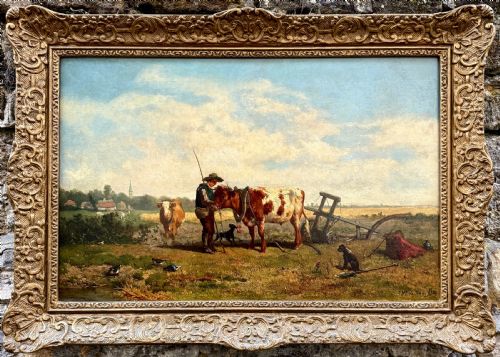


Framed Agricultural Oil Art
Framed agricultural oil art captures rural labour and livestock in traditional canvas works.
Framed Agricultural Oil Art
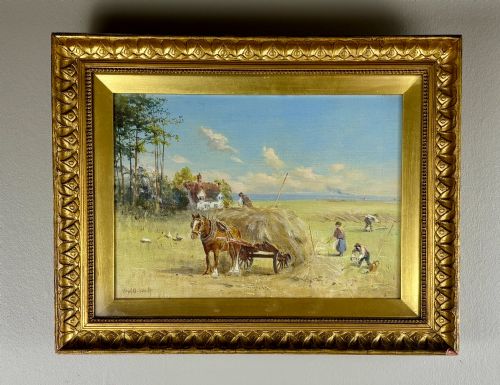
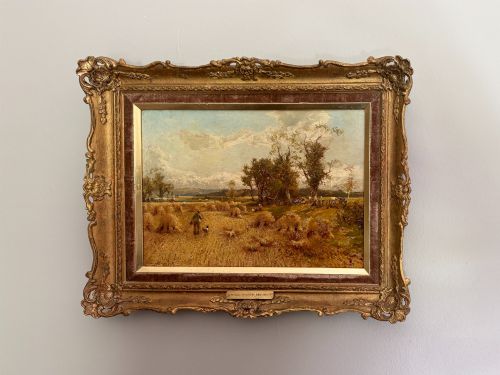
When you search for framed agricultural oil art, you examine canvases portraying rural life, working horses, and farmyard scenes. These paintings document the nineteenth and early twentieth centuries through depictions of ploughing, harvesting, and livestock.
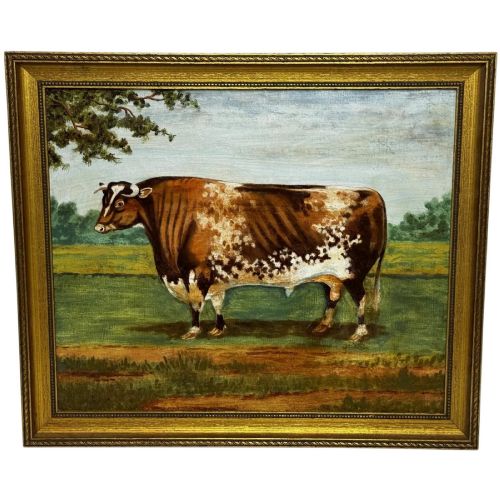
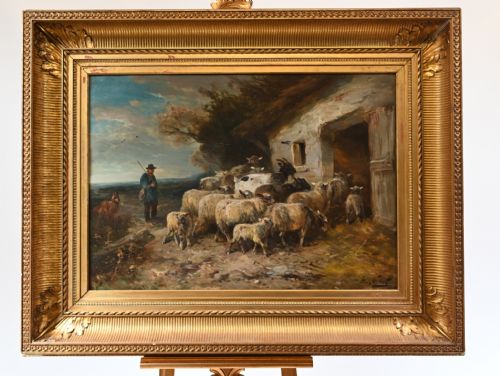
The versions most common on this page date from the Victorian period through to the mid-twentieth century. Works span British and European schools, showing shire horses, cattle, and shepherds with their flocks.
Compositions range from intimate studies of individual animals to large pastoral landscapes with farmworkers. Each piece records agricultural traditions through oil paint applied to canvas.
Materials and construction
These works rely primarily on oil paint applied to woven canvas supports. Artists built up pigment to create texture in fields, animal coats, and skies.
Many canvases sit within period timber surrounds, frequently incorporating gesso moulding and gilt decoration. Ebonised wood frames also appear, matching the palette of the nineteenth-century works.
The listings span from the nineteenth century into the 1960s, executed in oil on canvas.
Distinctions in quality
Quality rests in the anatomical accuracy of the animals and the handling of light across the landscape. Master painters capture the weight of heavy horses and the atmospheric conditions of harvest time with precision.
The integration of the canvas and its original frame dictates the visual success of the piece. Superior examples retain their period gilt wood or gesso frames, which complement the depth of the oil pigments.
Henry Schouten·Johannes de Haas·James Kyd·Herbert Royle·Arthur Charles Dodd·George Cole·William Sidney Cooper·George Wright
The Framed Agricultural Oil Art Glossary
- Oil on canvas
- A painting technique where pigments suspended in drying oils are applied to a woven fabric support. This method allows for rich colour blending and textured brushwork.
- Gesso
- A plaster mixture applied to wood frames as a base for gilding or paint. It provides a smooth surface for ornamental moulding.
- Gilt wood
- Timber treated with gold leaf or metallic powder to create a reflective surface. This finish frames nineteenth-century paintings with traditional ornamentation.
- Victorian Pastoral
- A nineteenth-century artistic genre focusing on idealized rural scenes and farm life. These works celebrate agricultural labour and pastoral scenery.
- Realism
- An art movement depicting subject matter truthfully without artificiality. In agricultural painting, this translates to accurate portrayals of farm animals and working conditions.
Framed Agricultural Oil Art: Frequently Asked Questions
How do I identify the period of an agricultural oil painting?
Examine the style of dress worn by the farmworkers and the framing materials used. Canvas preparation and stretcher construction also offer clues to the decade of creation.
Nineteenth-century works often feature heavier gilt wood frames, whilst mid-century pieces lean towards simpler ebonised surrounds.
Where should I hang these pastoral oil paintings?
These works suit dining rooms, studies, or hallways where traditional lighting enhances the oil pigments. Keep them away from direct sunlight to protect the canvas.
Ensure the hanging wall supports the weight of the timber and gesso frames securely.
What subjects are most common in farmyard art?
Shire horses, shorthorn bulls, and sheep flocks dominate the compositions. Artists frequently depicted ploughing teams, harvest scenes, and resting livestock.
Human figures usually appear alongside working animals rather than as standalone portraits.
How do I care for antique oil on canvas?
Dust the surface gently with a soft, dry brush and avoid using water or chemical cleaners. Maintain stable room temperatures to prevent canvas warping.
Professional conservators should handle any structural repairs to the paint layer.