






Framed Academic Oil Painting
A framed academic oil painting brings studio rigour, precise draftsmanship, and structured narrative straight to your walls from the nineteenth and early twentieth centuries.
Framed Academic Oil Painting
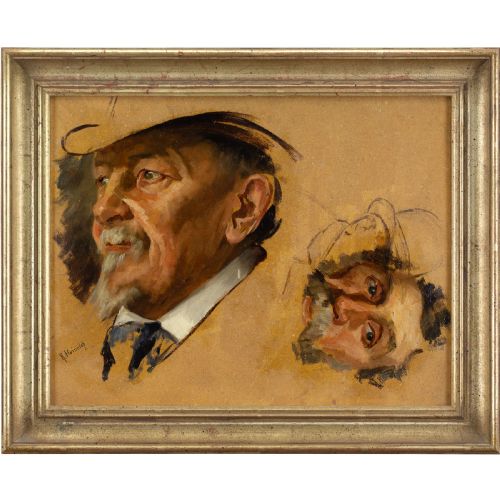
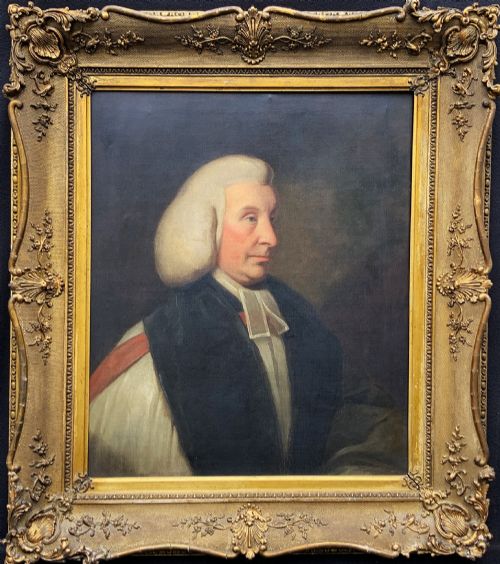
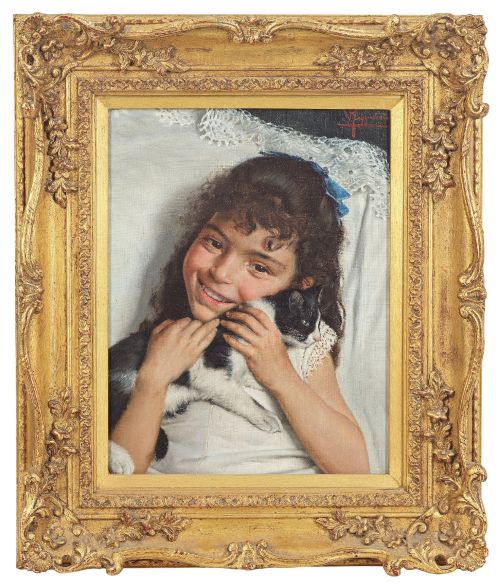
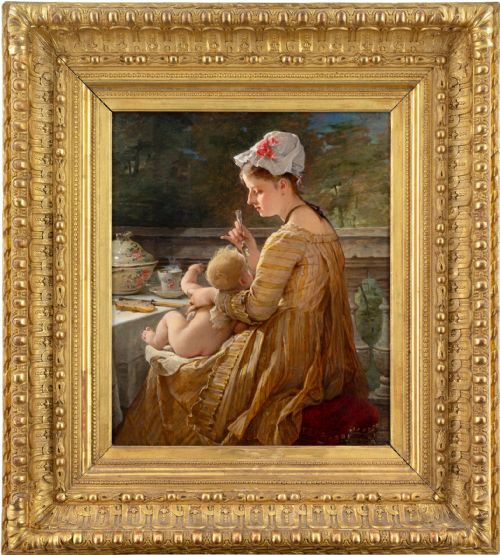
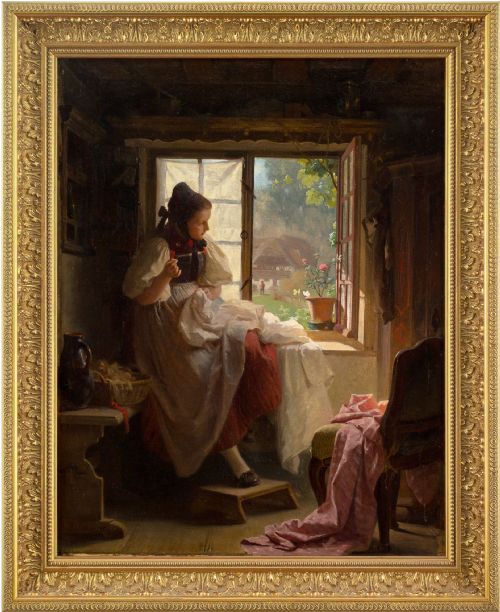
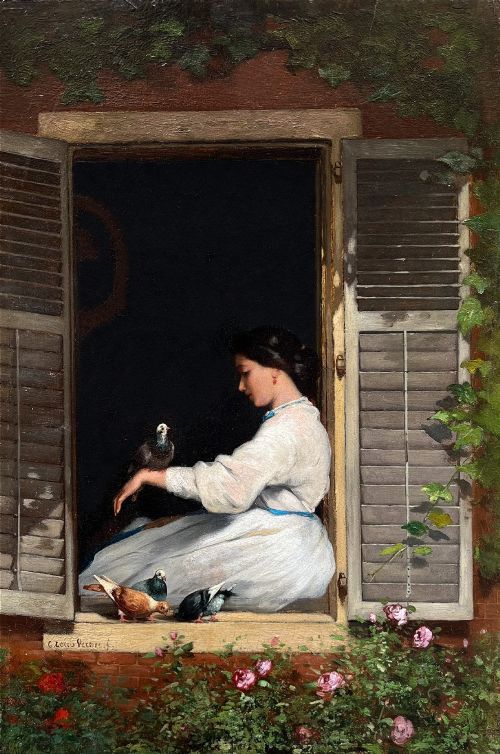
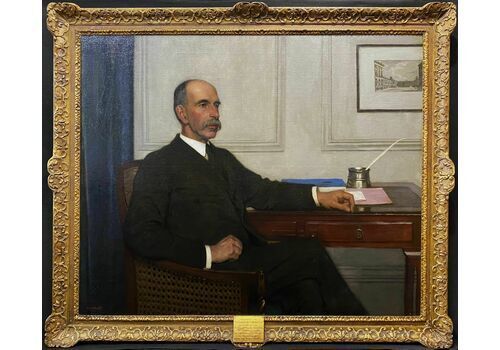
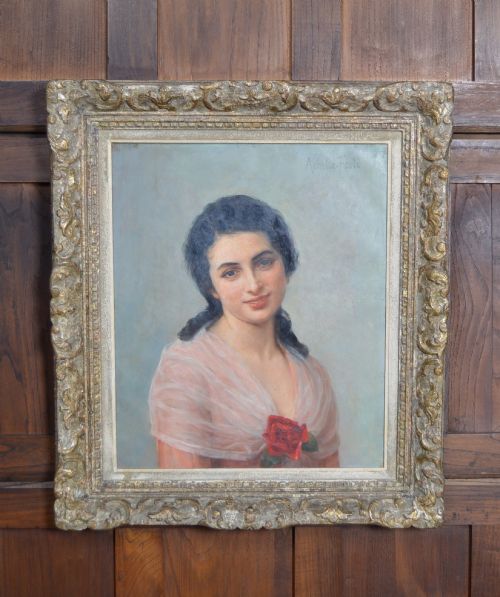
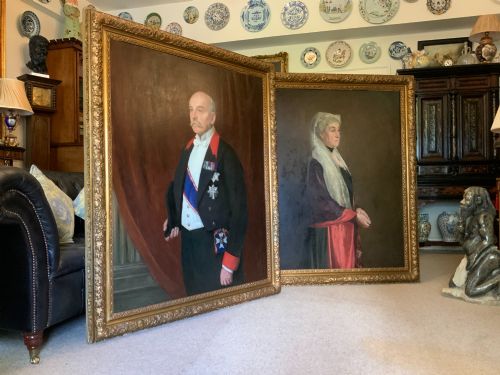
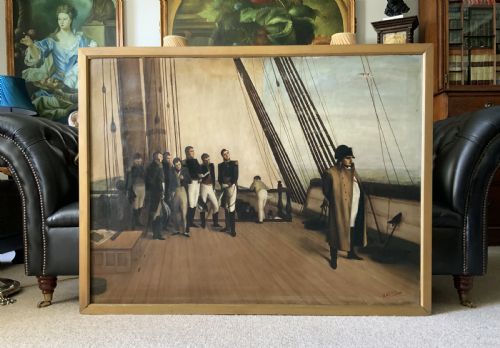
When you search for a framed academic oil painting, you encounter works rooted in the rigorous training methods of European art academies. These pieces span portraiture, historical genre scenes, mythological subjects, and detailed interior studies created during the nineteenth century and the early decades of the twentieth century. The version you are most likely to meet on this page is an oil on canvas or oil on board, preserved in its original giltwood or gesso frame.
The subjects range from formally posed sitters and military officers to intimate domestic interactions and classical nudes. Artists trained in this tradition prioritized anatomical accuracy, balanced composition, and narrative clarity over experimental abstraction. Consequently, the works reflect established atelier practices from British, French, German, Italian, and Belgian schools.
Materials and construction
These works rely on oil paint applied to prepared supports such as woven canvas, wooden panels, or occasionally card. The ground layer typically consisted of gesso or chalk primer to provide a stable, luminous surface for the pigments. Painters layered translucent glazes over opaque underpainting to build depth, flesh tones, and tactile fabric textures.
The frames form an integral part of the physical object, constructed from carved wood embellished with moulded gesso and finished in genuine or composition gold leaf. These heavy frames were designed to project authority and protect the canvas from environmental shifts while concentrating light onto the pictorial surface.
Several canvases feature remarkably stern dogs and attentive cats sharing the studio with their human sitters.
Distinctions in execution
Quality in this tradition rests upon anatomical certainty, brushwork control, and the psychological depth of the subject. Master hands command subtle transitions of light and shadow across complex drapery and human forms, whereas lesser works reveal stiff postures and flat, unmodulated surfaces.
The sophistication of the original frame and the prominence of the artist within academy circles also elevate the standing of a piece. Works bearing signatures of Royal Academy exhibitors or continental salon medalists demonstrate superior handling of narrative tension and spatial perspective.
Dumini Leopoldo·Vittorio Reggianini·Adelaïde Salles-Wagner·Max Kaltenmoser·Louis Charles Verwee·Harold Knight·Achille-Fould·Alfred Arthur Brunel de Neuville·Johann Hamza·Benjamin Eugene Fichel·Charles Zacharie Landelle·André Charles Voillemot·Ferdinand Victor Leon Roybet·Alexandre-Louis Martin·William Etty·Allan Douglas Davidson·Gabriel Puig Roda·Frederick Goodall·Lance Calkin·Alfred Holst Tourrier·Hermann Armin Kern·Frank Hyde·Thomas Couture·James Clark·Antonietta Brandeis
The Framed Academic Oil Painting Glossary
- Academic realisms
- A style of painting governed by the strict standards of European art academies, emphasising classical drawing, historical subjects, and polished finishes. This approach discouraged visible brushstrokes in favor of illusionistic depth.
- Giltwood
- Timber carved and coated with gold leaf or metallic powder, frequently used for traditional picture frames during the Victorian period. It provides a reflective border that isolates the dark tones of the oil painting.
- Gesso
- A paint mixture consisting of a binder mixed with chalk, gypsum, or pigment, applied to canvas or wood to create a smooth surface before oil painting begins. This foundation prevents the oil from rotting the fabric support.
- Genre painting
- The pictorial representation of scenes from everyday life, ordinary people, and domestic interiors rather than grand historical or religious events. These works often carry subtle moral or narrative messages.
- En grisaille
- A painting executed entirely in shades of grey or neutral monochrome, often used to simulate sculpture or serve as an underpainting for subsequent glaze layers. Artists utilised this technique to establish tonal values before introducing colour.
Framed Academic Oil Painting: Frequently Asked Questions
What is academic art?
Academic art refers to the style and technique produced under the influence of European academies of art, particularly the French Academy. These institutions enforced rigorous standards of drawing, historical understanding, and technical polish.
Paintings from this tradition adhere to classical rules of composition and subject matter, prioritizing narrative clarity and anatomical precision over expressive freedom.
Are these paintings signed?
Many examples bear the artist's signature or monogram, often located in a lower corner of the canvas. Signatures provide key evidence for attribution and historical context.
Unsigned works are frequently attributed to specific schools or regional workshops based on brushwork style, canvas preparation, and subject matter.
How do I hang a heavy framed painting?
Due to the substantial weight of nineteenth-century wood and gesso frames, these works require secure wall anchors and appropriate picture hooks rated for heavy loads. Hanging them directly into wall studs ensures structural stability.
Positioning should avoid direct sunlight, heat sources, and damp exterior walls to protect both the canvas and the gilt frame from cracking.