
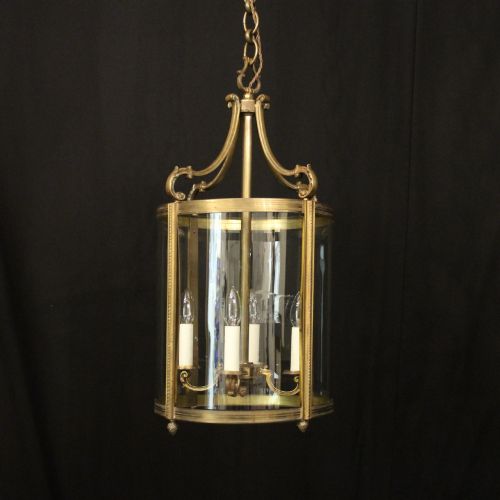
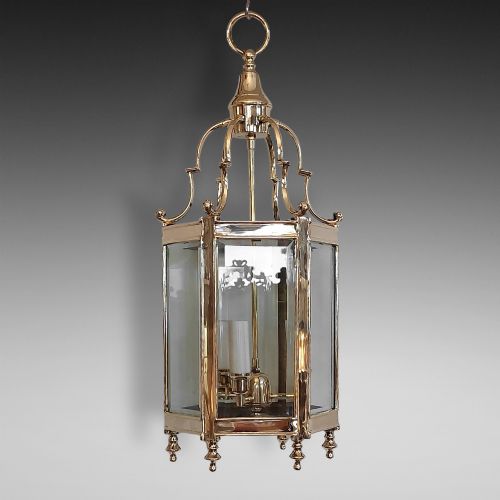
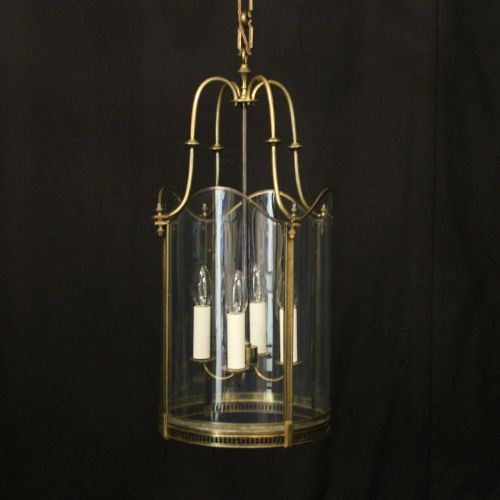
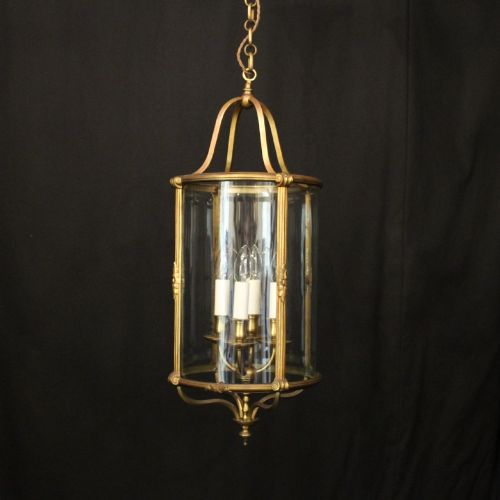
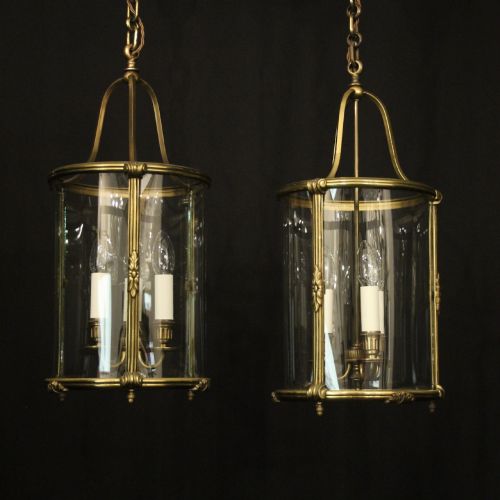
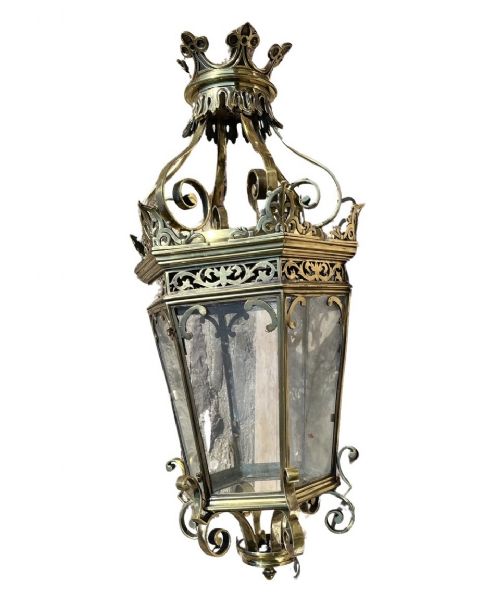
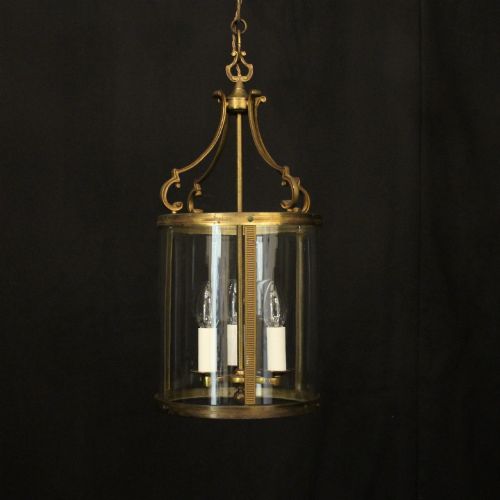
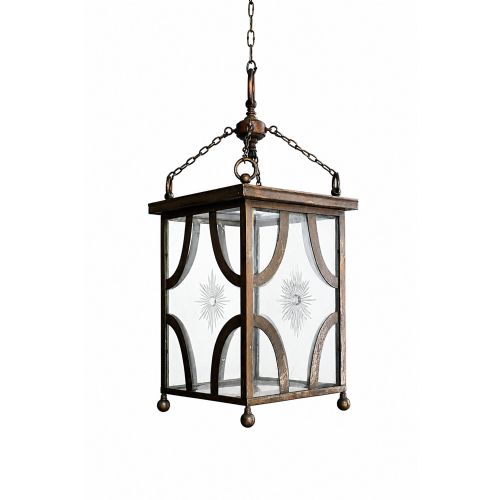
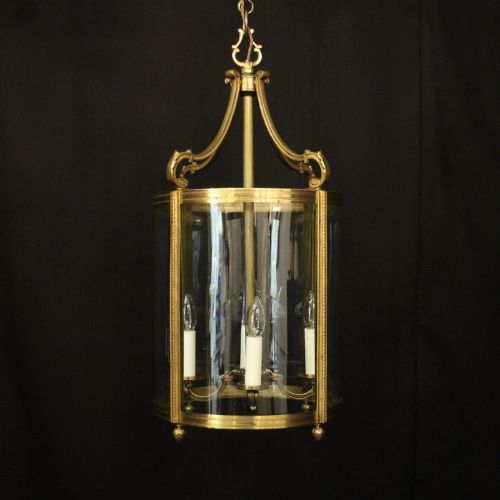
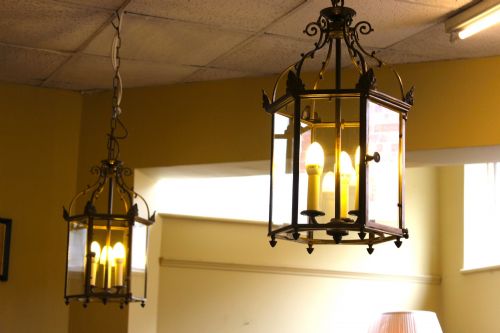
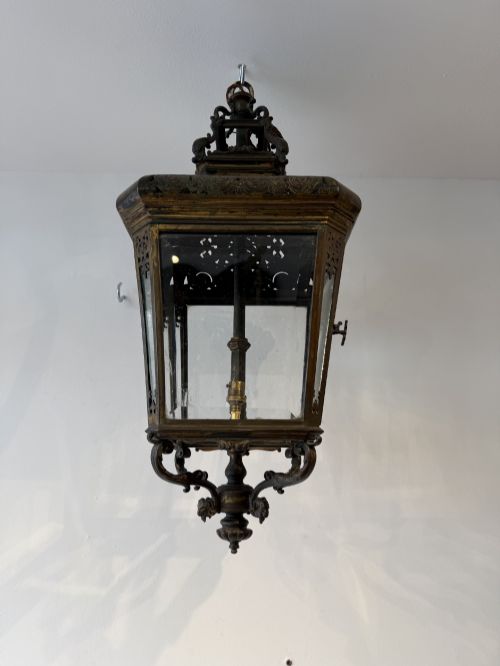

Foyer Hanging Lantern
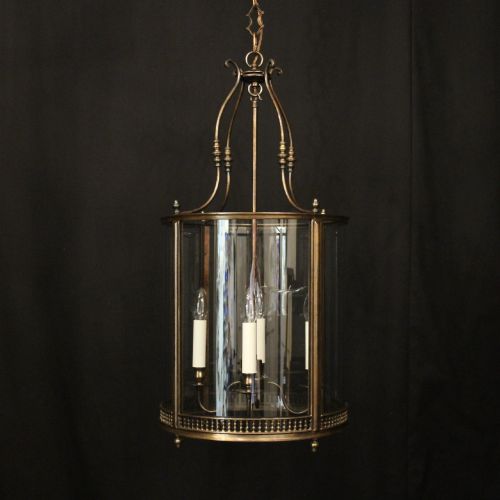
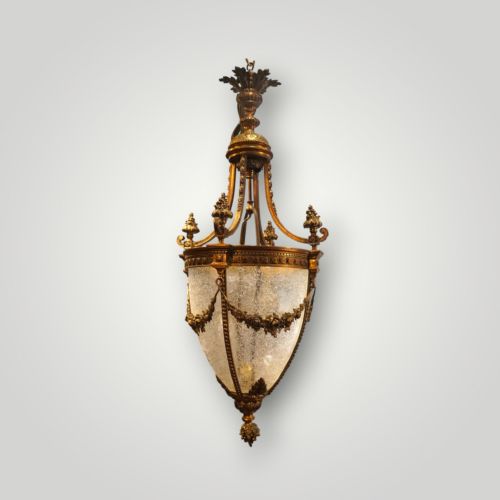
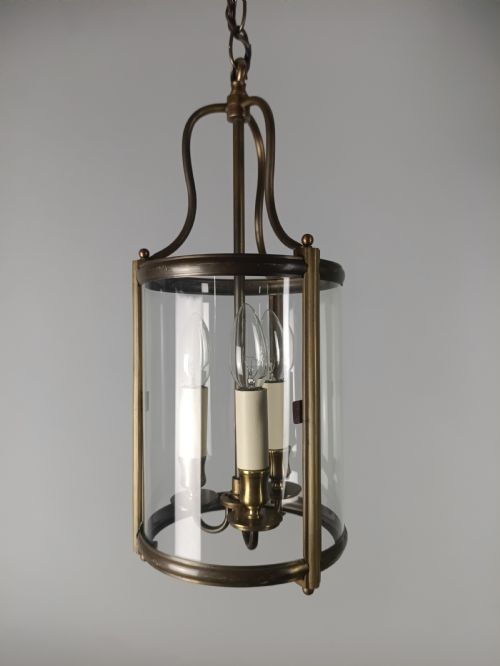
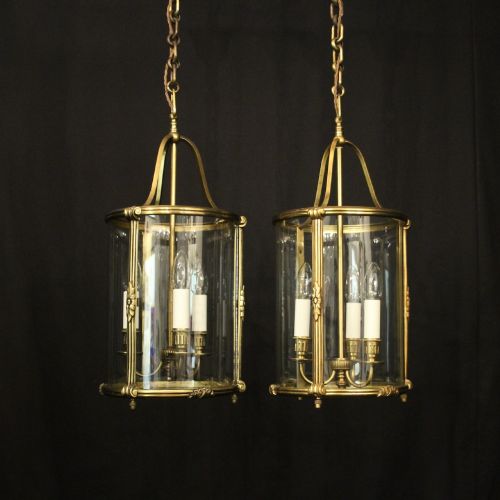
A foyer hanging lantern sets the tone for an entrance, casting warm illumination through glass panels set within metal frames.
Foyer Hanging Lantern
The pieces emerge from the nineteenth century, the Edwardian era and twentieth-century decades up to nineteen thirty. French and English origins dominate the inventory, spanning styles from Gothic Revival to Neoclassical and French Chateau.
Hexagonal, round and convex forms appear frequently, often enclosing multiple light fittings. Buyers encounter single lights alongside pairs suited to larger spaces.
How they were made
Metalwork forms the structural backbone, utilising brass, bronze, gilt bronze, gilded bronze, gilt brass and gilded brass. Founders cast these metals into intricate frames, sometimes applying surface gilding.
Glazing involves clear or bevelled glass panes fitted snugly into the metal frameworks. Hinged doors allow access to internal bulb holders and candles of earlier configurations.
Materials across the inventory include brass, bronze, gilt brass, gilded bronze and bevelled glass.
What varies in quality
The weight and depth of the cast metal frame distinguish finer examples from simpler production. Substantial bronze or brass castings hold crisp decorative details along borders and suspension loops.
Glass selection dictates visual clarity, particularly in convex and bevelled panes that refract light uniformly. Original components and unified patination across the metal surfaces elevate the standing of a piece.
The Foyer Hanging Lantern Glossary
- Convex glass
- Curved glass panes that project outward to diffuse light across a wider angle. This technique appears regularly on French hall lanterns.
- Bevelled glass
- Glass panes with cut and polished angled edges along the borders. This treatment adds depth and catches light from internal bulbs.
- Gilt bronze
- Bronze metal treated with a thin layer of gold or gold-coloured alloy. It provides a rich finish seen on many French Neoclassical examples.
- Hexagonal lantern
- A hanging light fixture featuring six sides arranged in a geometric enclosure. These structures often incorporate glass panels held by brass frames.
Foyer Hanging Lantern: Frequently Asked Questions
Where should I hang a foyer hanging lantern?
These lanterns suit entrance hallways, vestibules and high-ceilinged landings where overhead illumination is required.
Ensure adequate clearance beneath the lowest point for pedestrian traffic and door swings.
How do I determine the period of a lantern?
Dating relies on metal casting styles, framing geometry and associated decorative motifs from periods like the Edwardian era or nineteenth century.
French and English examples often display regional stylistic traits specific to their decade of manufacture.
What is the difference between brass and bronze?
Brass is an alloy of copper and zinc, typically yielding a brighter golden tone in these historical lighting fixtures.
Bronze contains copper and tin, offering a heavier structure with darker natural patination unless gilded.
Can these lanterns hold modern electrical bulbs?
Most antique lanterns have been adapted to house standard internal electrical lamp holders safely.
Internal wiring configurations vary, so professional installation is recommended to match domestic circuits.