
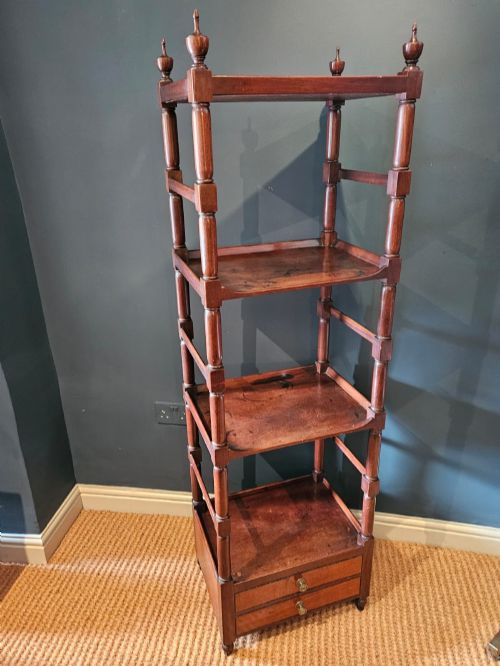
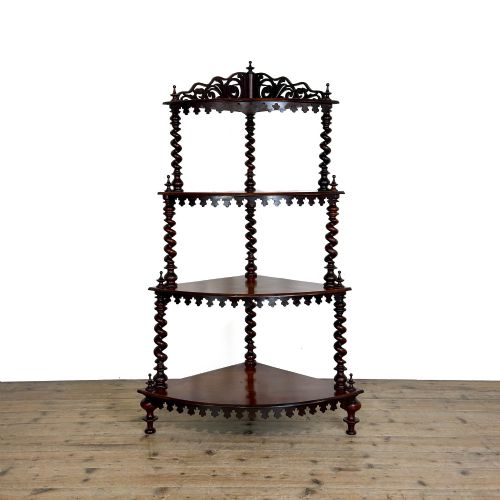
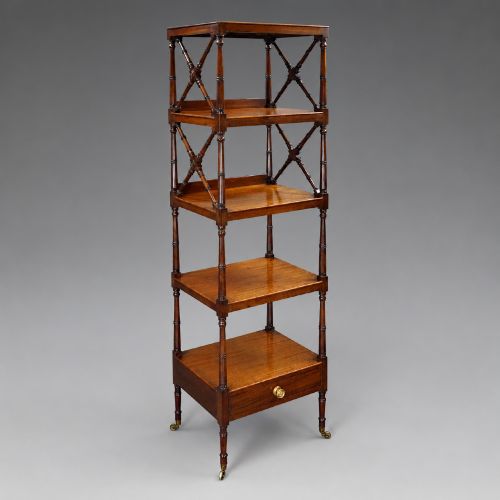
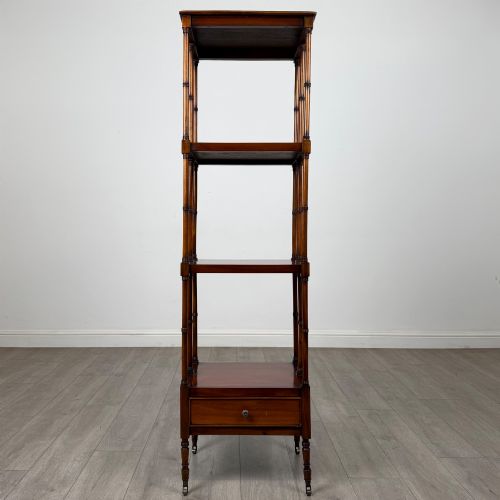
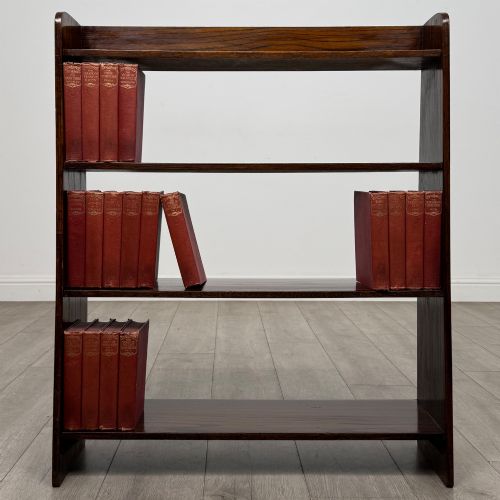
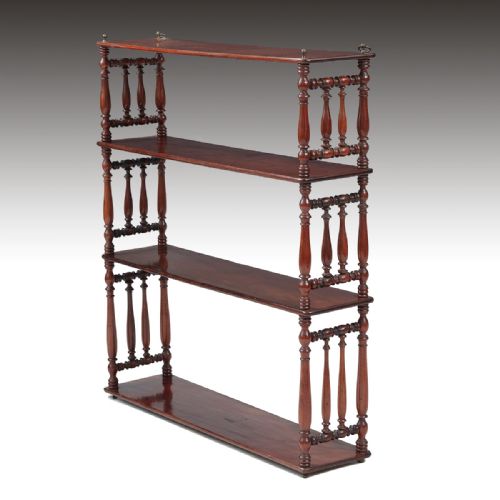
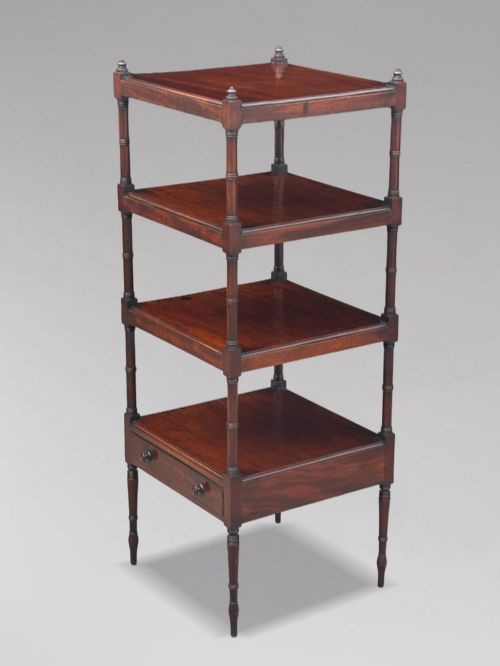
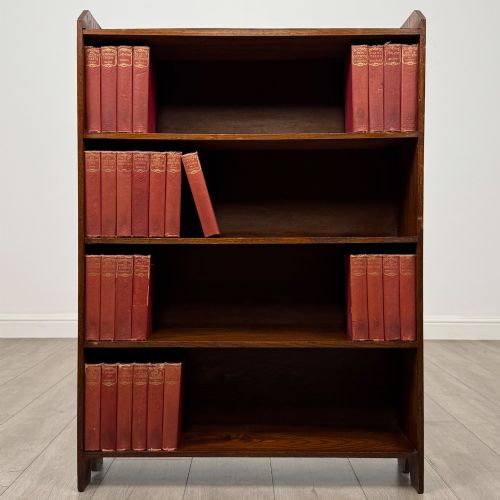
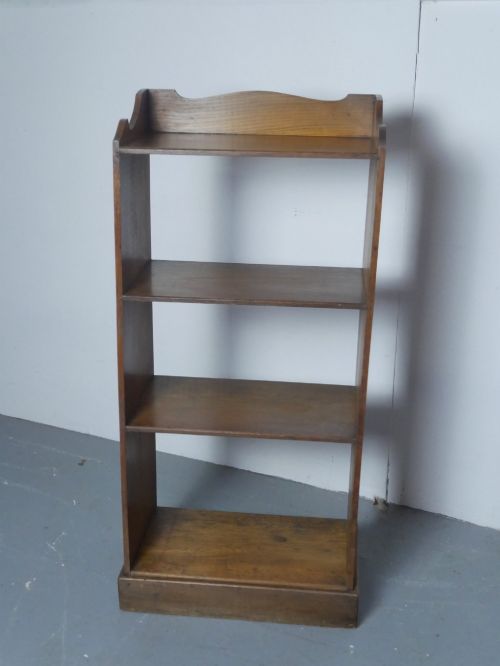
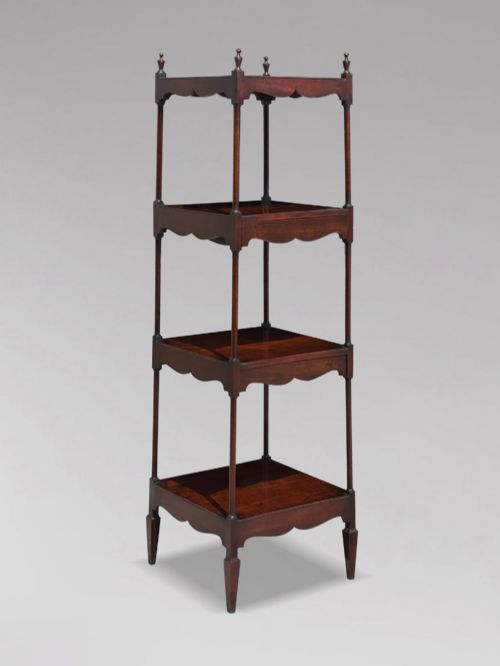
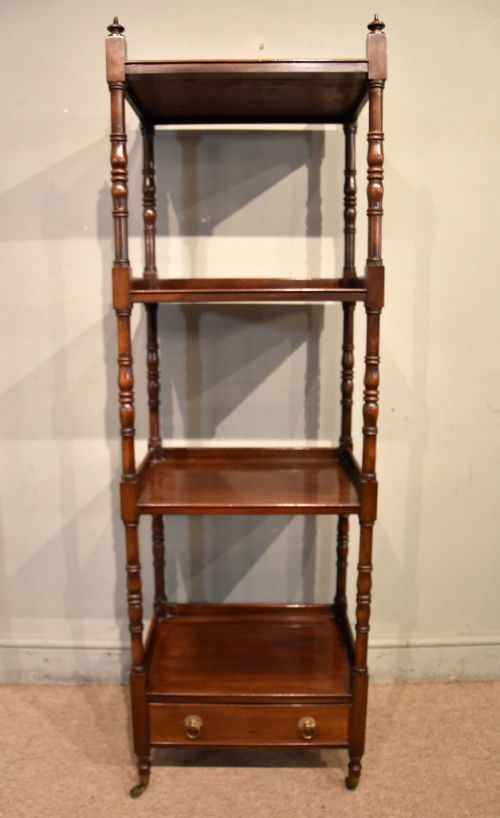
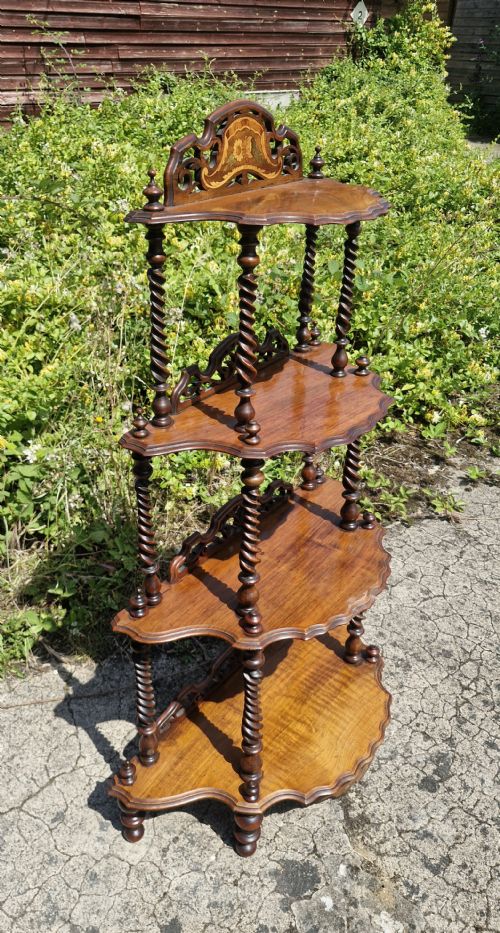
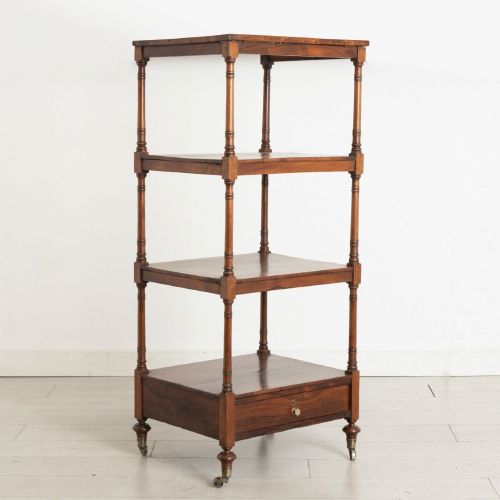


Four Tier Display Shelf
A four tier display shelf brings architectural rhythm to a room, offering graduated stages for treasured objects.
Four Tier Display Shelf
A four tier display shelf typically appears in the records as a whatnot, etagere, or set of hanging shelves, spanning the Georgian, Regency, and Victorian periods. These tiered stands were designed to hold books, ceramics, and ornaments in principal rooms of the house.
Mahogany and walnut form the backbone of the available selection, often found in corner formats or freestanding tapering shapes. Buyers meet these pieces in various configurations, including music stands with lower drawers and wall-mounted shelving units.
Materials and construction
Cabinetmakers utilised dense hardwoods such as mahogany, rosewood, and burr walnut, sometimes enhancing the grain with delicate wood inlay or brass mounts. These materials provided the structural integrity required to support multiple graduated shelves on slender uprights.
Construction techniques balanced lightness with stability, particularly in corner whatnots and A-frame designs that needed to fit snugly against domestic walls. Hanging shelves relied on sturdy backplates and secure joints to bear the weight of books and display items safely.
Several examples were designed for life at sea as ship's teak whatnots, proving that even sailors needed somewhere tidy to keep their teacups.
Assessing quality in tiered stands
Quality rests upon the choice of timber and the crispness of the turning on the upright supports. Superior examples display carefully matched veneer grains, particularly on burr walnut and rosewood tiers, alongside refined joinery that conceals structural stress.
Proportion and restraint separate standard utility pieces from exceptional items attributed to notable makers. The integration of functional elements, such as drawers or music stand adjustments, demonstrates higher ambition in the original workshop.
Gillows
The Four Tier Display Shelf Glossary
- Whatnot
- A freestanding piece of furniture with multiple tiers used for displaying ornaments or books. It gained popularity during the Georgian and Victorian eras for holding items that did not fit in enclosed cabinets.
- Etagere
- A French term for a display shelf or stand with several tiers. These pieces often feature delicate openwork and were designed to showcase porcelain and decorative objects.
- Corner whatnot
- A specialised shelving unit built to fit into the ninety-degree angle of a room. This form makes efficient use of domestic space while providing vertical display area.
- Hanging shelves
- Open shelves designed to be mounted directly onto a wall rather than resting on the floor. They frequently appear in mahogany and rosewood from the Regency period.
- Burr walnut
- A specialised timber cut from the abnormal growth of a walnut tree, yielding intricate, swirling grain patterns. Cabinetmakers utilised this veneer on high-status Victorian display pieces.
Four Tier Display Shelf: Frequently Asked Questions
What is a four tier display shelf used for?
These versatile pieces served primarily to hold books, small ceramics, and decorative objects in drawing rooms and parlours. Their graduated tiers allowed owners to display collections visibly without cluttering table surfaces.
Today, they function just as they did originally, providing structured vertical space for plants, books, or ornaments in modern living areas.
How do I tell a Regency whatnot from a Victorian one?
Regency models often feature clean architectural lines, brass details, and rich mahogany or rosewood timbers. They lean towards classical restraint and elegant proportions.
Victorian pieces tend to introduce burr walnut, elaborate wood inlay, and darker finishes, sometimes incorporating curved or serpentine shelf edges.
Are hanging shelves sturdy enough for heavy books?
Hanging shelves from the Georgian and Regency periods were engineered from solid hardwoods like mahogany and oak. Their stability depends entirely on proper wall attachment and the condition of the original hanging brackets.
While they easily support standard volumes and decorative items, extremely heavy modern volumes should be avoided in favour of lighter display pieces.
What is the difference between a whatnot and an etagere?
The terms are often used interchangeably in antique records, but etagere generally leans towards lighter, French-inspired display stands with open fretwork. Whatnots frequently include enclosed lower cupboards or small drawers.
Both forms rely on tiered shelving to create vertical display capacity within domestic interiors.