
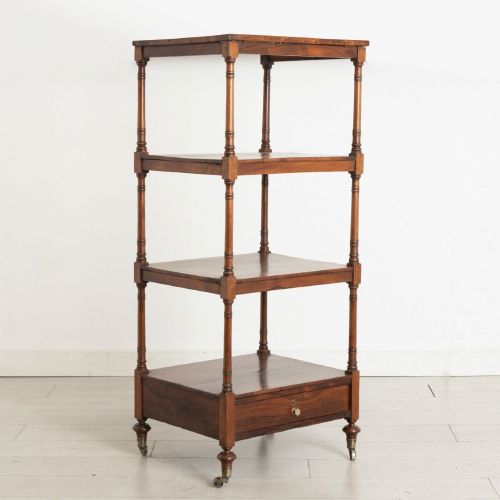


Four Shelf Etagere Unit
A four shelf etagere unit provides open display tiers for books and ornaments, combining decorative grace with practical room storage.
Four Shelf Etagere Unit
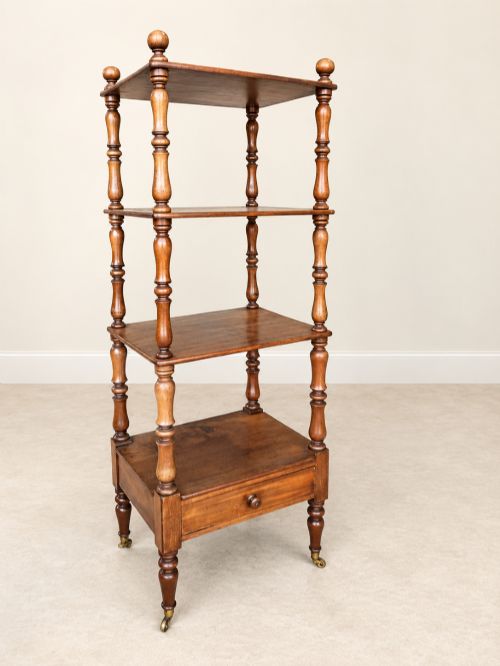
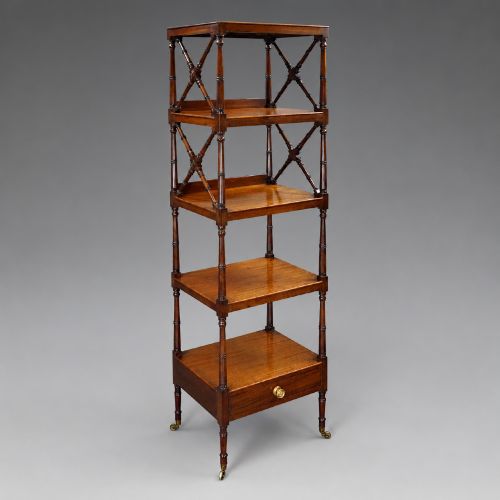
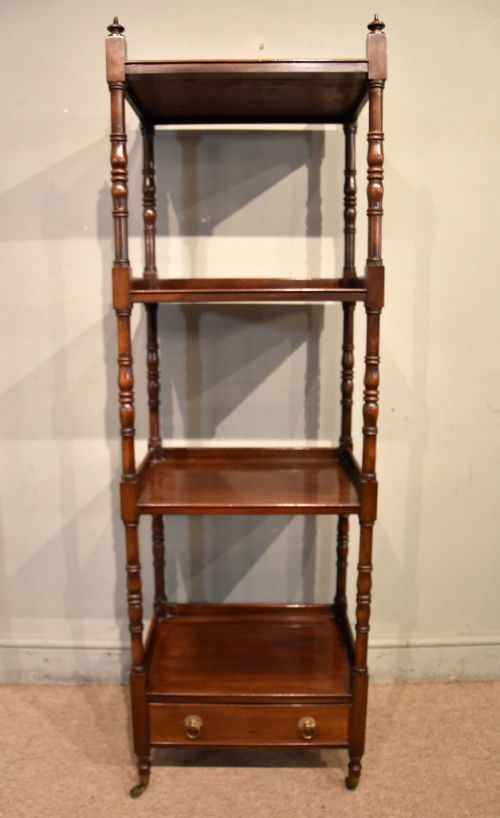
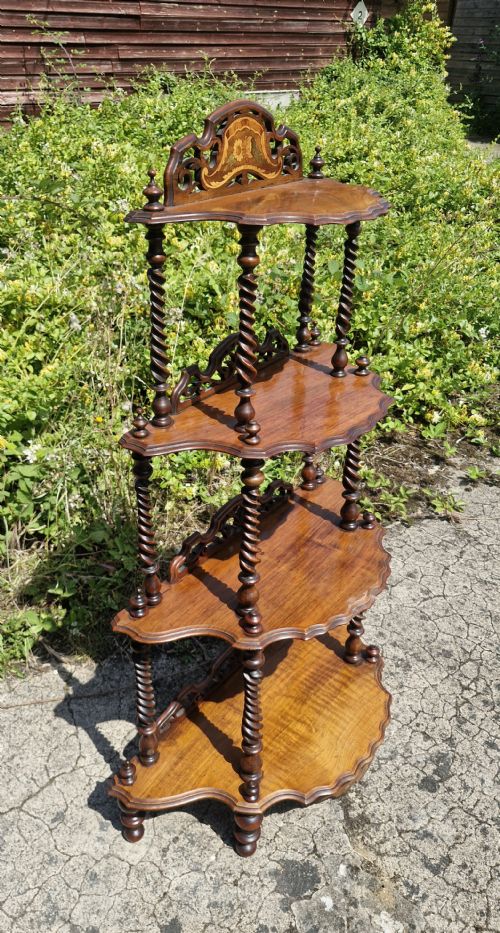
A four shelf etagere unit functions as a multi-tiered open display stand, known historically across British domestic interiors as a whatnot or etagere. These pieces appear in forms ranging from standing four-tier floor models to corner units, hanging shelves, and wall-mounted variations.
The pieces on this page stem predominantly from the Georgian, Regency, and Victorian eras, spanning the nineteenth century alongside late nineteenth-century Edwardian examples. Standing four-tier mahogany and walnut frameworks dominate the selection, accompanied by rosewood, teak, and marquetry inlay.
Materials and construction
Cabinet makers built these open shelving units using hardwoods such as mahogany, walnut, burr walnut, and rosewood, occasionally incorporating specialised ship's teak or lighter wood inlay and marquetry. Timber selection dictated the structural integrity of slender upright supports and multi-tiered platforms.
Construction methods rely on tiered shelf configurations fixed to vertical corner posts or A-frame supports, sometimes adapted for corner placements or wall suspension. Surfaces display polished wood grains, decorative inlays, and turned columns characteristic of nineteenth-century cabinet work.
Among the maritime selections, a robust ship's teak unit stands ready to survive heavy seas while holding your collection.
Elements of quality
Quality rests upon the selection of timber veneers, such as burr walnut or figured mahogany, and the precision of any wood inlay or marquetry. Superior examples exhibit refined turning on support columns and balanced proportions across all tiers.
Structural robustness distinguishes finer pieces, ensuring the shelves remain rigid and level under weight. The depth of the polish and the clarity of the wood grain further separate standard production from exceptional cabinet work.
The Four Shelf Etagere Unit Glossary
- Etagere
- A piece of furniture consisting of a set of open shelves for displaying small objects or ornaments. It originates from French domestic design and often matches the function of a British whatnot.
- Whatnot
- A multi-tiered shelving unit used for books, ornaments, and display, popular throughout the Georgian, Regency, and Victorian periods. These pieces stand on floors or fit into corners.
- Marquetry
- Decorative woodwork in which pieces of finely tinted wood are fitted together to form geometric or floral designs on a surface. This technique appears on walnut and inlaid cabinet pieces.
- Burr walnut
- Wood taken from a walnut tree growth featuring swirling, knotted grain patterns prized for decorative veneer work. It yields rich visual movement across table tops and shelf tiers.
Four Shelf Etagere Unit: Frequently Asked Questions
What is a four shelf etagere unit used for?
A four shelf etagere unit serves as an open display piece for books, ceramics, and decorative objects within a room.
Historically placed in parlours and drawing rooms, these tiers held ornaments that homeowners wished to exhibit publicly.
How do I distinguish a Georgian whatnot from a Victorian one?
Georgian and Regency pieces tend to display cleaner architectural lines, restraint in decoration, and simpler turned uprights in mahogany or rosewood.
Victorian models frequently incorporate heavier timbers like burr walnut, richer wood inlay, marquetry, and more elaborate corner or standing configurations.
Where should I place a corner etagere?
A corner etagere fits directly into the angle of a room, making efficient use of floor space that might otherwise remain empty.
These pieces suit smaller sitting rooms or hallways where a standard rectangular shelf unit would project too far outward.
Are hanging shelves structurally secure?
Hanging shelves mount directly to a wall via integrated brackets or fixing points designed to support lighter display loads.
Proper wall fixings are essential to bear the combined weight of the timber frame and any objects placed upon the tiers.