



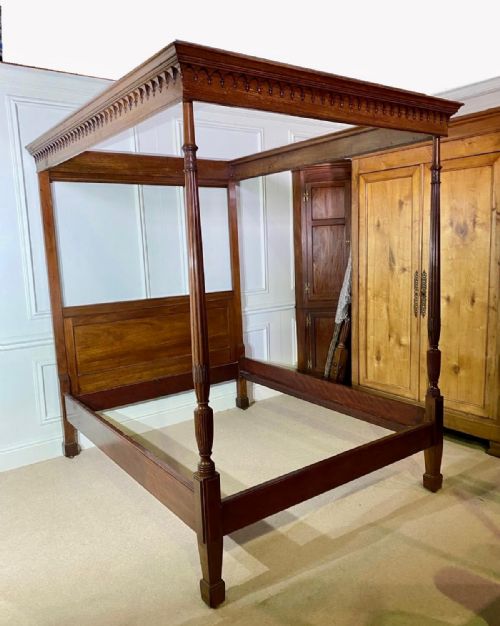

Four Poster Posts
These four poster posts form the monumental architecture of historic beds, bringing grand scale and rich timber grain to high-ceilinged rooms.
Four Poster Posts
When you search for four poster posts, you are looking at the vertical wooden columns that once supported the testers and canopies of grand beds. These architectural elements survive as standalone pairs of posts or remain attached within complete bedsteads spanning several centuries.
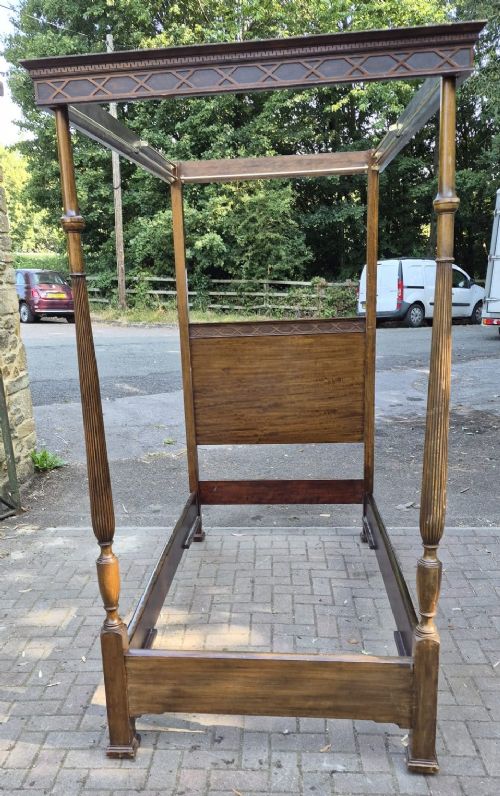
The selections here range from substantial Regency and William IV examples to Edwardian interpretations, reflecting diverse periods including the eighteenth and nineteenth centuries. You will encounter both carved hardwood components salvaged from larger frames and complete beds designed in distinct revival styles.
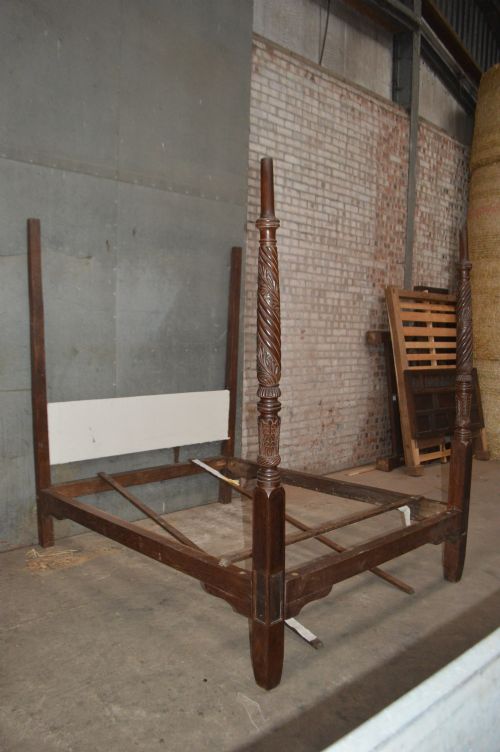
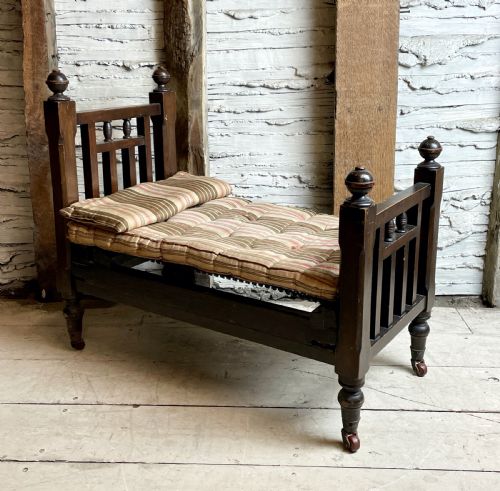
The forms vary from simple turned timbers to heavily carved Anglo-Indian colonial and Chippendale designs, alongside miniature doll furniture demonstrating the same craftsmanship. These pieces trace the evolving domestic luxury of elite bedrooms across British and international traditions.
Materials and construction
Cabinetmakers utilised dense hardwoods such as mahogany, oak, rosewood, and tiger maple to ensure the structural integrity required to support heavy tester canopies. These primary timbers were often selected for rich grain patterns and substantial weight.
Joinery combined deep lathe turning with skilled hand carving, producing spiral fluting and classical motifs directly into the solid wood. Secondary timbers like pine occasionally appear in concealed structural areas of larger bedsteads.
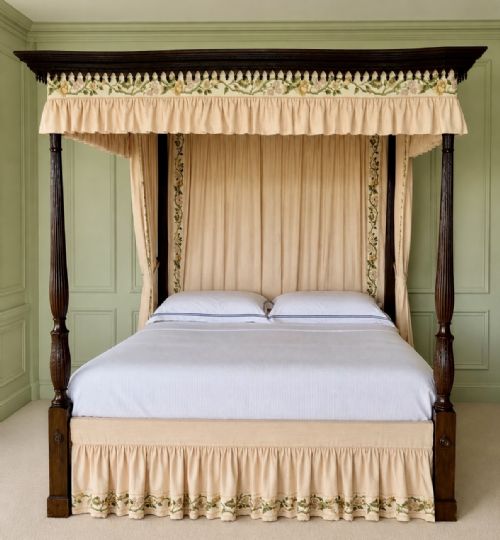
Surface treatments range from polished natural wood finishes to historic painted applications, occasionally paired with textile elements on complete bed structures.
Distinctions in quality
The hierarchy among these pieces rests upon the crispness of the hand carving and the selection of the timber. Deeply undercut acanthus leaves, sharp reeding, and well-figured mahogany separate ambitious workshop output from standard production.
Proportion and architectural harmony dictate the success of the post, with superior examples maintaining balanced thickness from base to capital. Alterations to length or diminished surface patination differentiate survivor pieces from heavily restored components.
Howard & Sons
The Four Poster Posts Glossary
- Tester
- The wooden frame or canopy suspended above a four poster bed, supported directly by the posts. It often featured decorative cornices or fabric linings.
- Regency
- A British design style spanning the early nineteenth century, characterised by classical Greco-Roman motifs and clean architectural lines. Pieces from this era often incorporate rosewood or mahogany.
- Chippendale
- A mid-eighteenth-century style associated with cabinetmaker Thomas Chippendale, known for elaborate carved ornament, ribbon backs, and classical proportions. Surviving bed posts in this manner display robust, sculptural detailing.
- Anglo-Indian Colonial
- Furniture produced in the Indian subcontinent under British rule, frequently utilising dense local hardwoods for domestic export. These items blend traditional British forms with intricate indigenous carving techniques.
Four Poster Posts: Frequently Asked Questions
How were four poster posts used?
These posts served as the structural vertical supports for canopy beds, holding up the heavy wooden tester and the surrounding curtains that kept drafts away from sleepers.
In grand houses, elaborate posts displayed the wealth and status of the household through expensive imported hardwoods and intricate hand-carved ornamentation.
Can I buy just the bed posts?
Yes, individual posts and matched pairs frequently survive independently of their original bedframes as architectural salvage.
Collectors and interior designers often repurpose these substantial turned timbers as decorative architectural elements or freestanding display pieces.
What is Anglo-Indian colonial furniture?
This category encompasses pieces made in India for British residents during the colonial period, combining European furniture forms with local carving traditions.
Beds and posts from this tradition often utilise dense regional hardwoods and exhibit exceptionally deep, floral or figurative relief work.