


Georgian Bed Posts
Georgian bed posts bring architectural presence to a room, offering tall timber supports that anchor a historic four poster bed.
Georgian Bed Posts
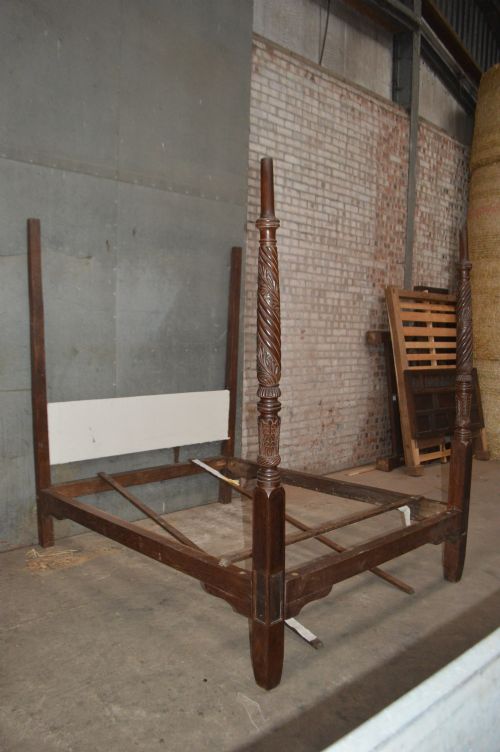
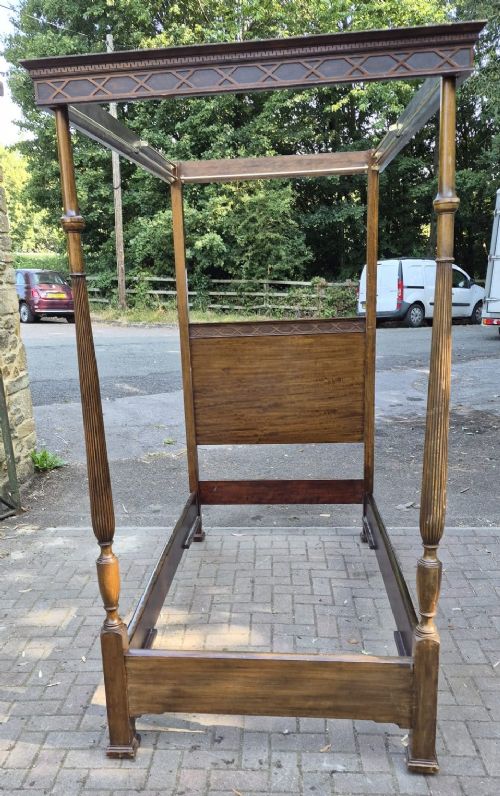
When you search for georgian bed posts, you are looking at tall architectural supports that once held up large four poster beds or have since been adapted as stands. The versions most commonly met on this page include carved mahogany columns from the Georgian and Regency periods, alongside later Georgian Revival examples.
These structural elements come in forms ranging from full four poster bedsteads to pairs of carved column stands and single bedheads. They appear across various periods from the eighteenth century through to the Edwardian era, showing the enduring appeal of traditional designs in timber.
The materials and styles span traditional mahogany, painted finishes, and rosewood, reflecting both authentic period production and later revivals in the Chippendale and William IV tastes. Each piece demonstrates the heavy timber construction typical of historic sleeping furniture.
How they were made
Makers utilised dense timbers such as mahogany and rosewood, which allowed for deep carving and structural strength. These woods were turned on large lathes to create the characteristic column shapes before being hand-carved with decorative motifs.
Surface treatments included polished wood finishes that highlighted the natural grain of the timber, as well as painted applications seen on specific Regency pieces. Structural integrity depended on heavy timber scantlings joined to support the heavy tester frames overhead.
Listings include architectural salvage and bed posts spanning the eighteenth, nineteenth, and early twentieth centuries.
What varies in quality
The depth and crispness of the timber carving separate standard examples from finer pieces, particularly where acanthus leaves or spiral fluting are rendered with sharp detail. Superior columns display careful proportioning in the turning, maintaining balance from base to capital.
The choice of raw material also dictates quality, with rich, well-figured mahogany and select rosewood commanding greater visual weight than simpler pine or secondary woods used in hidden areas. Furthermore, the retention of original surface finishes and harmonious colour depth enhances the standing of any column.
Howard & Sons
The Georgian Bed Posts Glossary
- Chippendale
- A style of eighteenth-century English furniture design known for elaborate carved details and classical motifs. It draws inspiration from the pattern books published by Thomas Chippendale.
- Regency
- A British design period spanning the early nineteenth century defined by classical restraint and archaeological influence. Furniture from this era often incorporates bold architectural lines.
- William IV
- A transitional nineteenth-century style characterised by heavy proportions and robust classical carving. Pieces from this time frequently employ dense mahogany with pronounced grain.
- Four poster
- A large bed featuring four vertical posts that support an upper canopy framework known as a tester. These structures were historically designed to hold fabric curtains for warmth and privacy.
Georgian Bed Posts: Frequently Asked Questions
What are georgian bed posts?
These pieces are the vertical wooden supports that historically held up the canopy or tester of a large four poster bed. They were turned and carved to provide both structural support and visual grandeur in formal bedrooms.
Today, they survive either as part of complete historic bedsteads or as standalone pairs adapted into architectural column stands.
How were these posts used?
In their original setting, they supported an overhead timber frame and heavy fabric curtains that enclosed the sleeper to retain heat and block drafts. They served as the main structural framework for elaborate beds found in principal chambers.
In later interiors, salvaged posts often function independently as decorative architectural elements or floor-standing display pedestals.
How do I live with them?
Placing tall wooden posts requires adequate ceiling height and a room proportioned to handle heavy vertical furniture. They work well as statement pieces in traditional bedrooms or flanking architectural doorways.
Maintenance involves regular dusting and occasional treatment with suitable wood waxes to preserve the dry timber surface without building up excessive residue.
How do I tell periods apart?
Earlier eighteenth-century examples often feature crisp hand-carving in rich mahogany, reflecting the dominant Chippendale aesthetic of the time. Regency and William IV pieces tend to show heavier proportions, spiral turning, and bolder classical motifs.
Later Edwardian revivals replicate these historic styles using similar timber techniques, though the underlying construction methods and wear patterns generally betray their twentieth-century origin.