



Four Legged Wooden Stool
A four legged wooden stool offers honest utility and character, bringing everyday historic seating into modern spaces.
Four Legged Wooden Stool
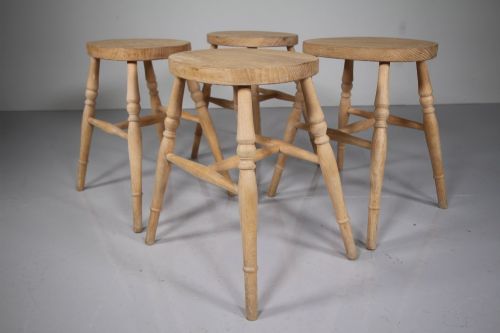
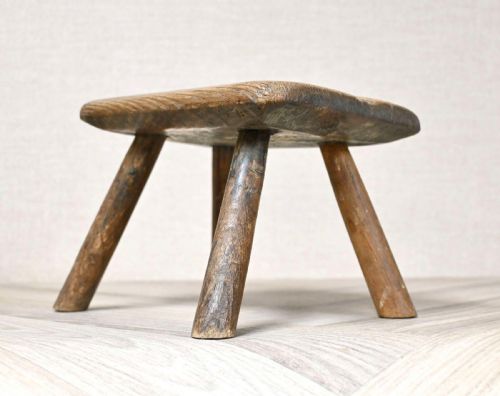
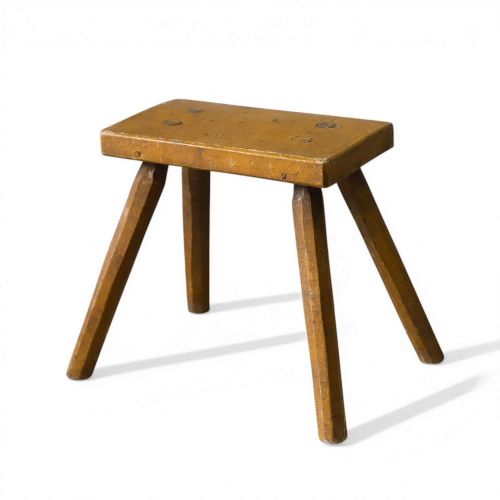
When you search for a four legged wooden stool, you encounter an array of utilitarian forms shaped by local makers for domestic and agricultural life. These pieces serve practical purposes around the hearth, kitchen, or dairy across multiple centuries.
The selections on this page span several distinct eras, notably the eighteenth and nineteenth centuries, alongside Edwardian examples and pieces from around nineteen-twenty. You find forms ranging from low country stools and hearth stools to dining sets and milking stools.
Most examples hail from vernacular and rustic traditions, reflecting regional British and Eastern European methods. Simplicity defines these objects, with sturdy timber construction prioritizing function above ornament.
How they were made
Makers relied on solid timbers such as oak, elm, pine, yew, and beech, selecting local woods suited to daily wear. Carpenters shaped seats from single blocks or planks, sometimes sculpting rounded forms for comfort.
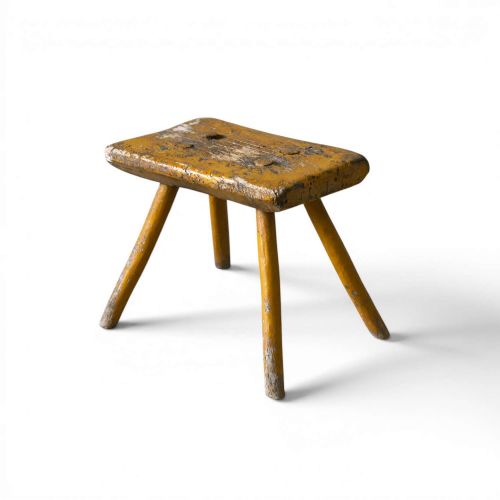
Surfaces frequently display their natural grain, while certain pieces retain original ochre or yellow paint, or traditional staining. Joinery techniques connect the four legs directly to the underside of the seat, ensuring stable support.
Four Legged Wooden Stool Retail Price Guide 2026
Typical asking prices for four legged wooden stool among the pieces listed under this phrase on Sellingantiques today, from the lower quarter to the upper quarter. They describe what is for sale here now, not the wider market.
Listings feature oak, elm, pine, and yew wood across eighteenth, nineteenth, and Edwardian periods.
What varies in quality
Quality rests in the integrity of the timber and the honesty of the construction, where proportional balance determines visual appeal. The tactile quality of a well-sculpted seat separates everyday joinery from pieces with genuine presence.
Original surface treatments, such as surviving layers of early paint or rich patination accumulated through generations of handling, elevate a piece. The relationship between the thickness of the top and the stance of the four legs governs the overall harmony.
The Four Legged Wooden Stool Glossary
- Hearth stool
- A low seating form traditionally placed near a fireplace for warmth. These items often feature generous proportions and sturdy timber frames.
- Milking stool
- A small utilitarian seat used in agricultural settings, typically supported by three or four legs. Eastern European examples often retain bright original paint finishes.
- Vernacular
- Architecture and objects created by local artisans using traditional methods and regional materials. This style prioritises practical utility over academic design.
- Patina
- The surface sheen and colour developed by wood through age, handling, and wear. Collectors value this visual record of history.
- Solid timber
- Wood used in its natural state rather than as a veneer or composite board. This material ensures durability across centuries of domestic use.
Four Legged Wooden Stool: Frequently Asked Questions
What is a four legged wooden stool?
A four legged wooden stool is a simple, portable seat built from solid timber for domestic or agricultural tasks.
These pieces reflect vernacular traditions across the eighteenth, nineteenth, and early twentieth centuries.
Where were these stools used?
Historical stools served various roles around the home, farm, and dairy, from the kitchen to the hearth.
Milking variants stood in barns, while dining stools gathered around tables in country houses and cottages.
How do I care for antique wood?
Keep wooden stools away from direct heat sources and dramatic humidity fluctuations to protect the timber.
Apply a microcrystalline wax occasionally to maintain the surface without building up excessive residue.
How do I date a wooden stool?
Dating relies on assessing tool marks, construction methods, timber species, and overall style evolution.
Comparing the wear patterns and fasteners helps place an object within periods like the Georgian era or the nineteenth century.