



Four Kitchen Chairs
Four kitchen chairs bring practical charm and sturdy seating to a domestic interior, spanning traditional Windsor styles and country farmhouse forms.
Four Kitchen Chairs
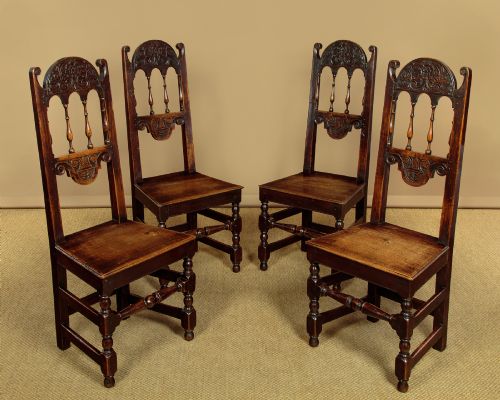
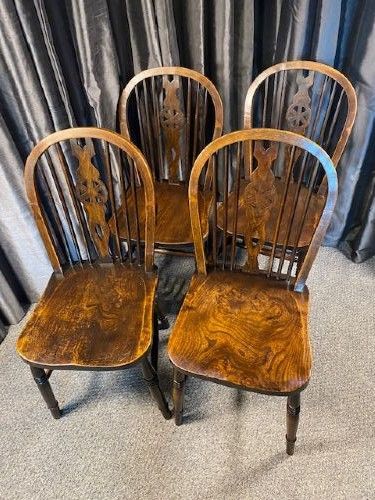
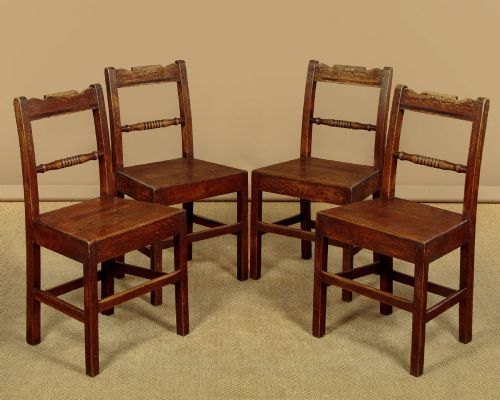
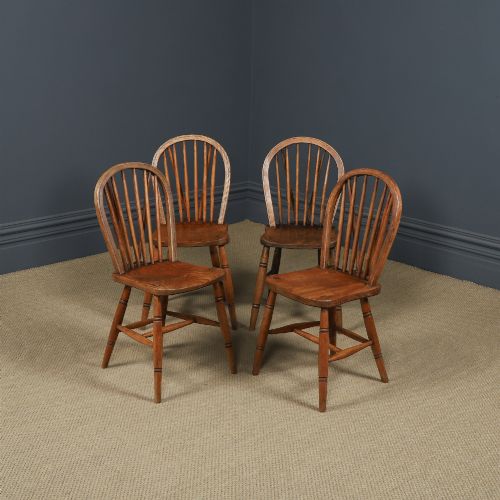
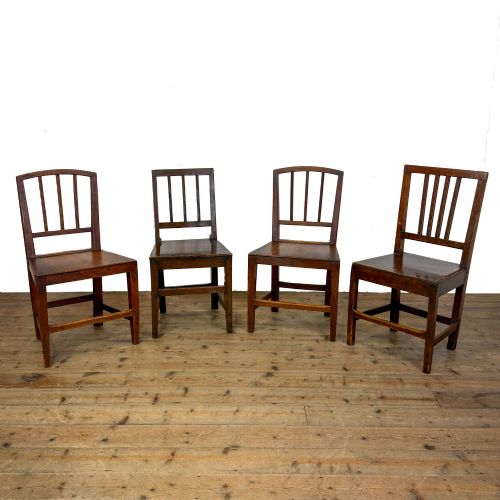
Four kitchen chairs provide a matching or harmonised set of seating designed for daily domestic use around a table. When searching for four kitchen chairs, you encounter various regional styles and utilitarian forms originating from the nineteenth and early twentieth centuries.
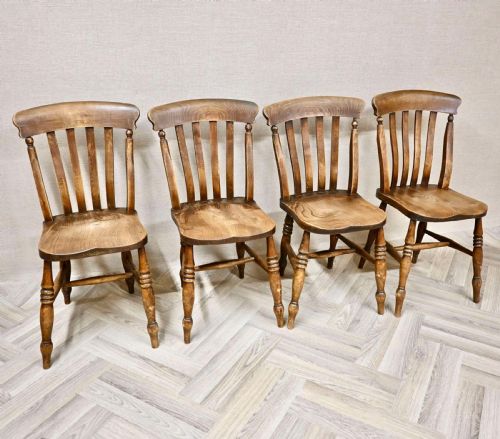
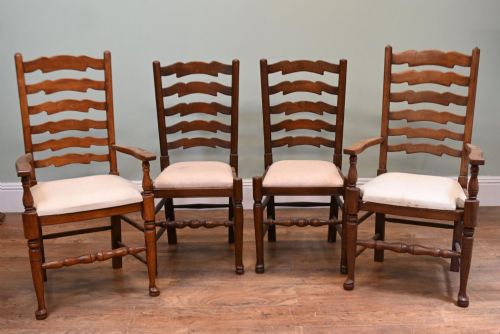
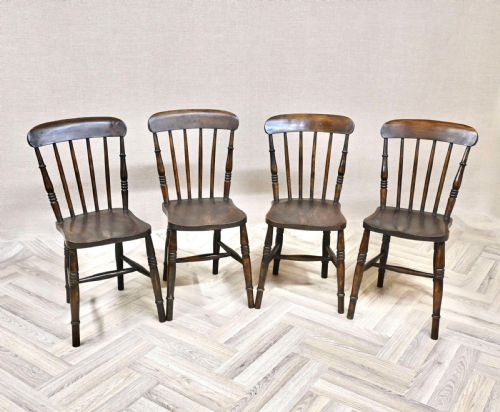
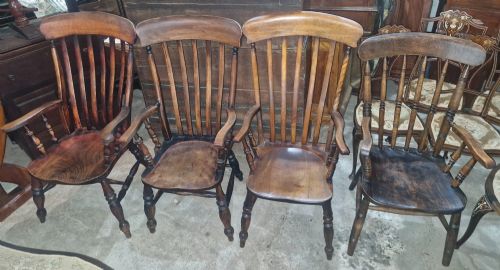
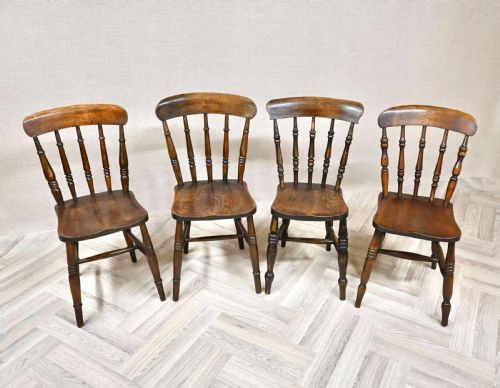
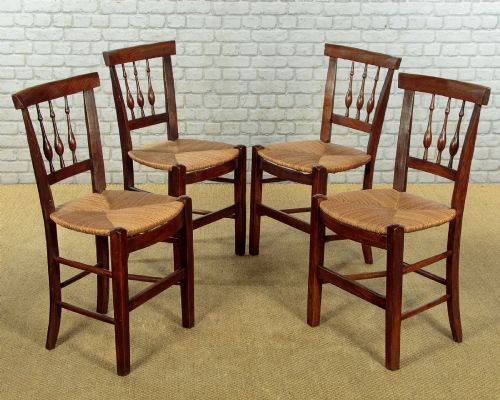
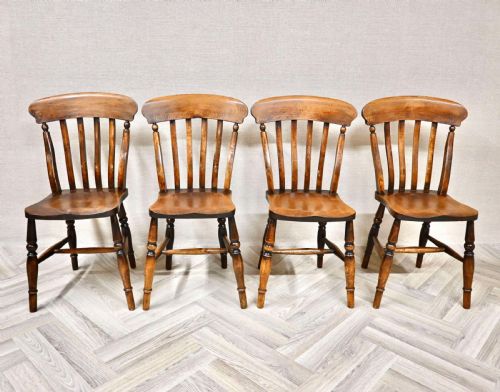
The selections span distinct domestic traditions, including Windsor lathback and hoop back designs, ladderbacks, and robust farmhouse chairs. These sets primarily utilise timber seats, ranging from shaped solid wood to rush inserts.
The origins reflect diverse British and continental workshop practices, encompassing Victorian, Edwardian, and earlier nineteenth-century periods. Sets frequently combine elm, ash, oak, and beech components tailored for long-term endurance.
Materials and construction methods
Traditional makers combined contrasting timbers to maximise strength and flexibility within a single frame, pairing resilient elm seats with robust ash or beech spindles and legs. This multi-wood construction allowed the seat to absorb daily movement while upright supports maintained rigid structural integrity.
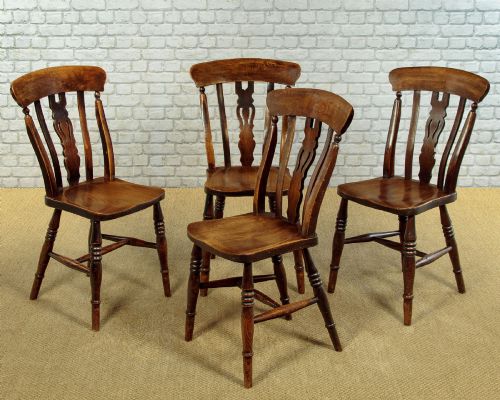
Joinery relied heavily on traditional turned components, wedged tenons, and steam-bent hoops that formed continuous backrests. Many country chairs incorporated double stretchers between the legs to reinforce the underframe against regular tilting and heavy use.
Four Kitchen Chairs Retail Price Guide 2026
Typical asking prices for four kitchen chairs among the pieces listed under this phrase on Sellingantiques today, from the lower quarter to the upper quarter. They describe what is for sale here now, not the wider market.
Available pieces span the Victorian and Edwardian eras, encompassing regional British styles from Shropshire to Lancashire.
Distinctions in quality
Quality rests upon the integrity of the timber selection and the retention of original matching elements across all four chairs within the set. Harlequin sets demonstrate assembled groups collected over time, whereas unified sets maintain identical turning details, seat thicknesses, and timber grain characteristics.
The refinement of the seat sculpting, often termed a saddle or penny seat, indicates the maker's skill and the comfort prioritised during production. Deeper carvings and well-balanced spindle arrangements separate standard utility seating from finer vernacular examples.
The Four Kitchen Chairs Glossary
- Windsor
- A traditional chair construction featuring a solid wooden seat into which the legs, back stiles, and spindles are separately socketed.
- Lathback
- A chair back featuring flat horizontal wooden slats or laths arranged between the top rail and the seat.
- Stretcher
- A horizontal wooden rod connecting the legs of a chair to provide structural reinforcement and stability.
- Rush seat
- A woven seating surface created from dried marsh rushes, commonly found on traditional ladderback and country dining chairs.
- Penny seat
- A distinctive circular depression carved into the centre of a wooden chair seat to improve seating comfort.
Four Kitchen Chairs: Frequently Asked Questions
What defines a Windsor chair?
A Windsor chair is built around a thick solid wooden seat that serves as the anchor for all other components. The legs and back spindles fit directly into drilled holes within this central platform.
This method creates an exceptionally rigid frame without requiring traditional box aprons. Variations include hoop backs, low backs, and lathbacks.
Are these chairs suitable for daily dining?
These historical chairs were originally constructed for heavy domestic use in farmhouses and cottages. Their solid timber construction makes them resilient for modern dining environments.
Maintenance involves checking leg joints and stretchers periodically. Using felt pads on the feet protects hard flooring from unnecessary wear.
How do I identify a matched set?
A matched set shares identical turning patterns on the legs, consistent timber patination, and uniform dimensions across all four pieces. Minor variations in shade or turning often indicate harlequin sets gathered together later.
Examining the underside of the seats reveals tool marks and construction methods that help confirm whether the chairs originated from the same workshop.
What timbers were commonly used?
Country chair makers selected native hardwoods based on their specific mechanical properties. Elm provided a split-resistant, highly figured seat, while ash and beech offered flexible strength for steam-bent components.
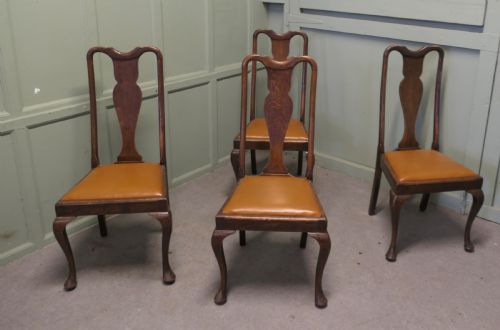
Oak also appeared frequently in formal dining variations and regional vernacular styles throughout the nineteenth century.