

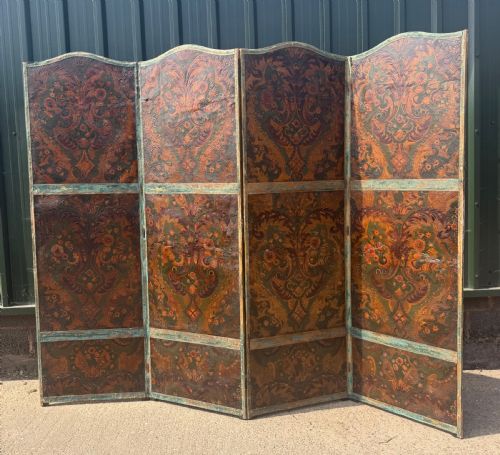

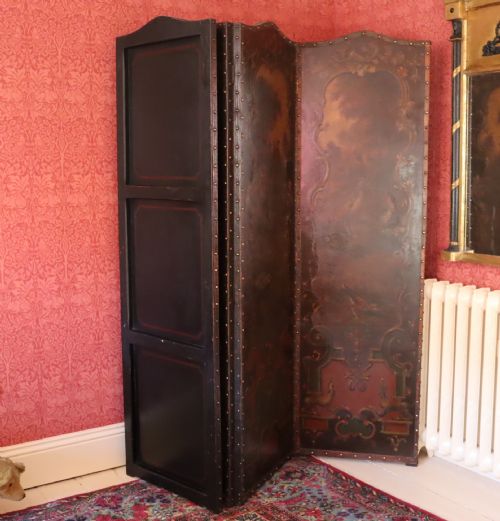


Four Fold Divider
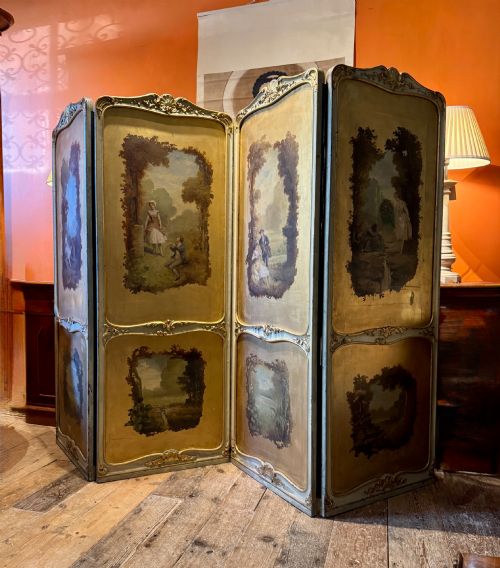
A four fold divider partitions a large room with architectural grace, offering both privacy and a distinct decorative anchor for the space.
Four Fold Divider
A four fold divider is a hinged screen designed to segment living spaces, create private areas, or conceal sections of a room. These pieces range from modest dressing screens to grand architectural partitions.
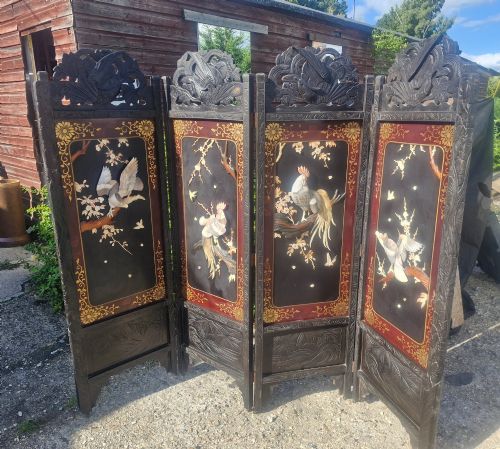
The versions most commonly met on this page span the eighteenth, nineteenth, and early twentieth centuries, drawing on varied international traditions including Japanese Meiji craftsmanship, French chateau aesthetics, and English country house styles.
Materials and Construction
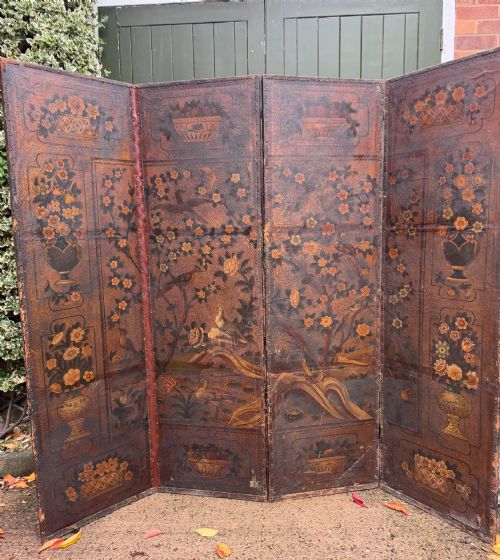
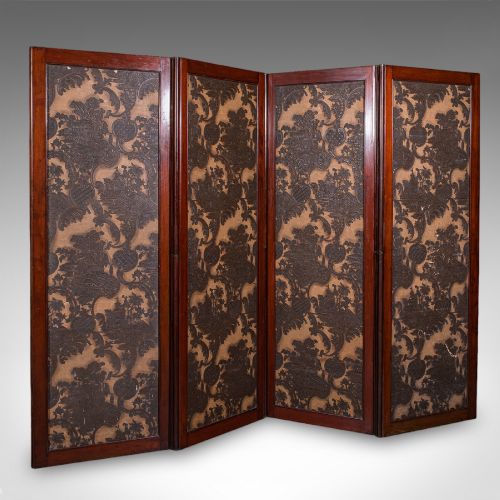
Makers utilised solid timbers such as mahogany, oak, and other hardwoods for the structural frames, often integrating brass hinges and intricate fretwork. Panels frequently consist of canvas, leather, paper mâché, or fabric stretched across the framework.
Surface decoration defines much of the construction, employing hand painting, gilt embossing, lacquer, needlepoint, and carved bone or hardstone mounts to achieve rich visual depth.
Four Fold Divider Retail Price Guide 2026
Typical asking prices for four fold divider among the pieces listed under this phrase on Sellingantiques today, from the lower quarter to the upper quarter. They describe what is for sale here now, not the wider market.
Several Victorian screens are covered entirely in historic scrap work paper cutouts, proving that DIY collage projects have delighted households for centuries.
Assessing Quality and Execution
Quality rests primarily on the depth and execution of the surface ornamentation, whether through finely applied hand painting, intricate tooled leather, or precise woodcarving. Superior examples display crisp detail in every panel and robust framing that supports the hinges without sagging.
The choice of materials also dictates standing, with genuine period lacquer, embossed Cordoban leather, and hand-stitched needlepoint elevating a piece above simpler painted canvas or standard wood panels.
Paul Sormani·William Morris
The Four Fold Divider Glossary
- Chinoiserie
- European artistic interpretations of Chinese and East Asian decorative styles, commonly seen on lacquered and painted screens. This aesthetic gained immense popularity across multiple centuries.
- Mashrabiya
- An architectural element featuring intricate wooden lattice work, utilised in panels to filter light and air while maintaining privacy. It appears in distinct regional folding screens.
- Cordoban leather
- Heavy leather that has been hand painted, gilt embossed, and stamped with rich patterns. Originating in Spain, it represents a luxurious traditional screen material.
- Scrap work
- A Victorian decorative technique involving the application of numerous printed paper scraps onto a surface, often finished with a protective varnish. Screens decorated this way capture a distinct domestic hobbyist history.
Four Fold Divider: Frequently Asked Questions
What is a four fold divider used for?
These screens partition large rooms, create private dressing areas, or act as decorative backdrops within an interior space. They offer a flexible alternative to permanent walls.
Historically, they also served to block drafts from doors and windows in large drafty houses, combining practical comfort with visual interest.
How do I care for a leather screen?
Leather panels require a stable indoor environment away from direct sunlight and excessive moisture to prevent cracking or warping of the hide. Dust them gently with a dry, soft cloth.
Avoid applying modern chemical cleaners or saddle soaps unless specifically advised by a conservator, as historic finishes and gilt embossing can be delicate.
Are these dividers stable when opened?
A properly constructed four fold divider stands securely when the panels are arranged in a slight zig-zag or accordion fold rather than pulled completely flat. This geometry distributes the weight evenly across the hinges.
Heavier frames made from solid mahogany or hardstone-mounted lacquer require careful positioning on level flooring to maintain their balance.
How do I date an antique screen?
Dating relies on examining the construction of the wooden frames, the type of hinges utilised, and the style of decoration or painting techniques. Nineteenth and early twentieth-century pieces often display machine-made elements alongside hand craftsmanship.
Reference materials, period specific motifs like Arts and Crafts or Regency styling, and the specific composition of the canvas or leather backing help narrow the decade of origin.