


Four Door Buffet
A four door buffet provides substantial storage and surface space, bringing practical utility and period character to a dining room or hall.
Four Door Buffet
A four door buffet serves as a prominent storage piece in dining rooms and halls, offering generous internal capacity behind four cabinet doors. When searching for a four door buffet, buyers encounter substantial timber constructions designed for domestic service.
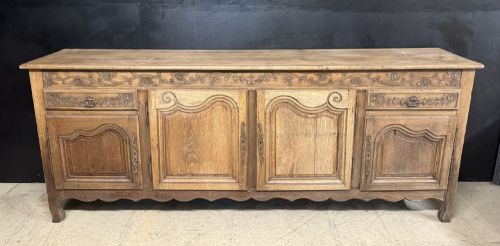
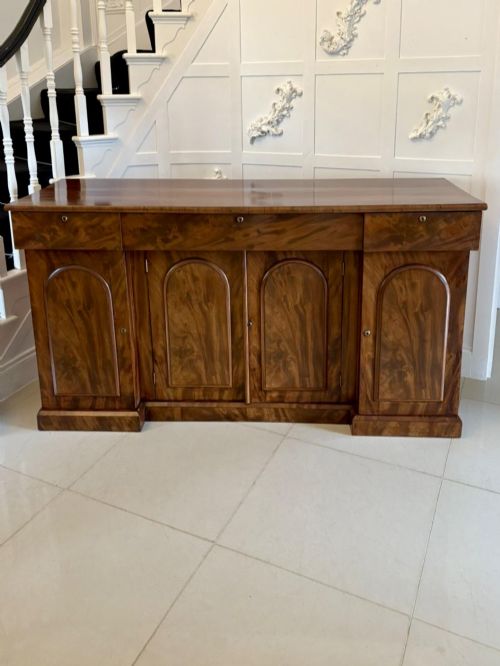
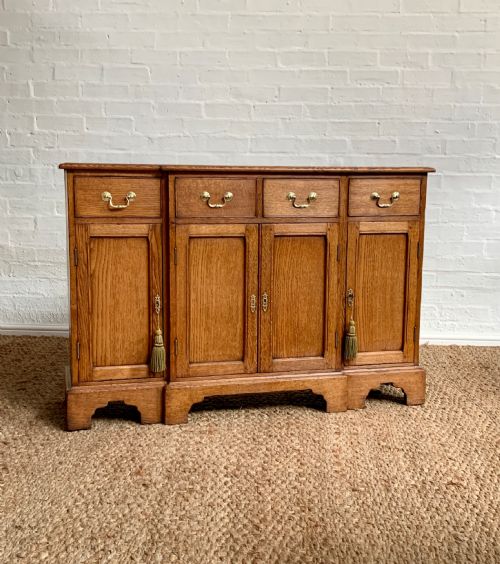
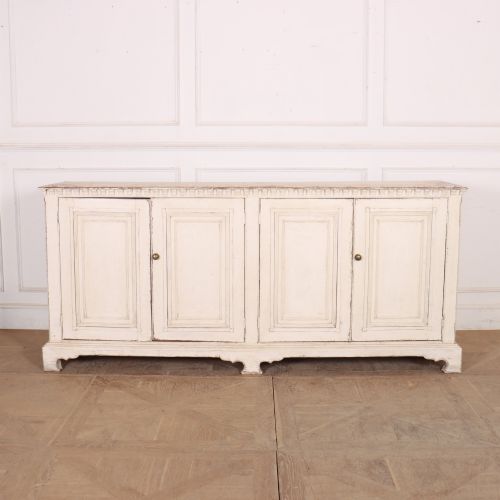
The pieces listed span multiple centuries and regional traditions, featuring English breakfront designs, French enfilades, and Italian walnut or painted cabinets. Victorian and nineteenth century examples predominate on this page, often appearing in mahogany, walnut, or pine.
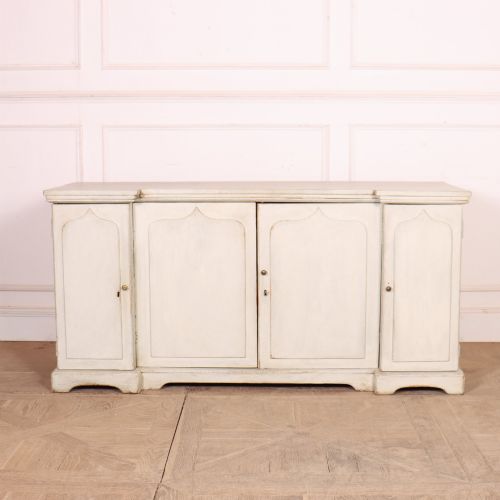
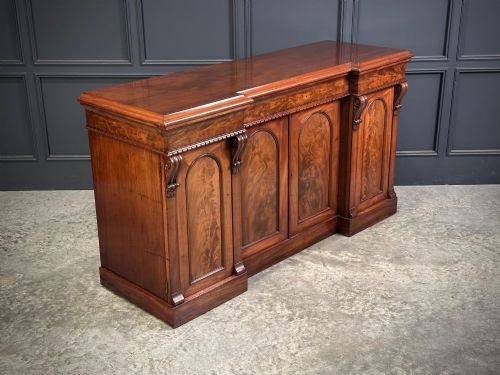
Forms range from formal breakfront sideboards with flame veneers to rustic pine farmhouse bases and painted country pieces. Each variant meets different interior requirements while maintaining the characteristic four door configuration.
Materials and construction
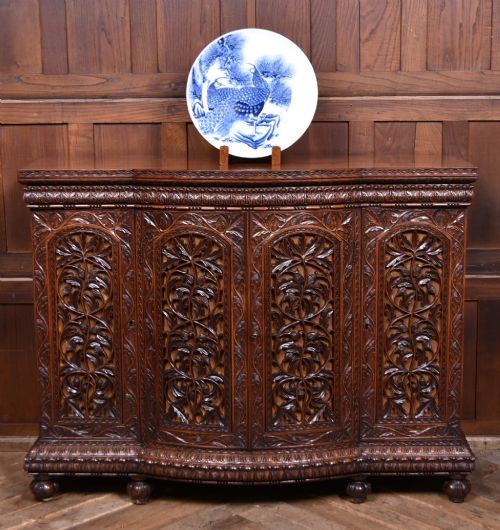
Cabinetmakers utilised dense hardwoods such as mahogany, rosewood, oak, and walnut, frequently applying figured veneers to large flat surfaces like doors and friezes. Secondary timbers such as pine appear in carcases and internal framing.
Surface ornament includes marquetry inlay, brass mounts, and painted finishes, while structural joinery relies on traditional methods suited to heavy domestic furniture. Timber selection dictates both the visual weight and the durability of each cabinet.
Listings feature eighteenth-century through early twentieth-century examples, spanning periods from the seventeenth-century style to Art Nouveau and the Edwardian era.
What determines quality
Quality rests upon the selection of timber veneers, the precision of cabinet joinery, and the integrity of the overall proportions. Finer examples display carefully matched grain patterns across all four doors and well executed decorative details such as marquetry or brass hardware.
Construction methods distinguish standard utility pieces from exhibition grade furniture, visible in drawer linings, backboards, and internal fittings. Original finishes and minimal structural alteration preserve the integrity and character of the piece.
The Four Door Buffet Glossary
- Breakfront
- A piece of furniture where the central section projects forward from the flanking outer sections. This architectural arrangement creates depth and visual interest on large sideboards.
- Enfilade
- A long sideboard or cabinet with multiple doors, originating in French interior design. These pieces often feature timber construction and painted or polished finishes.
- Credenza
- A low cabinet or sideboard, frequently associated with Victorian or continental European design. They often incorporate fine veneers and glass or panelled doors.
- Dresser base
- A lower kitchen or dining cabinet fitted with cupboards and drawers beneath a flat top surface. They typically display sturdier timber construction for daily utility.
- Marquetry
- Decorative patterns formed by fitting together thin veneers of different coloured woods. Craftsmen apply this technique to create intricate geometric or floral designs on cabinet doors.
Four Door Buffet: Frequently Asked Questions
Where should I place a four door buffet?
A four door buffet requires adequate wall space and clearance for the doors to open fully. Dining rooms and wide hallways suit their substantial proportions best.
Ensure the room has sufficient depth so the piece does not crowd traffic paths. Positioning it away from direct heat sources protects the timber and veneer.
How do I clean a mahogany buffet?
Dust the timber regularly with a soft, dry cloth to prevent grit accumulation. Avoid silicone based polishes that can build up and damage the finish over time.
Apply a traditional beeswax sparingly when the wood appears dry, buffing it gently to maintain a natural sheen. Keep moisture away from the surface to prevent staining.
What is the difference between a sideboard and a buffet?
The terms often overlap, but buffets historically served dining rooms specifically for food service and storage. Sideboards share a similar long, low form with cupboards and drawers.
Regional preferences often dictate the terminology used by makers and dealers. Both types provide extensive interior storage behind multiple doors.
How do I identify a Victorian mahogany buffet?
Victorian pieces often feature dense mahogany timbers, sometimes with flame or burr figuring on the doors. They display heavier proportions and robust architectural mouldings.
Examine the secondary woods inside drawers and cabinet backs for signs of period construction methods. Hardware and locks also provide clues to the manufacturing era.
Can I use a buffet in a living room?
A buffet functions well in living spaces for storing books, linens, or media equipment behind closed doors. The top surface provides a display area for lamps or decorative objects.
Consider the height and depth of the cabinet to ensure it fits the scale of the seating area. Painted or lighter wood finishes often blend easily into modern living rooms.