
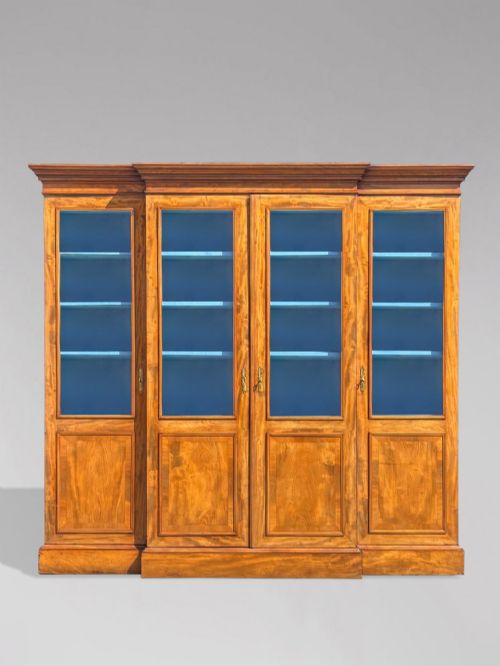
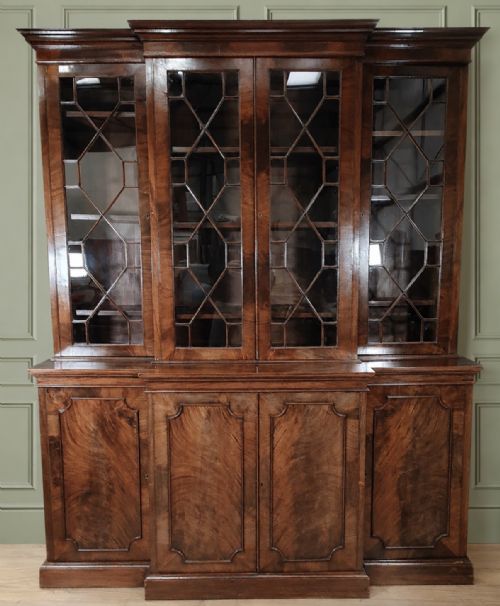

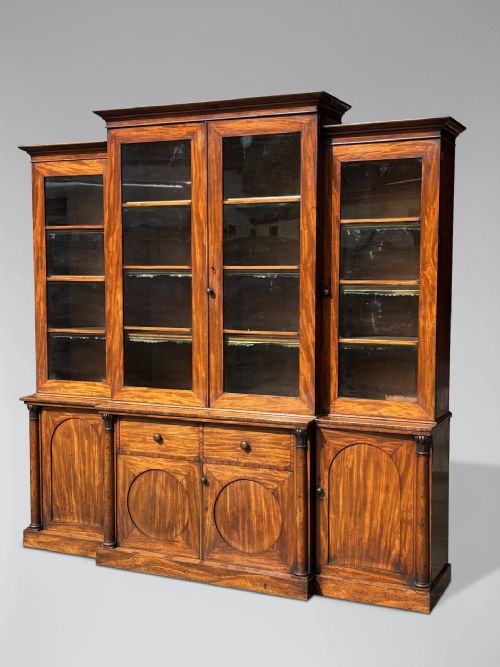


Four Door Breakfront Cabinet
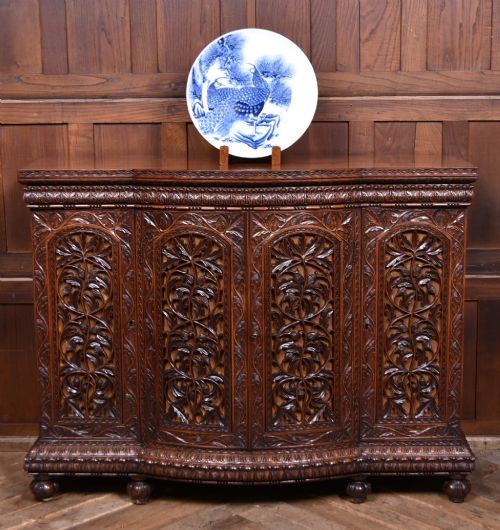
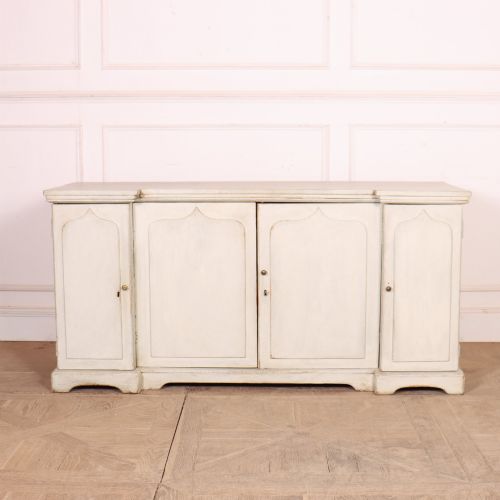
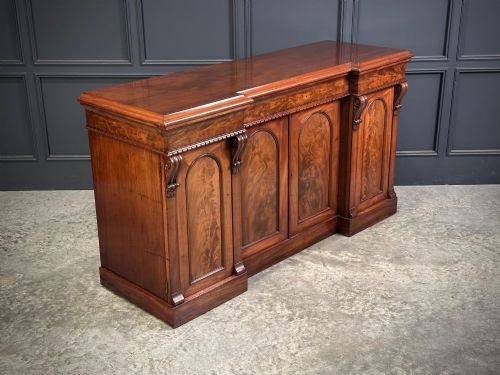
A four door breakfront cabinet commands a room with its projecting central section, offering substantial display and storage space.
Four Door Breakfront Cabinet
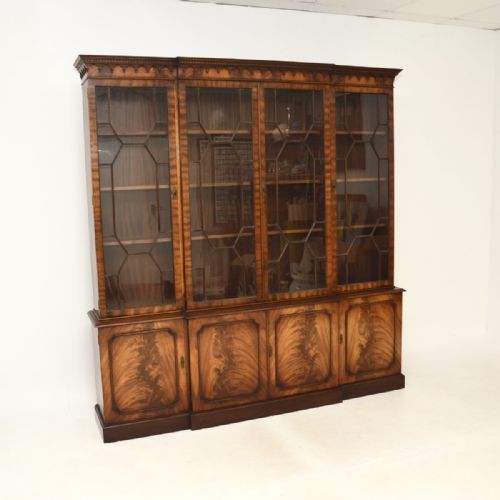
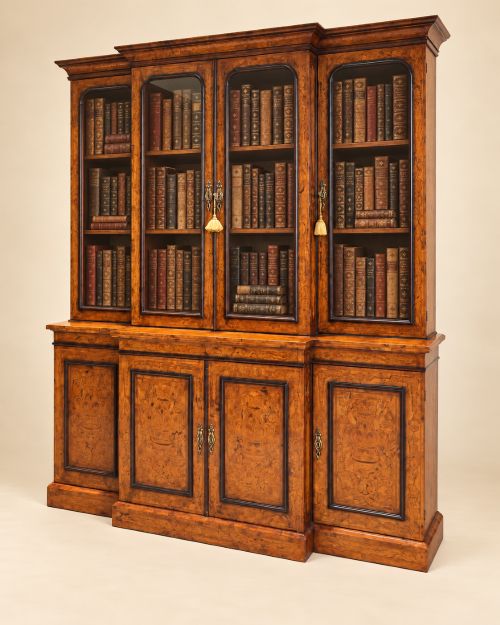
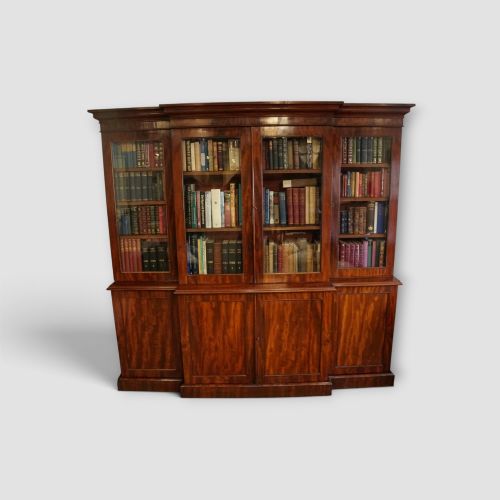
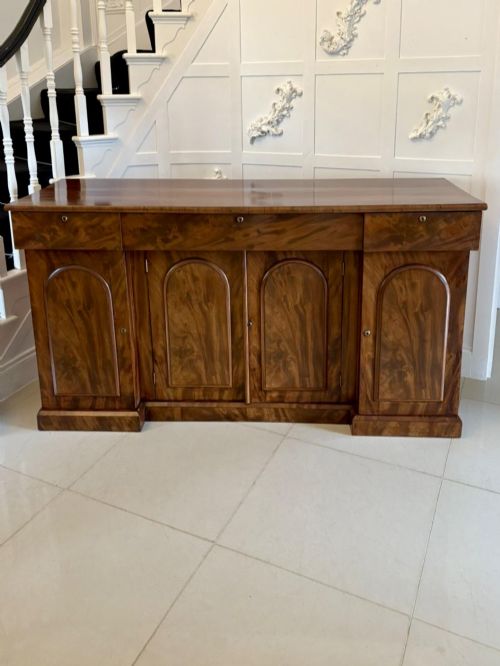
A four door breakfront cabinet provides a commanding presence in a room, featuring a central section that projects forward from the flanking outer wings. These large pieces primarily function as library bookcases or substantial sideboards, designed to anchor formal living spaces and studies.
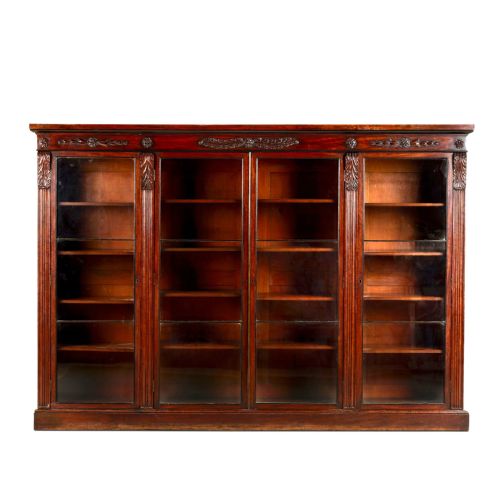
Most examples encountered on this page date from the nineteenth century, spanning Regency, William IV, and Victorian periods, alongside Georgian and Chippendale style revivals. Cabinet makers constructed them in mahogany, flame mahogany, walnut, and rosewood, frequently incorporating glazed upper doors for book storage or panelled wooden doors for concealed shelving.
How they were made
Cabinet makers relied upon solid timbers such as mahogany, oak, and walnut, often applying figured mahogany, flame mahogany, or burr walnut veneers to the principal exterior surfaces. These choice veneers highlight the natural grain patterns across the wide expanses of the four doors and the projecting central section.
Construction details frequently include brass fittings, ormolu mounts, and glass panels set into wooden frames for glazed bookcase doors. Interior shelving adjusts within large carcasses, while advanced examples incorporate specialised elements such as Tunbridgeware inlay, elaborate carvings, or brass wire grilles.
Listings feature eighteenth-century George III pieces through to late-nineteenth-century Revival styles.
What varies in quality
The selection of timber grain largely dictates the visual impact, ranging from plain mahogany boards to heavily figured flame mahogany and burr walnut veneers carefully matched across the four doors. Superior execution shows in the precision of the cabinet work, particularly where the central section projects forward and joins the flanking bays.
Detailing separates standard items from exhibition pieces, with master cabinet makers incorporating fine inlay, carved mouldings, ormolu mounts, and specialised brass grilles rather than plain wooden panels. The internal configuration, original glass, and soundness of the large timber carcasses further distinguish the superior pieces.
Lamb And Co
The Four Door Breakfront Cabinet Glossary
- Breakfront
- An architectural cabinet design where the central section projects forward beyond the flanking side sections. This arrangement creates depth and breaks up the long horizontal line of large bookcases and sideboards.
- Flame mahogany
- A distinct veneer cut from the branch junctions of the mahogany tree, producing a swirling, flame-like pattern. Cabinet makers prized this wood for high-status nineteenth-century furniture facades.
- Ormolu
- Gilt bronze ornamentation applied to furniture, popular in Regency and French cabinet work. It provides metallic contrast against dark woods like mahogany and walnut.
- Tunbridgeware
- A form of decorative woodworking utilising tiny mosaic wood tiles to create pictorial or geometric designs. It appears as subtle inlaid banding on specific nineteenth-century pieces.
Four Door Breakfront Cabinet: Frequently Asked Questions
What is a four door breakfront cabinet?
A four door breakfront cabinet is a large storage unit featuring a central section that advances outward from the two outer sections. These substantial pieces typically serve as library bookcases or grand sideboards.
Cabinet makers produced them extensively during the eighteenth and nineteenth centuries using dense timbers like mahogany and walnut. Their grand scale makes them suitable for formal dining rooms and large libraries.
How do I identify a Regency breakfront cabinet?
Regency pieces often display rich flame mahogany or rosewood veneers combined with clean classical proportions and restrained ornament. Look for brass inlay, brass gallery rails, or delicate wooden glazing bars in the doors.
These cabinets reflect early nineteenth-century neoclassical tastes, avoiding the heavier carving associated with later Victorian furniture. Their timber selection usually emphasises dramatic grain patterns.
Where were these cabinets placed in a home?
These large cabinets traditionally stood against the longest walls of formal libraries, drawing rooms, and dining halls. Their primary function was housing extensive book collections or displaying fine china and silver.
Because of their monumental width and height, they require ample wall space and high ceilings. They were built as permanent architectural furniture rather than easily moved items.
What is the difference between a bookcase and a sideboard version?
Bookcase versions feature glazed glass doors in the upper sections to display library collections while protecting volumes from dust. Sideboard versions use solid wooden panelled doors to conceal interior shelving for dining silver and linen.
Both share the signature projecting central breakfront shape but serve different functional rooms within period houses. Library bookcases often include adjustable wooden shelving to accommodate varying book heights.