
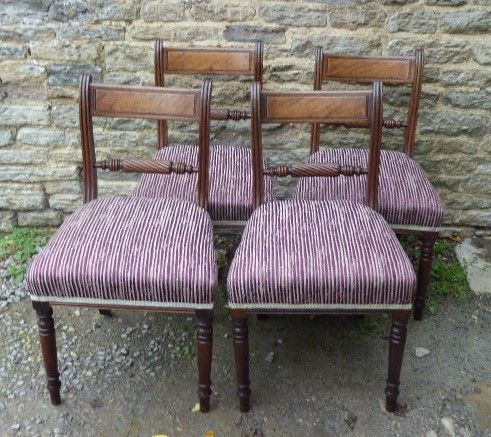
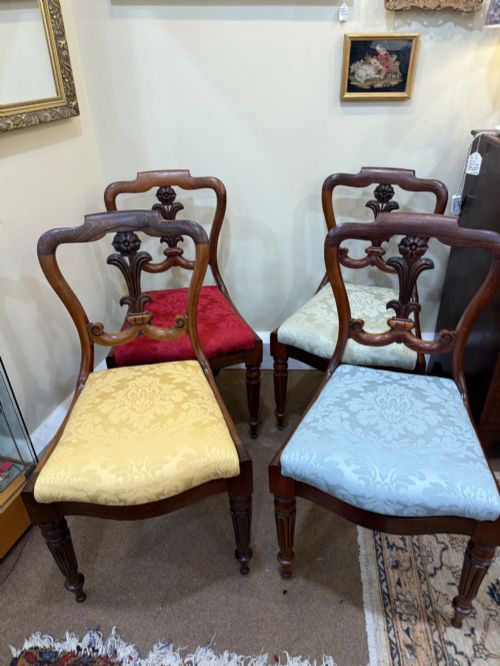
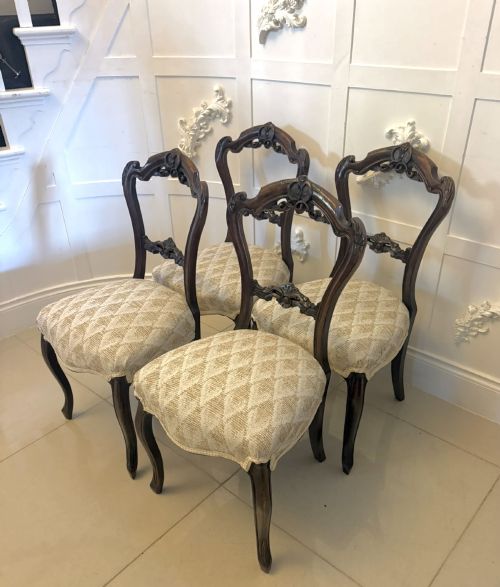
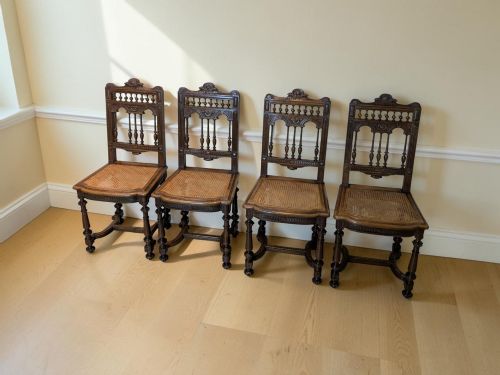
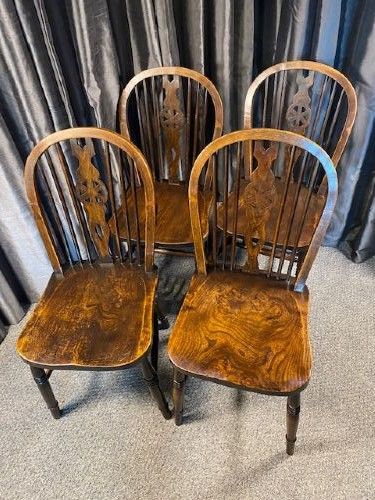
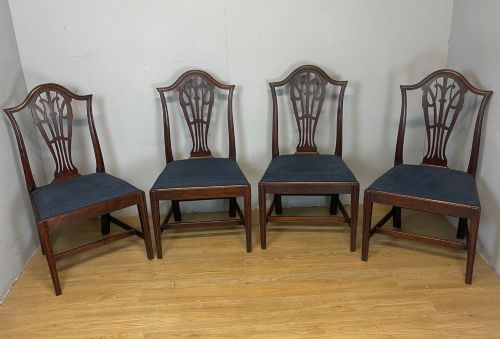
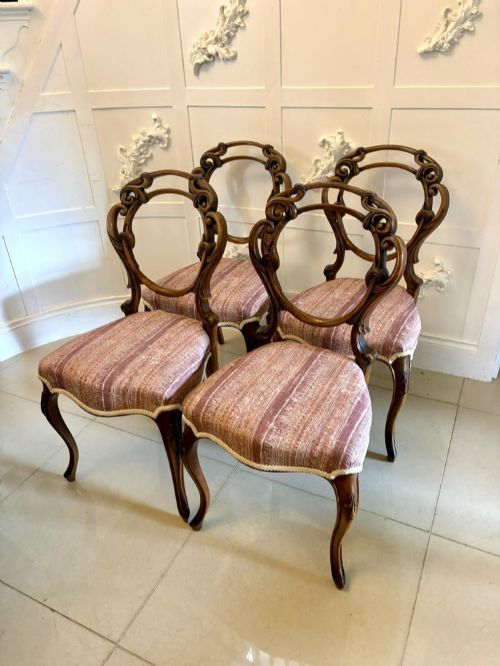
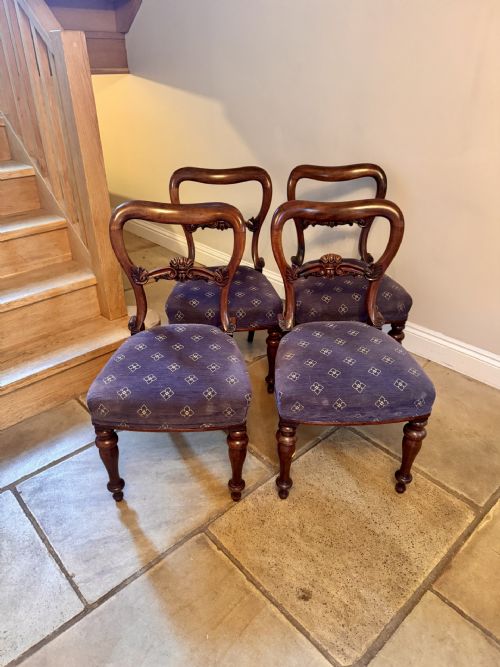
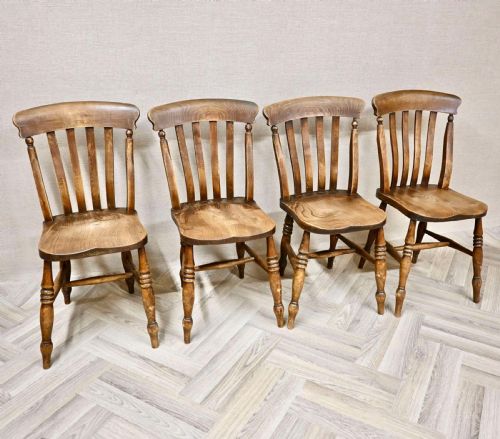
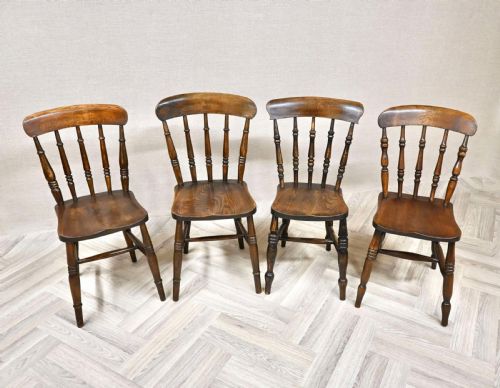
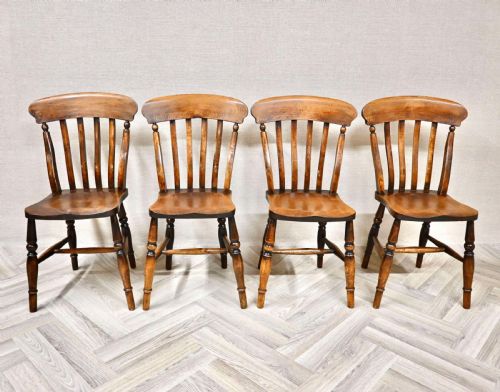
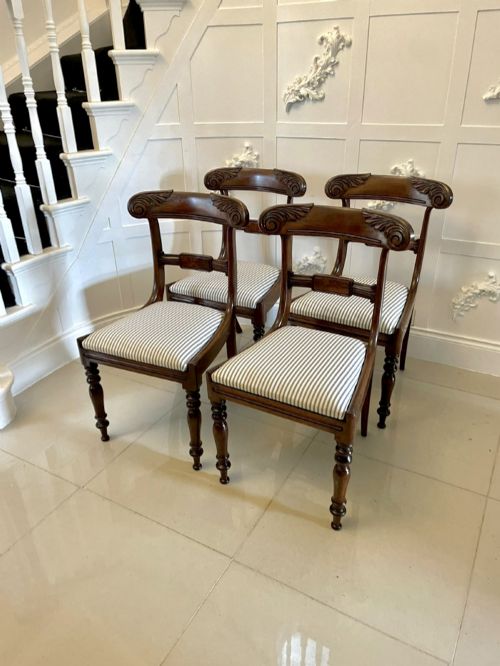
Four Dining Chairs
Four dining chairs bring matched seating together for the table, offering historical variety from robust country Windsors to formal Regency mahogany sets.
Four Dining Chairs
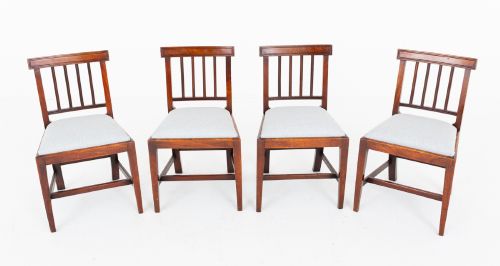
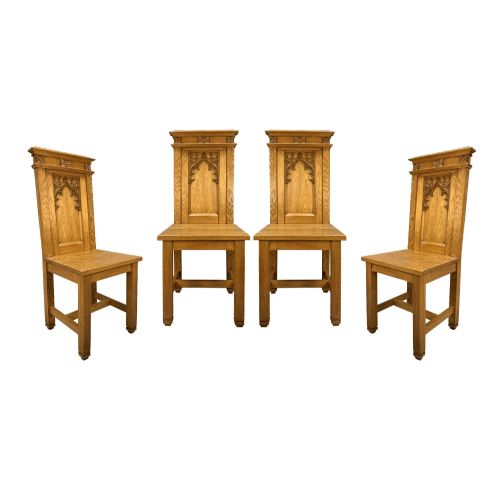
When searching for four dining chairs, buyers encounter matched sets originating from the Georgian, Regency and Victorian periods, alongside later Arts and Crafts and mid-century designs. These sets provide uniform seating for a dining table, combining practical utility with period style.
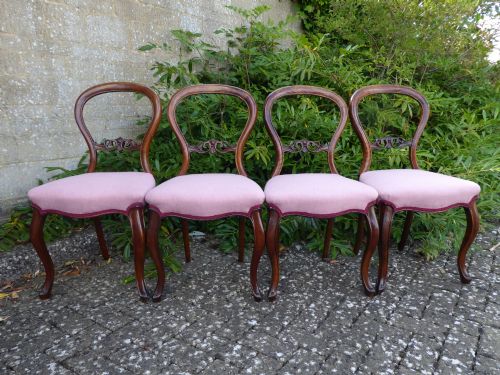
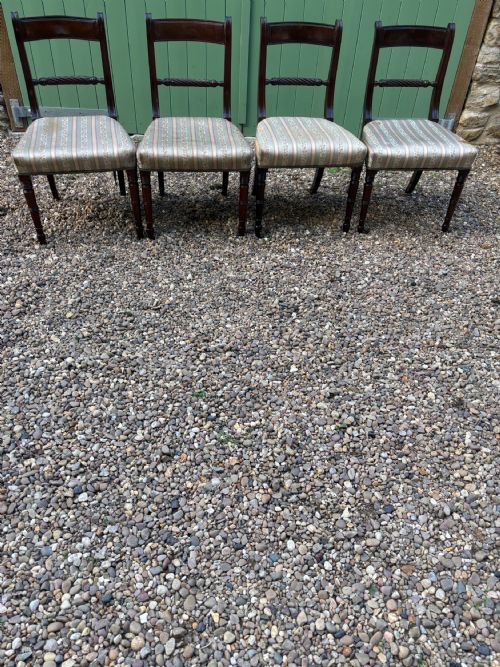
The most common groupings on this page include nineteenth-century mahogany balloon back chairs and robust farmhouse Windsor kitchen chairs made from elm and ash. Formal dining rooms are typically represented by Regency brass-inlaid models or Georgian styles, while country interiors are served by ladderback and rush-seat variants.
Sets also extend to garden dining arrangements featuring cast iron, alongside walnut salon chairs and bentwood bistro seating from around nineteen hundred. This variety reflects the changing domestic priorities of British households across two centuries of furniture production.
What varies in quality
The distinction between ordinary utility seating and high-end cabinet work rests on the selection of timber and the crispness of carved details. Superior sets exhibit dense, figured mahogany or carefully matched walnut grains, whereas utilitarian kitchen chairs show simpler turned members in mixed woods.
Construction integrity dictates longevity, with top-tier examples retaining tight joinery and original blocking beneath the seats. The survival of matching finishes across all four pieces, rather than assembled replacements, determines the cohesion of the set.
Listings feature eighteenth-century Irish dining chairs alongside nineteenth-century Victorian balloon backs and twentieth-century bentwood seating.
Strahan·Codina·Neville Neal Clissett·Heals·Christopher Dresser
The Four Dining Chairs Glossary
- Balloon back
- A rounded, curved dining chair back shaped like a balloon, popular during the Victorian era. This design provided ergonomic support through its flowing timber frame.
- Windsor
- A chair built with a solid wooden seat into which the legs and back spindles are separately inserted. These vernacular country chairs often combine elm seats with ash or yew spindles.
- Bar back
- A dining chair featuring a horizontal carved wooden slat across the upper back, frequently seen on Regency and William IV models. This horizontal rail often matches the curve of the sitter's back.
- Sabre leg
- A concave, outwardly curved chair leg tapering towards the foot, characteristic of the Regency style. The shape echoes classical Greek furniture forms.
- Bentwood
- Wood softened by steam and bent into curved structural shapes, commonly utilised in nineteenth-century bistro chairs. This technique allowed lightweight yet resilient frames without traditional joinery.
Four Dining Chairs: Frequently Asked Questions
How do I spot a matched set?
Examine the timber grain, turning marks on the legs, and overall dimensions to ensure all four pieces share identical workshop origins.
Discrepancies in minor joinery details or wood species often indicate assembled groups rather than original sets.
Are Windsor chairs comfortable for daily dining?
Solid elm and ash Windsor chairs feature sculpted saddle seats designed for extended sitting periods without upholstery.
Their sturdy stick-back construction provides robust lumbar support suitable for busy kitchens and dining rooms.
How should I care for antique mahogany?
Maintain antique mahogany surfaces by applying natural beeswax sparingly and buffing with a soft cloth to preserve the patina.
Keep wooden chairs away from direct heat sources and dramatic humidity fluctuations to prevent timber splitting.