

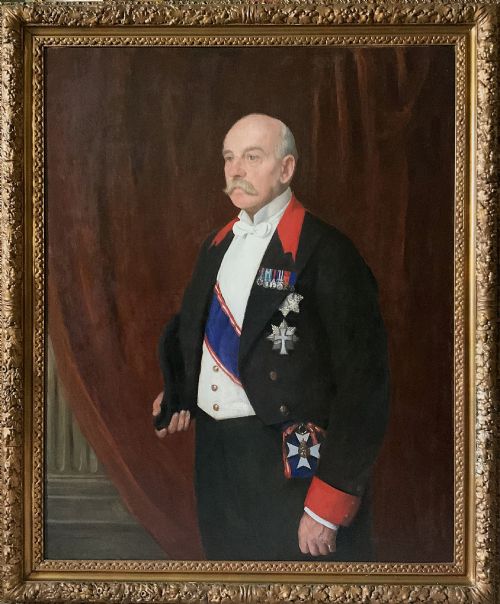
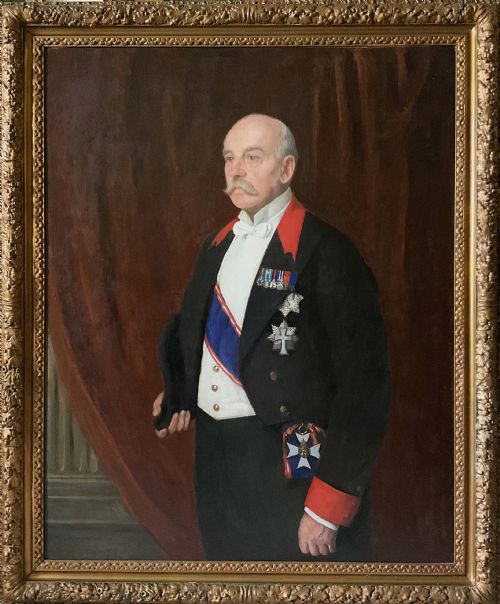


Formal Portrait Painting Canvas
A formal portrait painting canvas captures distinguished figures in oils, bringing historical presence and academic realism directly into your interior.
Formal Portrait Painting Canvas
When you search for a formal portrait painting canvas, you encounter substantial works depicting historical militia, baronets, and gentlemen. The examples on this page span the nineteenth century through the mid-twentieth century, capturing notable subjects in grand scale.
The selections include monumental military portraits and framed works by named British artists. These pieces range from Victorian academic realism to mid-century British portraiture, often presented in substantial frames.
You meet both large military canvases and intimate depictions of gentlemen in black tie or academic robes. The subjects include specific historical figures, knights, and medical pioneers rendered in oils.
How They Were Made
These works utilise oil paint applied to canvas stretched over wooden frames, often supported by heavy plaster and gilt wood mouldings. Artists built up the surface using rich oil pigments to capture the texture of uniforms, robes, and skin tones.
The framing often matches the ambition of the canvas, utilising carved gilt wood and gold leaf to create a commanding presence. Wood provides the structural stretcher and frame backing necessary to support heavy oil paint.
Formal Portrait Painting Canvas Retail Price Guide 2026
Typical asking prices for formal portrait painting canvas among the pieces listed under this phrase on Sellingantiques today, from the lower quarter to the upper quarter. They describe what is for sale here now, not the wider market.
Several subjects wear formal robes, black tie, or military uniforms while gazing sternly into the room.
What Varies in Quality
The strength of the likeness and the fidelity of the academic realism separate a standard record from a masterwork. Hand-rendered details in the subject's expression, hands, and attire demonstrate the painter's capability.
The ambition of the composition, scale, and the preservation of the original gilt wood framing influence the impact of the piece. Monumental proportions and documented sitters elevate the standing of the work.
Henry William Pickersgill·Frank Thomas Copnall·William Dring·Arthur Royce Bradbury
The Formal Portrait Painting Canvas Glossary
- Oil on Canvas
- Pigments bound in a drying oil applied to a woven fabric support. This combination allows for rich blending and deep tonal graduation.
- Gilt Wood
- Timber coated with gold leaf or metallic powder. It provides a luminous border that isolates and enhances the painted surface.
- Academic Realism
- A style of painting produced under the influence of European academies of art. It emphasises precise anatomical accuracy and detailed finish.
- English School
- A loose designation for artists born or working in England. It groups national portrait traditions across successive centuries.
Formal Portrait Painting Canvas: Frequently Asked Questions
How do I hang a large portrait canvas?
These works require secure wall anchors and substantial picture hooks rated for heavy framed oils. Due to the scale of military and historical canvases, professional installation ensures the weight is distributed safely across the wall studs.
Position the centre of the canvas at eye level to replicate gallery and period domestic placement. Ensure the wall receives indirect natural light to protect the oil paint from excessive heat and fading.
How do I clean an oil painting canvas?
Dust the canvas surface gently using a soft, dry natural bristle brush, moving lightly across the painted areas. Avoid using water, household cleaners, or damp cloths on the oil pigments.
Professional conservators should handle any removal of discoloured varnish or deeper grime. Regular inspection of the wooden stretcher keeps the canvas tension stable.
What dates are common for these portraits?
The pieces span the nineteenth century through the mid-twentieth century, encompassing the Edwardian era and the 1950s. Victorian and Edwardian examples often feature military officers and titled gentlemen.
Mid-century works continue the tradition of academic realism into the 1940s and 1950s. Each period reflects changing styles in formal British portraiture.
How do I identify the sitter?
Check the canvas surface, stretcher bars, or framing for inscriptions, plaques, and archival labels. Many formal portraits record the sitter's name, titles, and dates directly on the frame or canvas edges.
Historical records, military rolls, and exhibition catalogues often verify the identity of the portrayed figures. Named subjects frequently include baronets, military generals, and surgeons.