







Forest Canvas Art
Forest canvas art brings the quiet depth of woodland scenery indoors through painted oils spanning the nineteenth and twentieth centuries.
Forest Canvas Art
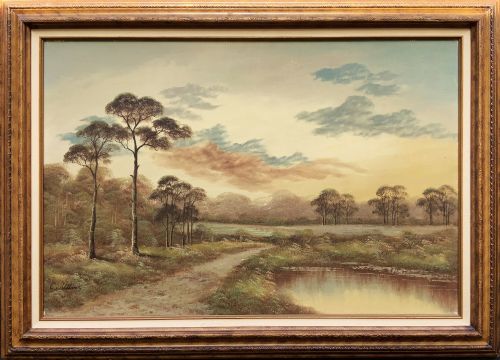
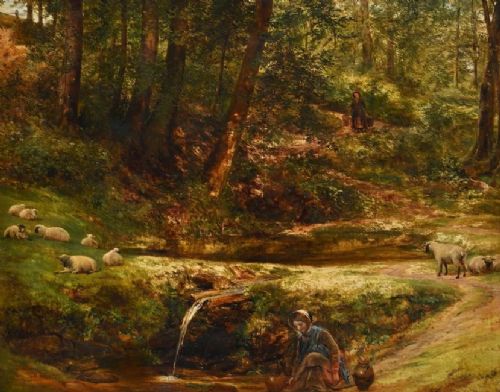
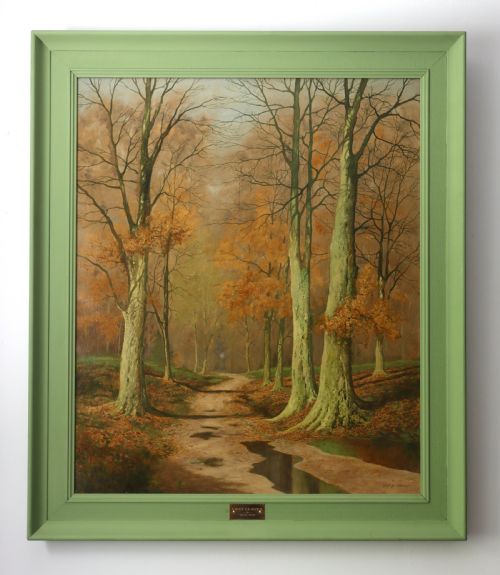
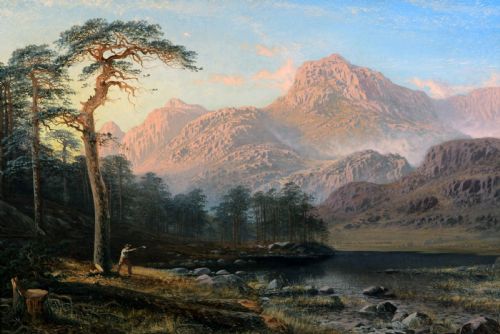
When searching for forest canvas art, buyers encounter traditional oil paintings on canvas depicting woodland scenes, trees, rivers, and rural landscapes. These works capture natural settings ranging from quiet Victorian countrysides to mid-century impressionist views.
The pieces on this page primarily consist of oil paintings executed on canvas stretched over wood frames, often accompanied by period frames finished with gilt and gesso. Creators range from named nineteenth-century artists to mid-century practitioners working in British and European traditions.
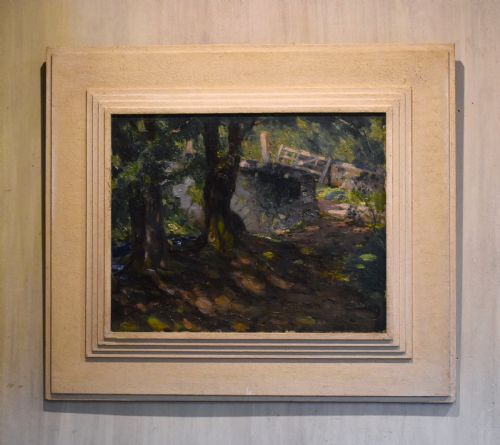
Subjects lean heavily toward natural tree-filled vistas, woodland paths, and sunset glens. The selection bridges nineteenth-century realism and early twentieth-century impressionism, offering buyers a direct window into historical landscape painting.
Materials and construction
These works rely fundamentally on oil paint applied to woven canvas supports. The canvas itself is typically stretched taut over a wooden framework, providing a stable and textured ground for the oil pigments.
Many paintings incorporate traditional preparatory layers including gesso on wood frames, whilst the oil medium itself allows for rich blending, luminous glazing, and varied impasto brushwork across the surface.
Forest Canvas Art Retail Price Guide 2026
Typical asking prices for forest canvas art among the pieces listed under this phrase on Sellingantiques today, from the lower quarter to the upper quarter. They describe what is for sale here now, not the wider market.
Listings feature works created across several eras, encompassing the nineteenth century, Victorian period, and mid-twentieth century.
Judging quality in forest canvas art
Quality rests upon the artist's handling of light, depth, and atmospheric perspective within the woodland setting. Superior works demonstrate a confident command of colour and brushwork that brings foliage and shadow to life.
The condition of the canvas and the integrity of the original paint layer heavily influence value. Stronger examples retain their original tension, vibrant pigments, and period-appropriate frames without excessive restoration or overpainting.
William H Myers·Richard Redgrave·Thomas Bromley Blacklock·James Proudfoot·Ernest Higgins Rigg·Frederick Golden Short·Augustus William Enness·Hans Kappel Øvre·Walter Emsley·William Mellor·Charles Pettitt·Henri Harpignies
The Forest Canvas Art Glossary
- Oil on Canvas
- A traditional painting technique where oil-based pigments are applied to a woven fabric support stretched over a wooden frame. This combination allows for rich colour saturation and subtle blending.
- Gesso
- A plaster-like mixture applied as a base to wooden panels or picture frames before gilding or painting. It provides a smooth, prepared surface.
- Impasto
- Paint applied thickly to a canvas, standing out in relief from the plane. This technique gives texture and physical presence to foliage and light.
- Gilt
- A thin layer of gold leaf applied to a surface such as a wooden picture frame. It adds a warm reflective border to the artwork.
- Barbizon School
- A nineteenth-century French art movement dedicated to naturalistic landscape painting. Artists painted directly from nature, focusing on the realities of forests and rural fields.
Forest Canvas Art: Frequently Asked Questions
What periods do these forest paintings come from?
The selection spans from the nineteenth century through the Victorian and Edwardian eras into the mid-twentieth century. Works reflect evolving artistic movements from traditional realism to early impressionism.
Buyers will find pieces dated across the decades, showcasing how artists continually reinterpreted woodland scenery over a century of painting.
How should I hang and light an oil painting?
Oil paintings on canvas need stable indoor environments away from direct sunlight and excessive humidity. Proper picture wire and wall anchors ensure the wooden stretcher frames remain secure.
Warm, low-intensity picture lighting enhances the depth of the oil pigments and brings out the subtle tones of the woodland canopy without damaging the canvas.
How do I identify nineteenth-century canvas works?
Nineteenth-century paintings often exhibit hand-woven canvas textures, older wooden stretcher bars, and handwritten artist inscriptions on the reverse. Frame styles, including period gilt moulding, also offer chronological clues.
Examining the canvas grain and the ageing of the oil paint under natural light helps distinguish Victorian and Edwardian works from later reproductions.
What is the difference between realism and impressionism in these landscapes?
Realist landscapes focus on precise botanical detail, clear lighting, and accurate depiction of woodland flora. Brushwork is tightly controlled to mirror natural forms closely.
Impressionism prioritises light, atmosphere, and loose brush strokes over strict botanical accuracy. The resulting forest scenes capture fleeting effects of sunlight through leaves rather than minute details.