



Footed Silver Salts
Footed silver salts bring miniature grandeur to the table, and these sterling vessels are built to hold precious seasonings with historic elegance.
Footed Silver Salts
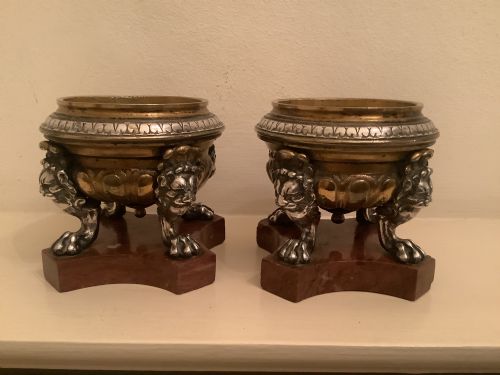
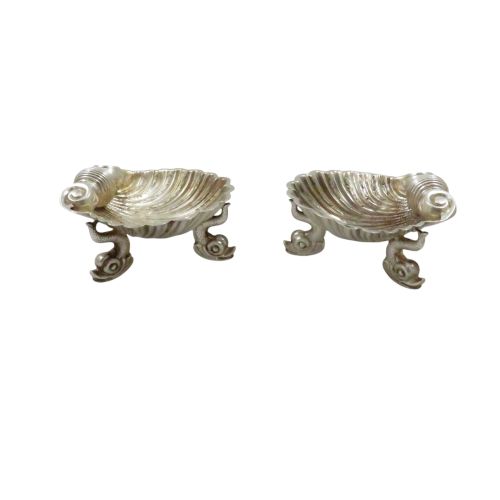
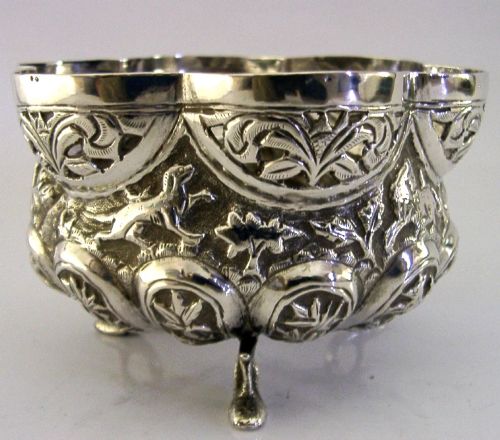
Footed silver salts are small, raised vessels designed to hold salt on the dining table, taking forms such as cauldron cellars, shell basins, and decorative bowls. When searching for footed silver salts, a buyer encounters examples spanning the Georgian, Victorian, and early twentieth-century periods.
The most common pieces met on this page are matched pairs from the Georgian and Victorian eras, often supported on three or four small feet. These functional items reflect the changing domestic habits of dining across the eighteenth and nineteenth centuries.
Makers shaped these miniature dishes in distinct regional designs, from Edinburgh workshops to London smiths and Anglo-Indian colonial studios. Each period brings characteristic proportions and foot designs, whether cast, chased, or applied.
How they were made
Silversmiths constructed these cellars using sterling or solid silver, occasionally incorporating gold gilt or vermeil interiors to protect the metal from corrosive salt. Cobalt glass liners appear inside pierced or openwork designs, adding deep blue contrast through clear metalwork.
Forming the body involved hammering sheet silver or casting thicker components like cauldron shapes and dolphin feet, which were then soldered together. Detailed chasing, engraving, and applied borders finished the rims and bases of the finest examples.
Footed Silver Salts Retail Price Guide 2026
Typical asking prices for footed silver salts among the pieces listed under this phrase on Sellingantiques today, from the lower quarter to the upper quarter. They describe what is for sale here now, not the wider market.
Listings feature sterling silver and solid silver pieces, frequently incorporating cobalt glass liners and gold gilt or vermeil interiors.
What varies in quality
Quality rests upon the crispness of the chased decoration and the proportional balance of the feet to the bowl body. Heavy-gauge silver provides a substantial feel in the hand, whereas lighter pieces lack the physical presence of top-tier work.
Provenance and documented maker marks distinguish exceptional pieces from unmarked domesticware. Original matching liners and well-preserved gilding elevate a pair well beyond standard production.
John Edmonstone·Bateman·Edward Wood·Michael Alexandrovich Romanov
The Footed Silver Salts Glossary
- Sterling silver
- A silver alloy containing 92.5 percent pure silver by mass and 7.5 percent other metals, usually copper. This standard composition provides the durability required for functional tableware.
- Vermeil
- Sterling silver plated with a thin layer of gold. This coating prevents the salt from tarnishing or corroding the silver beneath.
- Cauldron salt cellar
- A round, bowl-shaped salt container raised on three small feet, mimicking an open cooking pot. This form is particularly characteristic of eighteenth-century Georgian silver.
- Cobalt glass
- A deep blue glass used for liners inside openwork or pierced silver salt cellars. The dark colour shows brightly through the decorative metal cutouts.
- Chasing
- A metalsmithing technique where the silver is worked from the front with hammers and punches to sink the metal and create raised decorative patterns.
Footed Silver Salts: Frequently Asked Questions
What are footed silver salts used for?
These small open vessels held coarse table salt before the invention of free-flowing salt granules and shaker bottles.
Diners used tiny salt spoons or pinched the salt directly from the bowl to season individual portions on their plates.
How do I clean footed silver salts?
Maintenance requires gentle washing in warm soapy water to remove dust and residues, followed by thorough drying with a soft cloth.
Harsh abrasive dips should be avoided, particularly on pieces with interior gilding or fragile glass liners.
Can I use them for dining today?
Modern dining tables easily accommodate these small silver vessels for holding salt, pepper, or herbs during meals.
Care must be taken to empty and clean them promptly after use, as salt left sitting on silver causes pitting over time.
How do I identify Georgian silver salts?
Georgian examples often display characteristic cauldron forms, hefty cast feet, and distinct hallmarks stamped directly onto the base or rim.
Stylistic cues include rococo chasing, neoclassical beaded borders, and heavy-gauge construction typical of eighteenth-century workshops.