






Footed Silver Jug
These footed silver jug pieces combine practical serveware utility with decorative grace, offering collectors a tangible link to Georgian, Victorian and Edwardian dining traditions.
Footed Silver Jug
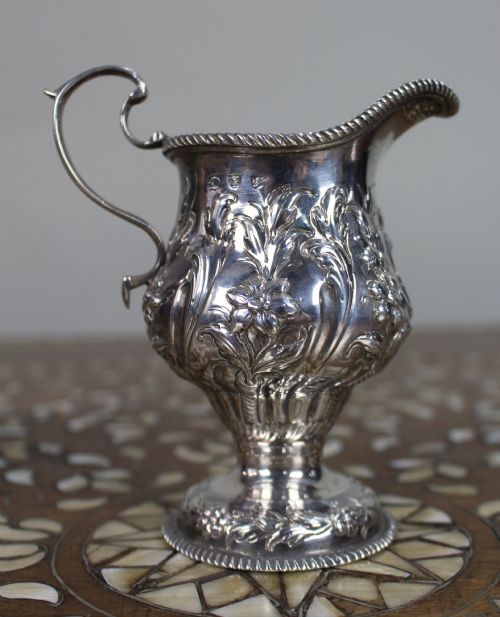
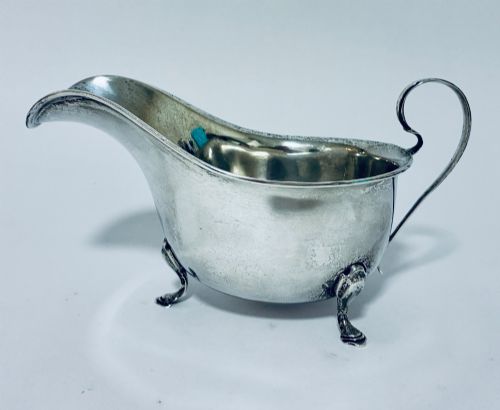
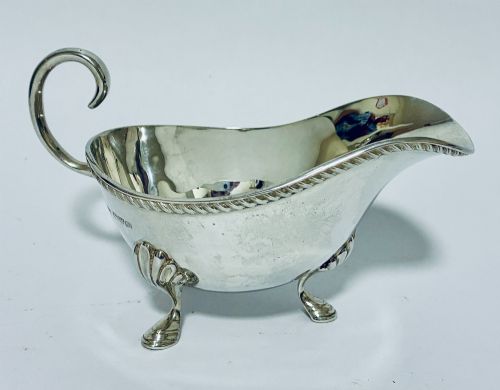
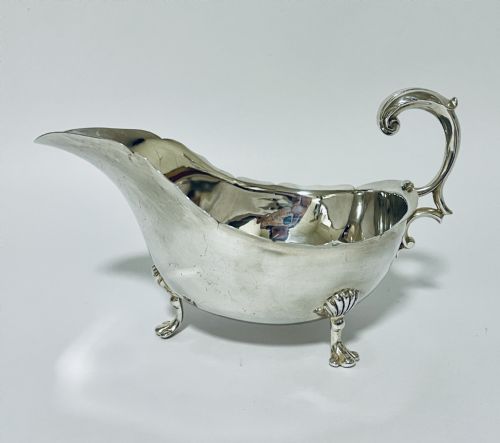
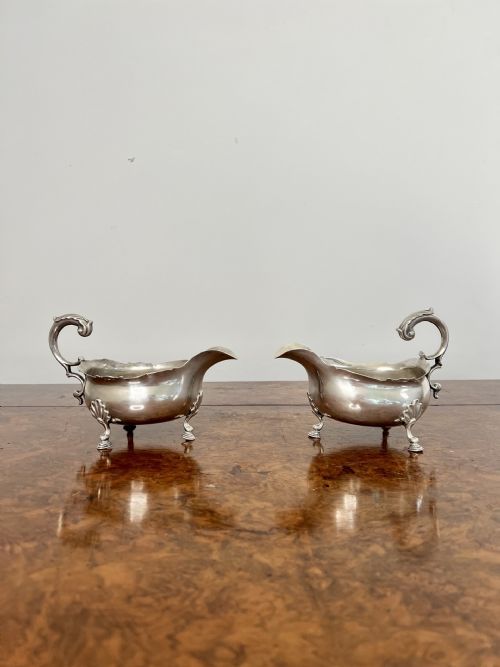
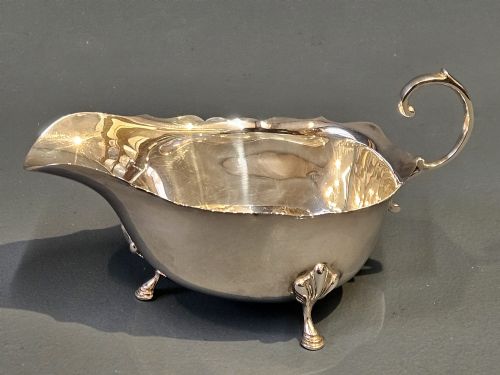
A footed silver jug serves as an elegant vessel for cream, milk or sauce at the table, taking various forms including sauce boats, ewers and cream jugs. When searching for a footed silver jug, buyers encounter pieces spanning the eighteenth century through the twentieth century, reflecting shifting domestic habits.
The selections on this page encompass traditional Georgian designs alongside Victorian Rococo Revival examples and later twentieth-century iterations. Most pieces belong to domestic serveware categories, functioning as cream jugs, milk jugs or sauceboats raised on distinct feet.
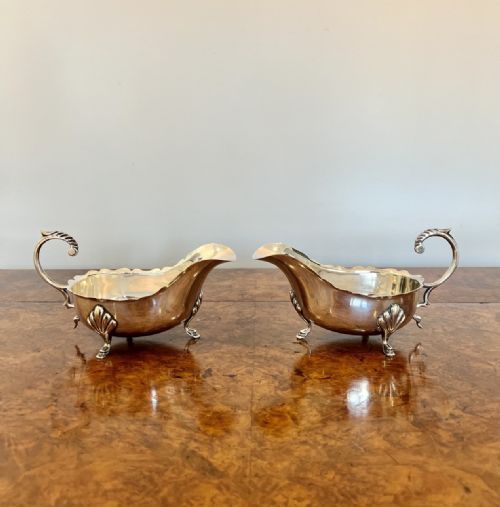
Origins range across multiple periods, with eighteenth-century pieces sitting alongside Victorian sterling silver examples and silver plated Edwardian pairs. Buyers frequently discover matching pairs or individual vessels bearing assay marks from London, Chester and Birmingham.
Materials and Construction
Silversmiths utilised sterling silver and standard silver plate to shape these vessels, occasionally incorporating an interior gold wash or gilt finish. These metals provided the necessary ductility for hammering and raising the body from a single sheet or casting components separately.
Master craftsmen applied techniques such as chasing and embossing to create naturalistic motifs like acorn designs on Victorian bodies. Footed bases, handles and lips were soldered securely to the main vessel, ensuring structural stability for daily service.
Footed Silver Jug Retail Price Guide 2026
Typical asking prices for footed silver jug among the pieces listed under this phrase on Sellingantiques today, from the lower quarter to the upper quarter. They describe what is for sale here now, not the wider market.
Object forms span sauce boats, cream jugs, milk jugs and ewers, with origins noted in London, Chester and Birmingham.
Assessing Quality and Craftsmanship
Quality reveals itself in the weight of the metal and the crispness of decorative details, where finer pieces display deeply chased naturalistic ornamentation rather than shallow stamping. The proportional balance between the raised foot, the bulbous body and the handle distinguishes superior examples.
Maker execution dictates distinction, with pieces bearing clear hallmarks from established assay offices demonstrating documented provenance. The integrity of the solder joints and the preservation of any interior gilt wash further separate standard utility vessels from high-status creations.
The Footed Silver Jug Glossary
- Sterling silver
- A silver alloy containing 92.5 percent pure silver by mass and 7.5 percent other metals, usually copper. This standard ensures durability while maintaining a bright, lustrous appearance suitable for fine domestic tableware.
- Sauce boat
- A boat-shaped vessel designed for serving sauces or gravies at the dining table. These typically feature an integrated foot, a spouted lip for pouring and a curved handle.
- Cream jug
- A small pitcher utilised specifically for holding and pouring cream into tea or coffee. They appear in numerous historical styles matching contemporary tea service sets.
- Gold wash
- A thin layer of gold applied to the interior surface of a silver vessel, often referred to as gilt. This technique protects the silver from the acidic corrosive properties of contents such as cream or lemon juice.
- Hallmark
- An official stamp or marks struck on items made of precious metals in the United Kingdom. These symbols indicate the maker, the assay office, the purity of the metal and the year of production.
Footed Silver Jug: Frequently Asked Questions
What is the difference between a sauce boat and a cream jug?
A sauce boat generally presents a wider, more open vessel shape with an elongated spout intended for savoury gravies and table sauces. Cream jugs are typically taller and more compact, designed for dispensing dairy into beverages.
Both forms utilise raised feet for elevation on the dining table, but their historical capacities and intended contents dictated their specific proportions.
How do I identify the period of a silver jug?
Examining the assay marks stamped into the metal provides the most direct indication of a piece's manufacturing date and origin. Stylistic markers, such as the ornate embellishments of Victorian Rococo Revival or the cleaner lines of Georgian design, offer further visual clues.
Documentation of makers' marks cross-referenced with historical assay records confirms the exact decade of creation.
Can these silver jugs still be used for dining?
Solid silver and silver plated vessels remain fully functional for serving liquids at the dining table provided they are handled with care. Many collectors utilise them for special occasions, ensuring they wash the silver gently by hand afterwards.
Pieces featuring an interior gold wash offer additional protection against tarnishing from dairy products.
Why do some silver jugs feature a gold interior?
A gilt or gold wash interior protected the reactive silver metal from tarnishing or corroding when exposed to acidic contents like cream or fruit juices. Silversmiths applied this decorative and practical finish to the inside of high-end vessels.
Over time, this wash may soften in colour but it remains a sign of superior original manufacture.