




Footed Pottery Bowl
A footed pottery bowl brings elevation and presence to a table, combining practical form with decorative ambition across centuries of ceramic tradition.
Footed Pottery Bowl
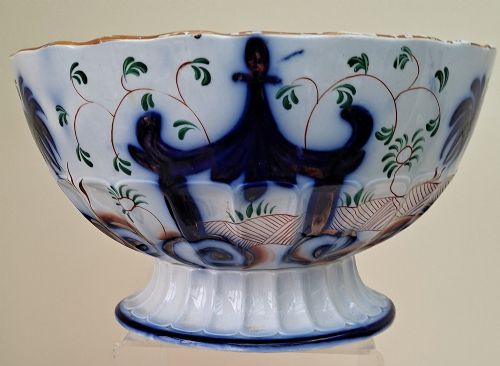
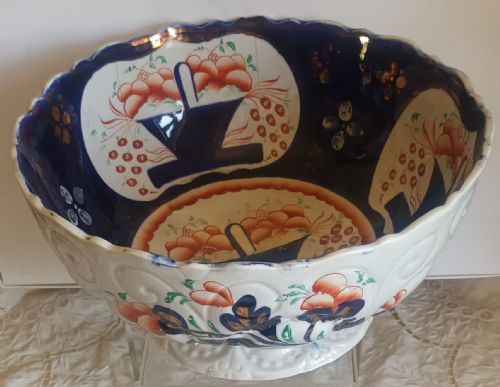
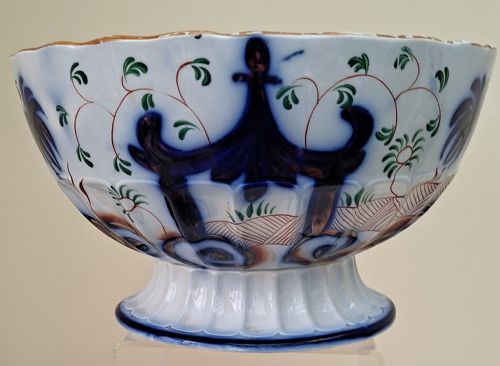
A footed pottery bowl provides a raised vessel form designed for display or service, frequently appearing as pedestal bowls, comports, and centrepieces. When searching for a footed pottery bowl, collectors encounter diverse historical interpretations ranging from English earthenware to Asian porcelain and Islamic lustreware. These pieces vary widely in scale, from small cabinet items to large serving vessels intended for the centre of a table.
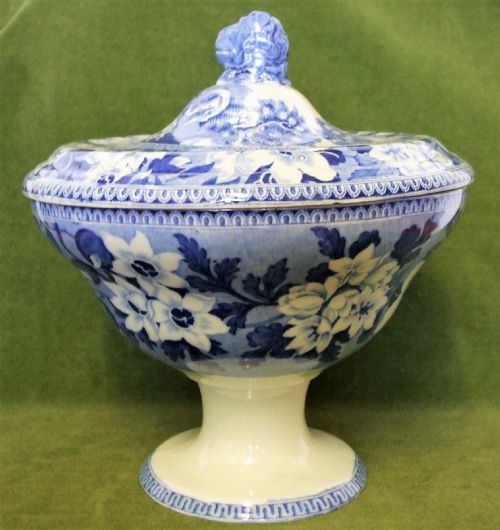
The material expression of these bowls spans utilitarian ironstone and earthenware through to refined porcelain and majolica. Examples stretch across multiple eras, taking in Georgian blue and white transferware, Victorian naturalistic majolica, and early twentieth-century lustre glazes. Each piece demonstrates how makers used elevated bases to give importance to functional ceramic forms.
Materials and Techniques
Makers formed these vessels using traditional ceramic bodies including ironstone, earthenware, and porcelain, shaping them on the wheel or in moulds before applying glazes. Cobalt blue transfer printing, hand-painted enamel, and copper lustre techniques provided the surface decoration seen across nineteenth-century and earlier examples. Potters incorporated raised feet as integral parts of the vessel structure or attached them separately prior to firing.
Glazing methods varied from simple clear lead glazes to complex crackle-glazes and coloured enamels such as those found on majolica and Imari wares. Firing processes required precise kiln control to achieve the glossy finishes and metallic sheens characteristic of lustre-glazed and pearlware pieces.
Footed Pottery Bowl Retail Price Guide 2026
Typical asking prices for footed pottery bowl among the pieces listed under this phrase on Sellingantiques today, from the lower quarter to the upper quarter. They describe what is for sale here now, not the wider market.
Japanese and Persian origins appear alongside English regional potteries, demonstrating wide geographic variety in footed vessel production.
Assessing Quality and Execution
Quality in a footed pottery bowl rests on the crispness of the moulding, the alignment of the raised foot, and the control shown in the glaze or transfer application. Superior examples display balanced proportions where the height of the pedestal complements the bowl basin without feeling heavy or awkward.
The sophistication of the painted or printed pattern distinguishes finer pieces, particularly where hand-applied enamels enrich transfer-printed outlines. The clarity of the ceramic body, whether dense ironstone or resonant porcelain, further indicates the standard of production achieved by the pottery.
John Rogers and Son·Minton·Ulisse Cantagalli·Maling·Mason·Daisy Makeig-Jones Wedgwood·Moorcroft
The Footed Pottery Bowl Glossary
- Comport
- A decorative footed dish or bowl used traditionally for serving fruit or sweetmeats at dessert.
- Ironstone
- A dense, durable type of earthenware patented in the nineteenth century to imitate porcelain.
- Majolica
- A type of earthenware coated with an opaque tin glaze and painted with brightly coloured metallic oxide enamels.
- Pearlware
- A fine-grained earthenware developed in the late eighteenth century featuring a subtle bluish glaze that pooled in recesses.
- Lustre Glaze
- A metallic ceramic finish that produces an iridescent or reflective sheen upon firing.
Footed Pottery Bowl: Frequently Asked Questions
What is a footed pottery bowl used for?
These elevated vessels served multiple functions historically, from holding fruit and sweetmeats on dining tables to acting purely as decorative centrepieces. Their raised profile gave them prominence in room schemes and dining arrangements.
Today, they function well as standalone decorative objects or practical containers for display purposes in domestic interiors.
How do I identify the period of a bowl?
Dating relies on examining the ceramic body, glaze characteristics, and the style of decoration applied to the surface. Transfer-printed patterns and maker marks often provide specific chronological clues.
Comparing the manufacturing technique against known historical periods helps narrow down the decade of production.
Are these bowls safe for food use?
Most antique ceramic vessels are best reserved for display rather than modern culinary service due to the fragile nature of historic glazes. Some robust ironstone pieces can handle light use, but antique surfaces risk damage from modern detergents and cutlery.
Collectors generally treat these items as decorative works of art rather than functional tableware.
How should I clean my pottery bowl?
Dusting gently with a soft, dry cloth is the safest routine maintenance for antique ceramic surfaces. Harsh scrubbing or immersion in water should be avoided, particularly on pieces with overglaze enamels or lustre finishes.
Professional conservation advice should be sought if deeper cleaning becomes necessary.