


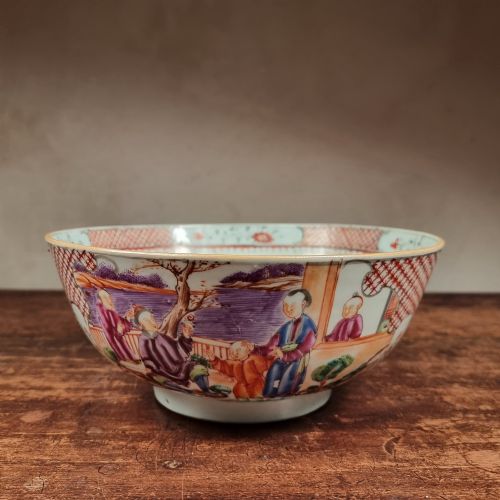
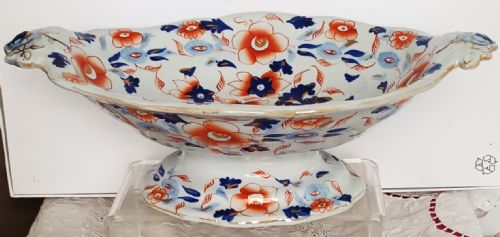
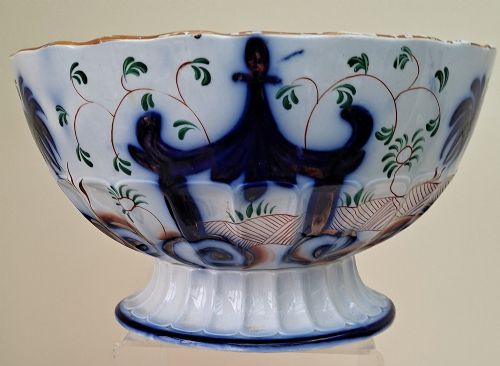
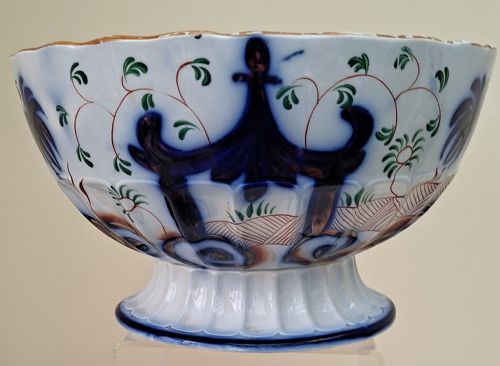
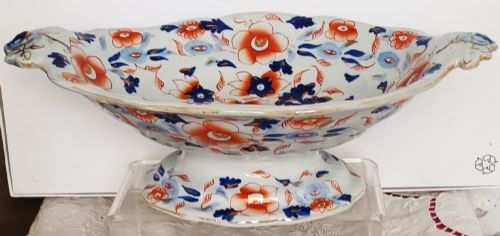


Footed China Bowl
A footed china bowl elevates any table or sideboard, offering a raised profile that showcases intricate patterns and glazes.
Footed China Bowl
When you search for a footed china bowl, you encounter raised vessel forms designed for display and service across the nineteenth and twentieth centuries. These pieces encompass pedestal bowls, comports, tazzas, and footed comports originating from English, Chinese, and European traditions.
You are most likely to meet nineteenth-century ironstone and earthenware examples, alongside twentieth-century lustre ware pieces. Forms range from large pairs of pedestal bowls to miniature sets and individual comports decorated in transfer-printed and hand-painted patterns.
The styles span Georgian, Victorian, Edwardian, Art Nouveau, and Art Deco periods, frequently featuring Imari palettes, Japanese-inspired motifs, and intricate dragon or butterfly designs. These elevated vessels serve both decorative purposes and traditional table service functions.
How they were made
Potters shaped these vessels using durable ironstone, refined porcelain, and earthenware bodies, which provided a stable foundation for heavy glazes and raised feet. Ironstone offered particular strength, allowing for large pedestal bowls and comports that could withstand regular use.
Makers applied complex surface decoration through transfer printing, hand-painted enamels, and rich lustre glazes that imparted iridescent finishes. Gold leaf accents frequently highlighted moulded rims and footed bases on finer Victorian and twentieth-century pieces.
Footed China Bowl Retail Price Guide 2026
Typical asking prices for footed china bowl among the pieces listed under this phrase on Sellingantiques today, from the lower quarter to the upper quarter. They describe what is for sale here now, not the wider market.
Early twentieth-century lustre bowls often feature whimsical coiling dragons and delicate butterflies that catch the light from every angle.
What varies in quality
The distinction between standard production and exceptional work rests on the precision of the hand-painting and the depth of the glaze application. Painted patterns featuring rich enamels and gold leaf demonstrate superior craftsmanship compared to simpler transfer prints.
Form and proportion dictate desirability, with well-balanced pedestals and crisply moulded details marking out pieces from distinguished workshops and renowned designers. The complexity of the pattern, such as intricate lustre work or multi-coloured Japanese-inspired motifs, elevates the status of the vessel.
Wedgwood·John Rogers and Son·Mason
The Footed China Bowl Glossary
- Comport
- A raised vessel on a pedestal, traditionally used for serving fruit or sweetmeats at the table. These pieces often feature prominent footed bases and decorative handles or rims.
- Ironstone
- A dense, heavy type of earthenware patented in the nineteenth century for its durability. It mimics porcelain while offering greater resistance to chipping and cracking.
- Lustre Glaze
- A metallic ceramic glaze that produces an iridescent or pearlescent surface sheen. Potters applied this technique to create shimmering effects on bowls and decorative wares.
- Imari
- A style of ceramic decoration characterised by contrasting colours, predominantly underglaze blue, iron red, and gold. The aesthetic originates from Japanese export porcelain and was widely copied by European potteries.
- Pedestal Bowl
- A bowl elevated on a raised foot or columnar base. This form lifts the vessel above the surface to display contents more prominently.
Footed China Bowl: Frequently Asked Questions
What is a footed china bowl used for?
These elevated vessels served primarily as centrepieces for dining tables or decorative display pieces on sideboards. Historically, they held fruit, sweetmeats, or floral arrangements.
Today, they function well as standalone decorative objects or for holding small items in a living space.
How do I identify a Victorian footed bowl?
Victorian examples often display heavy ironstone bodies, transfer-printed patterns, or rich enamel colours such as those found in Gaudy Welsh or Imari styles. Look for moulded details and floral or geometric motifs typical of the nineteenth century.
The style of the foot and the density of the ceramic material also provide strong clues to its period of manufacture.
What does lustre glaze look like?
Lustre glaze creates a metallic, iridescent sheen on the surface of the ceramic. It reflects light with rainbow or mother-of-pearl effects, often combined with painted dragons, butterflies, or geometric patterns.
This technique requires specialised firing processes to achieve the characteristic shimmering finish.
Are pedestal bowls and comports the same thing?
While both terms describe elevated serving vessels, comports specifically refer to footed dishes used for dessert or fruit courses. Pedestal bowls encompass a broader category of footed vessels, which may be deeper or designed for general display.
In marketplace listings, the terms frequently overlap depending on the specific form and historical terminology used.