

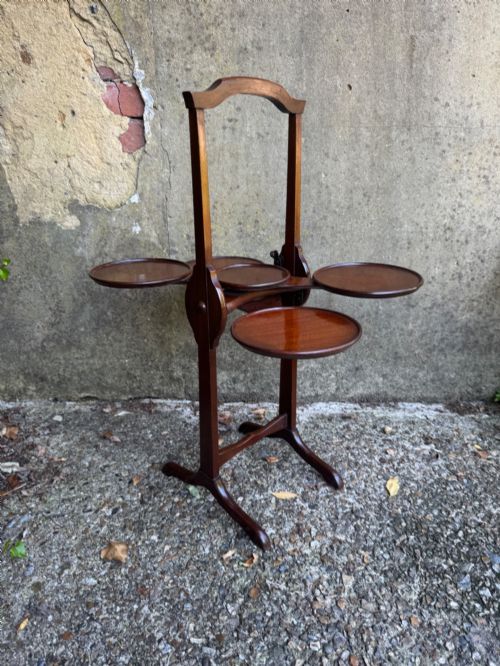


Folding Wooden Display Stand
These folding wooden display stand items span the 19th century through the Edwardian period, offering practical tiered surfaces and easels in mahogany, oak and rosewood.
Folding Wooden Display Stand
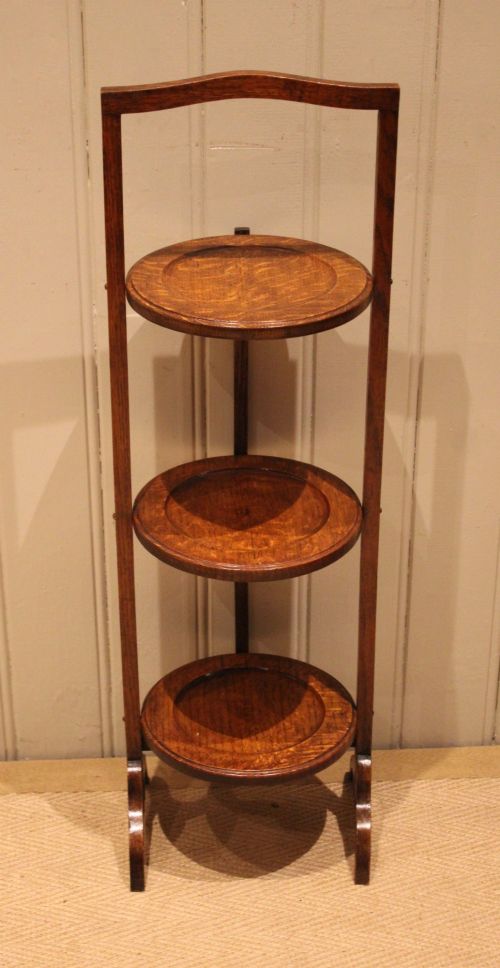
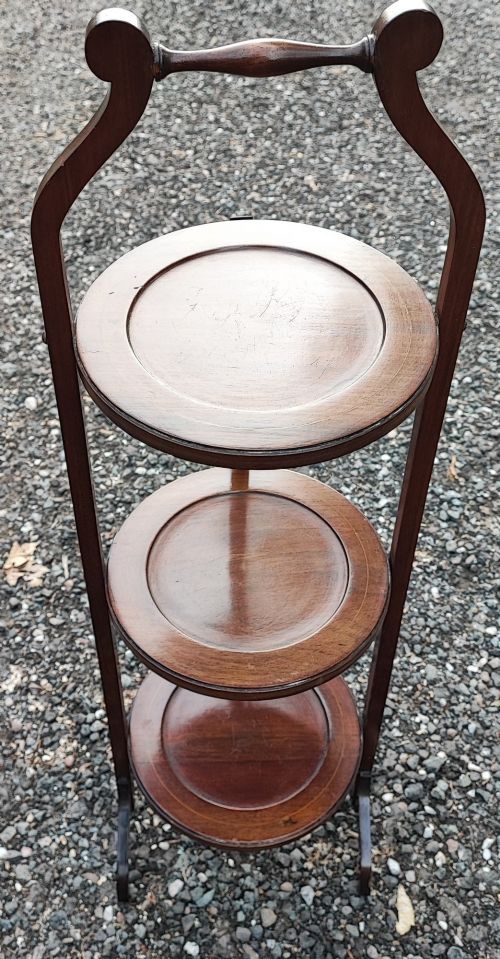
A folding wooden display stand brings versatile tiers and upright supports into a room without demanding permanent floor space. You will most frequently encounter tiered cake stands and bookstands from the Edwardian period and the early twentieth century.
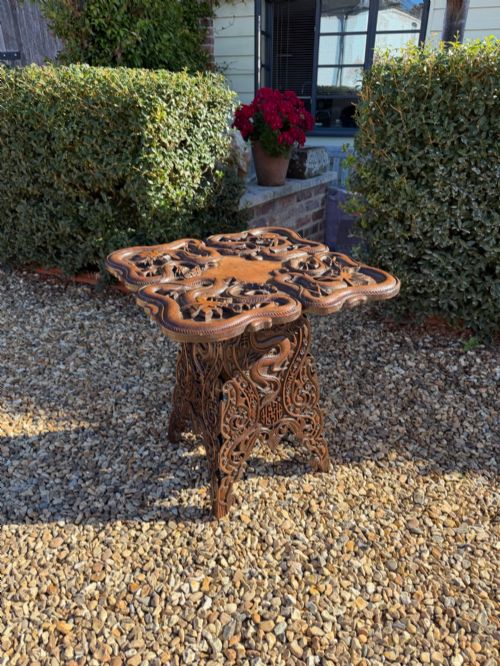
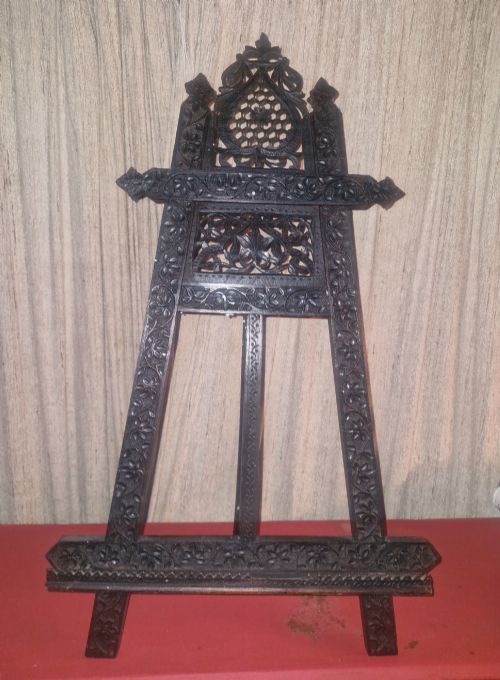
Makers designed these items for domestic utility, ranging from simple pine step ladders and rustic country items to inlaid Sheraton Revival occasional tables. More ornate examples incorporate Anglo-Indian carving or mother of pearl inlay.
The selection includes three and four tier standing cake stands alongside occasional tables and picture display easels. Each piece collapses or folds flat for storage when not in active daily service.
How they were made
Cabinet makers utilised dense hardwoods including mahogany, oak, rosewood, walnut and satinwood to construct frames capable of supporting folding mechanisms. Boxwood stringing and mother of pearl provided decorative contrast on finer inlaid surfaces.
Brass hinges and fittings allowed tiered shelves and bookstands to articulate smoothly without compromising structural stability. Carved wooden elements appeared on specific eastern picture display easels and decorative occasional tables.
Folding Wooden Display Stand Retail Price Guide 2026
Typical asking prices for folding wooden display stand among the pieces listed under this phrase on Sellingantiques today, from the lower quarter to the upper quarter. They describe what is for sale here now, not the wider market.
Listings feature woods such as mahogany, oak, rosewood, satinwood, boxwood, pine and walnut across nineteenth and early twentieth century periods.
What varies in quality
The sophistication of the timber selection and decorative inlay dictates the standing of an individual piece. Solid mahogany or rosewood with precise boxwood stringing sits above plain utility pine and basic oak construction.
Engineering integrity in the folding action separates standard items from superior examples. A well-adjusted hinge mechanism ensures the tiers or shelves remain level and steady when deployed.
The Folding Wooden Display Stand Glossary
- Cake stand
- A tiered item featuring two, three or four circular or shaped shelves designed originally for afternoon tea service and subsequently utilised for general display.
- Sheraton Revival
- A late nineteenth and early twentieth century design movement that reinterpreted eighteenth century neoclassical motifs, often featuring delicate mahogany and satinwood inlay.
- Inlay
- A decorative technique where contrasting materials such as boxwood or mother of pearl are set flush into the wooden surface of the piece.
- Tiered stand
- An article featuring multiple ascending levels supported by folding vertical frames, maximising display area within a compact footprint.
- Display easel
- An adjustable upright wooden stand intended for holding picture frames, books or decorative panels at a comfortable viewing angle.
Folding Wooden Display Stand: Frequently Asked Questions
Where should I place a tiered stand?
These pieces suit corners or empty wall spaces where vertical display is required without bulk. They hold small potted plants, books or decorative ceramics effectively.
Direct sunlight and proximity to heat sources should be avoided to protect polished mahogany, rosewood and inlaid boxwood surfaces from drying out or warping over time.
How do I date an Edwardian stand?
Edwardian examples often feature lighter mahogany timbers combined with delicate inlaid stringing, reflecting the dominant aesthetic of the early twentieth century. Construction methods typically show machine-cut components alongside traditional hand-finishing.
Earlier nineteenth century pieces tend to utilise heavier solid oak or rosewood with simpler structural forms. Checking the style of the turned supports helps distinguish between periods.
Can these stands support heavy items?
Tiered cake stands and occasional tables were engineered for light domestic objects such as china plates, books or small ornaments rather than heavy cast iron or dense stone. Distributing weight evenly across the shelves prevents tipping.
Checking the stability of the folding joints before placing objects ensures the frame bears the load securely without straining the brass hardware.