


Folding Vanity Table
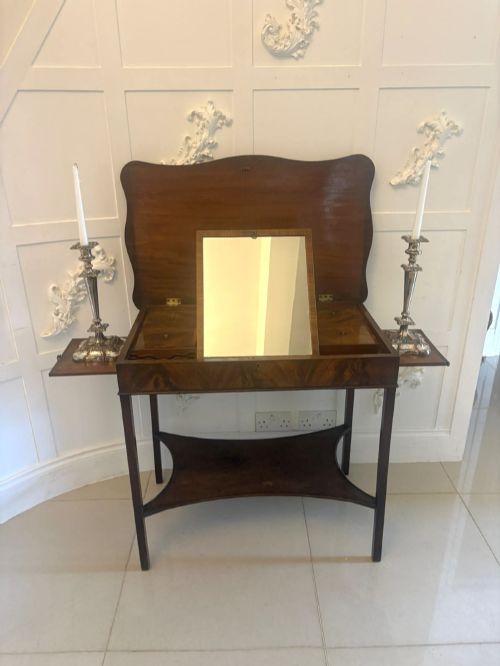
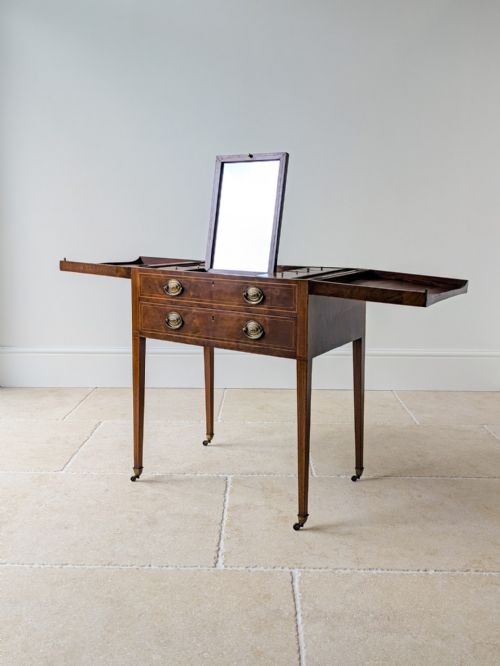
A folding vanity table is a compact piece designed for grooming, offering hidden compartments and mirrors that conceal their function when closed.
Folding Vanity Table
When you search for a folding vanity table, you encounter a variety of compact furniture pieces engineered for personal grooming and morning hygiene routines. These objects appear across several centuries and stylistic revivals, ranging from Georgian gentleman's washstands to Art Deco desks with fold-out structures.
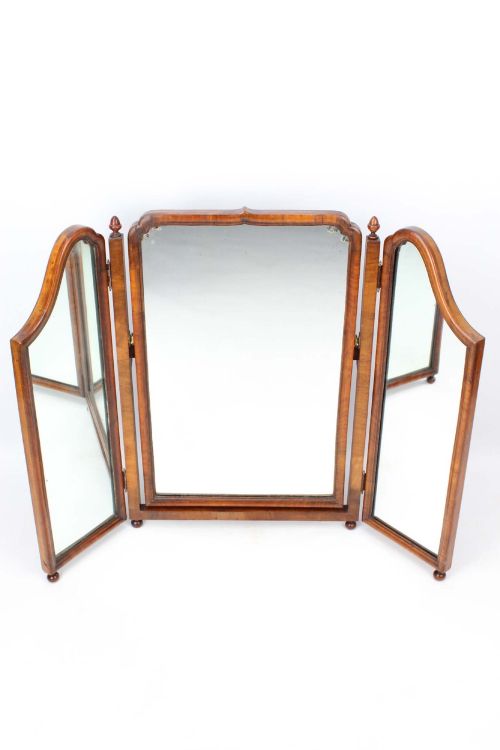
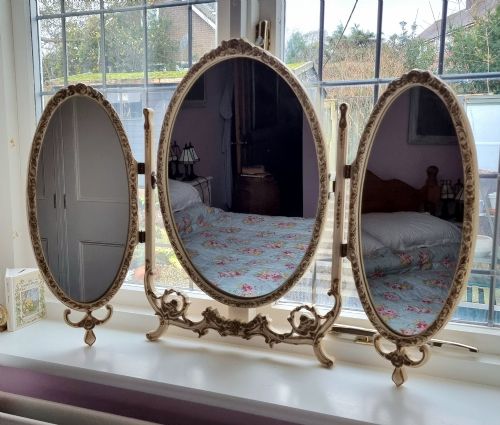
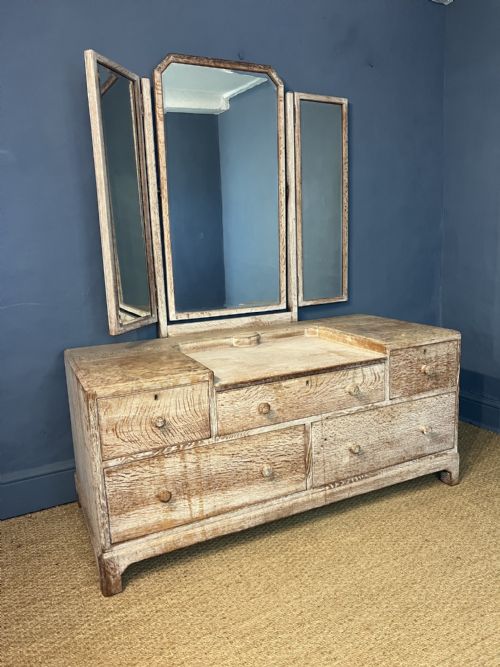
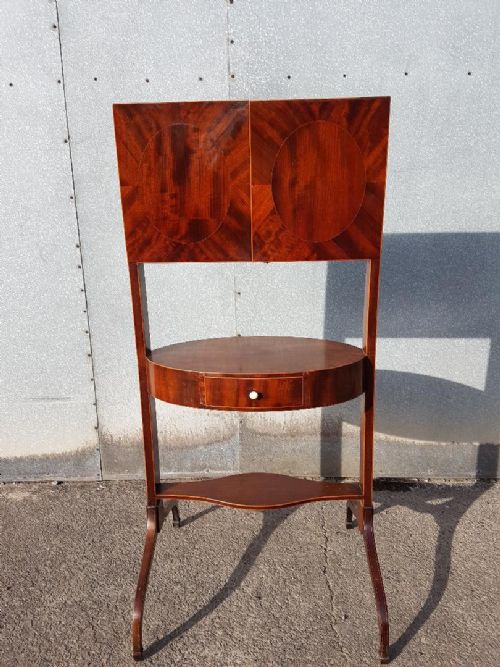
The most common forms on this page include dressing tables, washstands, shaving mirrors, and triptych dressing mirrors. Many feature clever folding mechanisms, drop-leaf surfaces, or concealed mirrors designed to save space in bedrooms and dressing rooms.
Origins span British workshops and continental European centres, with pieces manifesting French Provincial, French Neoclassical, and Queen Anne Revival influences. Whether handling an eighteenth-century mahogany piece or a 1930s limed oak variant, each design prioritises practicality alongside refined domestic presentation.
Materials and construction methods
Cabinetmakers utilised hardwoods such as mahogany, walnut, oak, and satinwood, frequently employing boxwood stringing and exotic crossbanding like kingwood and rosewood. These timbers provided the structural integrity needed for folding lids, drop-front desks, and multi-panel mirrors.
Metals and glass played an integral functional role, incorporating brass hardware, hinges, and heavy plate glass for pivoting vanity mirrors. Marble tops appeared on French washstands and dressing tables, offering a durable, water-resistant surface for daily ablutions.
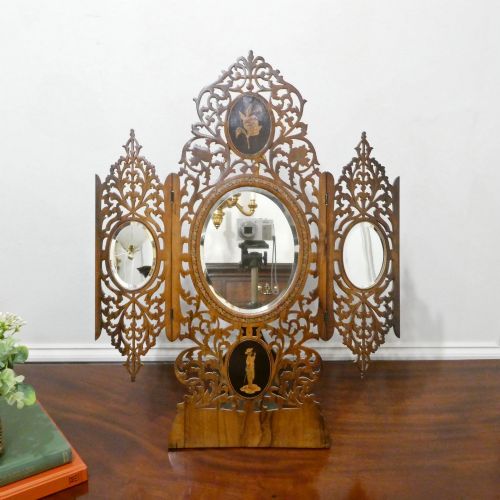
Sorrento travel mirrors fold away compactly, proving that Victorian travellers refused to compromise on their morning reflection.
Differentiating quality across pieces
Quality reveals itself in the precision of the folding mechanisms and the smoothness with which compartments, lids, and triptych mirrors operate. Finer examples display meticulous timber selection, such as matched mahogany veneers or subtle marquetry inlay, rather than purely decorative carving.
The integrity of the structural joints and the clarity of the original glass elements distinguish workshop production. Superior pieces maintain alignment in their folding leaves and drawers over decades of repeated movement, demonstrating careful joinery.
Heals
The Folding Vanity Table Glossary
- Triptych
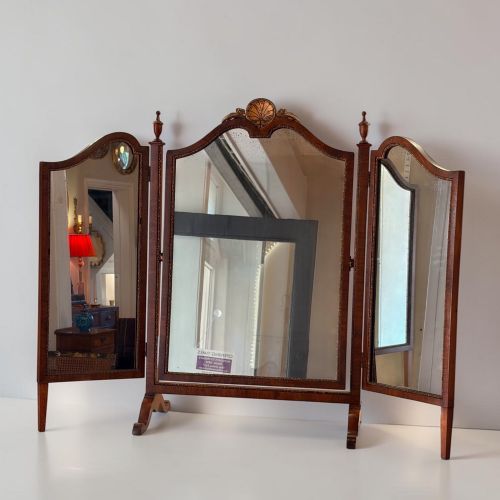
- A three-panel mirror arrangement where the outer wings fold inward to adjust the viewing angle. This configuration is frequently found on dressing tables from the Edwardian era and the 1930s.
- Gentleman's Washstand
- A compact piece of furniture historically equipped for male shaving and grooming routines. These often include internal compartments for basins, razors, and folding mirrors.
- Crossbanding
- A decorative border of veneer laid perpendicular to the grain of the main surface. Cabinetmakers utilised this technique on drawer fronts and table tops to frame the primary timber.
- Stringing
- A narrow inlay of contrasting wood inserted into channels cut into the surface of furniture. It creates fine linear borders on Georgian and Edwardian pieces.
- Washstand
- A table or cabinet designed to hold washing basins and water jugs before modern plumbing. Many examples feature marble tops and enclosed storage spaces.
Folding Vanity Table: Frequently Asked Questions
What is a folding vanity table used for?
These pieces served as dedicated stations for personal grooming, hair dressing, and morning hygiene routines.
When closed, the folding elements transformed the furniture into a simple desk or cabinet, concealing the mirrors and washing equipment.
How do I identify a Georgian folding table?
Georgian examples typically feature solid mahogany construction, restrained brass hardware, and concealed compartments designed for shaving gear.
They rely on clean architectural lines and subtle inlay work rather than heavy surface carving.
Where were these vanity tables placed?
Owners positioned them in bedrooms, dressing rooms, or private chambers where personal grooming took place.
The folding design allowed them to occupy minimal floor space when not in active use.
What distinguishes an Edwardian mirror?
Edwardian mirrors often incorporate triptych folding frames and polished brass stands that reflect lighter, more decorative interior styles.
They frequently accompany dressing tables or stand independently on chests of drawers.