



Folding Tiered Display Stand
These folding tiered display stand pieces offer tiered vertical space for service and display, combining clever collapsing mechanism with domestic charm.
Folding Tiered Display Stand
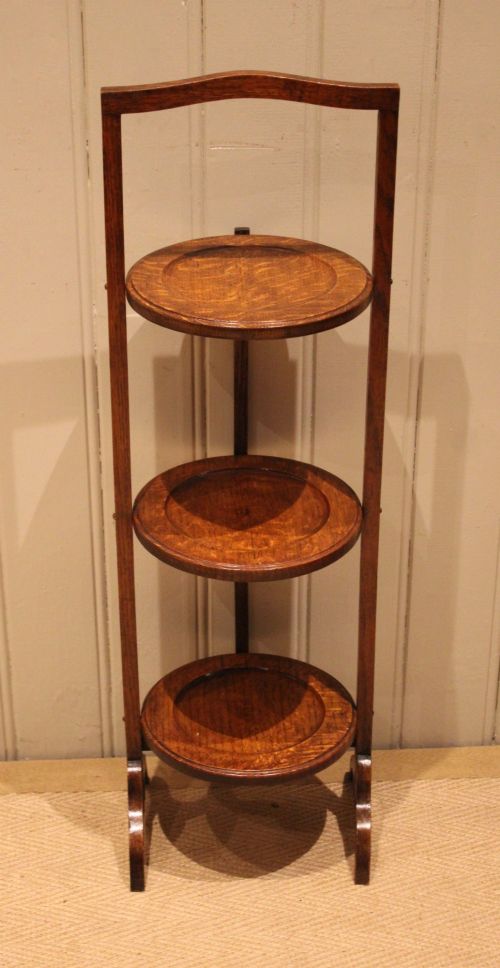
A folding tiered display stand serves homes as a functional surface for cakes or afternoon tea, typically taking the form of a multi-level structure that collapses flat for storage. Buyers searching for a folding tiered display stand encounter pieces predominantly from the Edwardian period and the early twentieth century, alongside occasional Georgian examples.
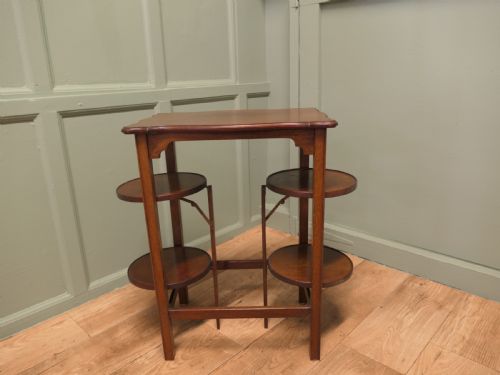
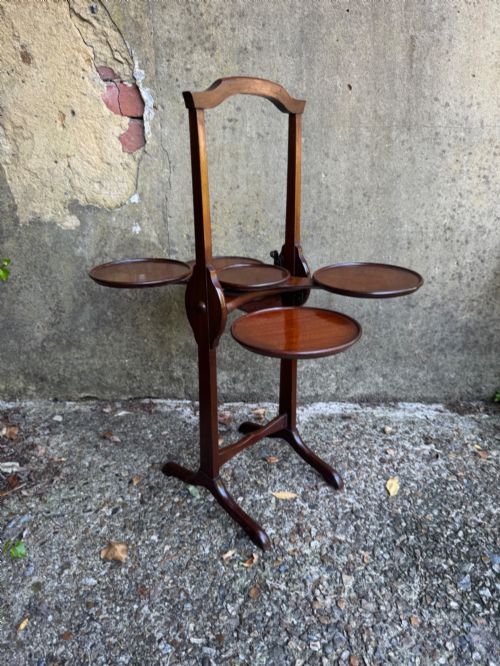
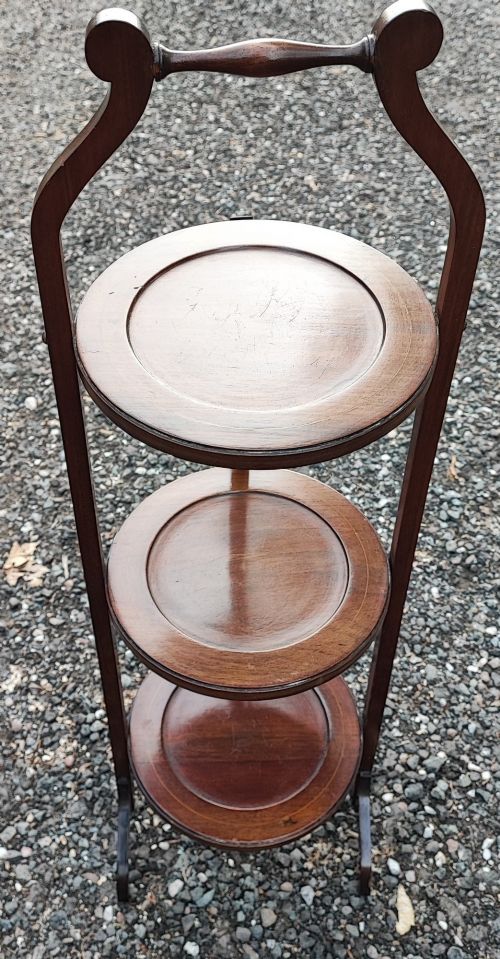
The physical forms on this page span cake stands, occasional tables, tiered stands, and dumb waiters, usually built with three or four ascending levels. Most examples utilise timber construction designed to support light domestic objects while remaining portable enough to move between rooms.
Originating largely from the Edwardian era, these items reflect domestic hospitality trends where space-saving furniture mattered greatly. The survival of such pieces demonstrates how everyday utility combined with neat carpentry to produce practical display furniture.
How they were made
Makers constructed these stands using hardwoods such as mahogany, oak, and rosewood, sometimes incorporating lighter timbers like satinwood and boxwood for decorative contrast. Cabinetmakers employed precise joints and hinged mechanisms to allow the tiers to fold smoothly without compromising structural stability.
Surface enrichment often included inlay work in the Sheraton Revival style, adding delicate lines or motifs to the shelves. Brass fittings provided sturdy hinges and folding braces that endured frequent opening and closing during daily service.
Folding Tiered Display Stand Retail Price Guide 2026
Typical asking prices for folding tiered display stand among the pieces listed under this phrase on Sellingantiques today, from the lower quarter to the upper quarter. They describe what is for sale here now, not the wider market.
Materials recorded across the inventory include mahogany, oak, rosewood, satinwood, boxwood, brass, and general wood and metal.
What varies in quality
Quality rests upon the selection of timber and the precision of the folding mechanism, where superior pieces operate smoothly and remain rigid when open. Finer examples display refined inlay, well-figured mahogany or rosewood veneers, and slender turned supports that balance elegance with load-bearing strength.
Simpler workshop output relies on plain solid oak or basic mahogany without decorative stringing, serving utilitarian purposes rather than formal drawing-room display. The joinery technique and the retention of original brass hardware distinguish standard domestic production from finer cabinetwork.
The Folding Tiered Display Stand Glossary
- Sheraton Revival
- A late nineteenth and early twentieth century design movement that reinterpreted the refined classical furniture forms of the eighteenth century. It frequently utilises mahogany surfaces embellished with contrasting inlay.
- Dumb Waiter
- A tiered piece of furniture traditionally used for holding plates, food, or serving items without the need for a servant present. In folding forms, the tiers collapse together for compact storage.
- Inlay
- A decorative technique where small pieces of contrasting wood, such as satinwood or boxwood, are set into recesses flush with the main timber surface. This creates delicate geometric borders and motifs.
- Metamorphic
- A descriptive term for furniture that transforms from one functional shape into another through hinges, pivots, or folding sections. These pieces adapt easily between display, service, and storage modes.
- Tiered Stand
- An upright piece featuring multiple horizontal surfaces arranged vertically to maximise display area on a small footprint. They support cakes, tea items, or decorative objects.
Folding Tiered Display Stand: Frequently Asked Questions
How do you fold these stands?
Most stands feature hinged vertical supports or pivoting central columns that allow the shelves to swing inward and collapse flat. Users simply lift or rotate the locking brace to release the mechanism.
Careful handling ensures the brass hinges and wooden joints remain aligned during the folding process, preventing strain on the side supports.
What were these stands used for?
These pieces served primarily during afternoon tea to present cakes, pastries, and small side dishes in a compact space. They allowed hosts to serve multiple items without overcrowding the main dining or tea table.
Over time, their convenient vertical tiers made them popular general display surfaces for plants, books, and decorative objects in domestic drawing rooms.
How can you tell Edwardian pieces apart?
Edwardian examples often incorporate lighter mahogany timbers, delicate string inlay, and Sheraton Revival stylistic details reflecting early twentieth-century tastes. They frequently feature three tiers designed for light hospitality service.
Earlier Georgian antecedents, such as dumb waiters, typically employ heavier timber construction and sturdier proportions built for more robust dining room service.
Are all these stands made of mahogany?
While mahogany appears frequently across the listed items, makers also utilised solid oak, rosewood, and occasional contrasting woods like satinwood and boxwood. Some pieces combine primary structural timbers with finer decorative veneers on the shelves.
Metal components such as brass appear as functional hardware for hinges, handles, and folding mechanisms rather than primary structural material.