



Folding Brass Stand Tables
These folding brass stand tables combine portable metal tops with folding wooden bases for adaptable living spaces.
Folding Brass Stand Tables
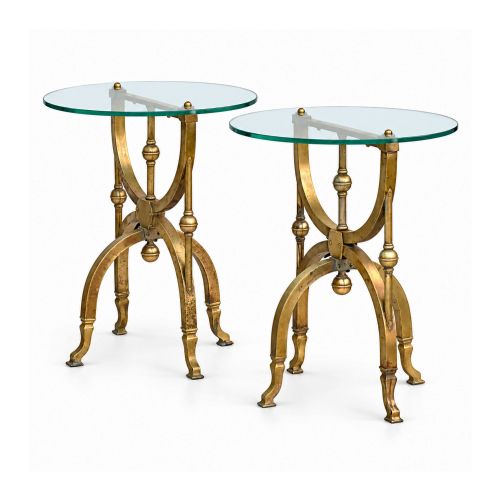
When you search for folding brass stand tables, you encounter an array of occasional tables, tray tables, and serving stands that feature metal tops paired with collapsible supports. The pieces on this page span several centuries, reaching from the Georgian and Regency periods through the Victorian and Edwardian eras up to the early twentieth century.
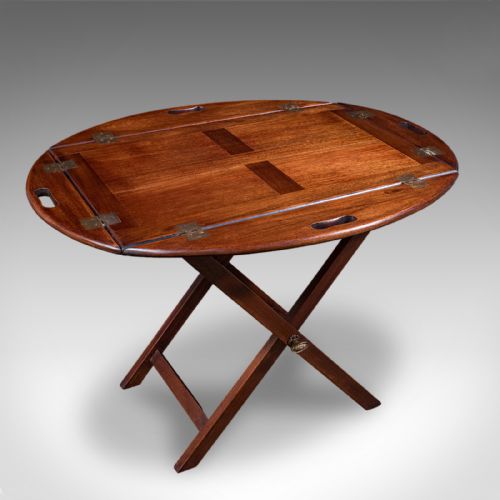
The physical evidence shows that many examples integrate solid timber bases made from mahogany, teak, or general hardwood with circular, octagonal, or oval metal surfaces. Alongside traditional butler tables with drop-flaps, you will find Anglo-Indian and Persian folding tables featuring intricate surface decoration.
Origin and stylistic influences vary widely, incorporating Classical Revival, French Neoclassical, and Middle Eastern motifs. Whether you select a compact occasional piece or a larger serving stand, each item offers portable functionality rooted in historical craftsmanship.
Materials and construction methods
Makers utilised durable metals such as brass and copper for the tabletops and decorative accents, often hammering or engraving the surfaces with detailed patterns. These metal tops were frequently paired with indigenous timbers, including Cuban mahogany, teak, and various hardwoods.
Inlay work forms a prominent part of the construction technique, incorporating bone and contrasting metals directly into the wooden or metallic surfaces. Folding mechanisms rely on hinged or X-frame wooden stands designed for easy collapse and storage.
Folding Brass Stand Tables Retail Price Guide 2026
Typical asking prices for folding brass stand tables among the pieces listed under this phrase on Sellingantiques today, from the lower quarter to the upper quarter. They describe what is for sale here now, not the wider market.
Several tables arrive with complete tea services ready for deployment.
Distinctions in construction and material quality
The standard of execution in the metal inlay and surface engraving dictates the visual distinction between standard examples and superior pieces. Finer items exhibit precise hand-cut bone or metal detailing set flush into dense hardwoods like Cuban mahogany or seasoned teak.
The integrity of the folding mechanism and the weight of the brass components also indicate the level of craftsmanship. Robust hinges and well-balanced X-frame stands ensure stability when assembled, whereas lesser examples show looseness in the joints and thinner gauge metal tops.
The Folding Brass Stand Tables Glossary
- Butler tray
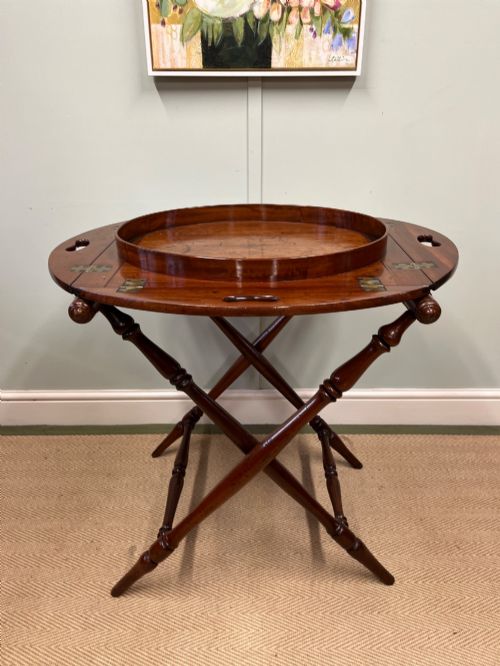
- A portable wooden tray with hinged or fixed sides, designed to be lifted off its support for serving. It frequently rests upon a separate folding stand.
- Anglo-Indian
- A descriptive term for artefacts made in India during the British period, combining local craftsmanship with European furniture forms.
- Occasional table
- A small, light table intended for flexible placement around a room rather than a fixed position.
- Drop-flap
- A hinged section of a tabletop that can be lowered or raised to alter the surface area as required.
Folding Brass Stand Tables: Frequently Asked Questions
How were folding brass stand tables used?
These tables served flexible domestic roles, particularly for portable dining, serving tea, or functioning as occasional surfaces in reception rooms. The removable trays allowed servants to transport items between rooms easily.
Foldable stands meant the furniture could be stored flat when not in use, suiting the needs of compact interiors or temporary living arrangements.
How do I identify a Georgian butler tray?
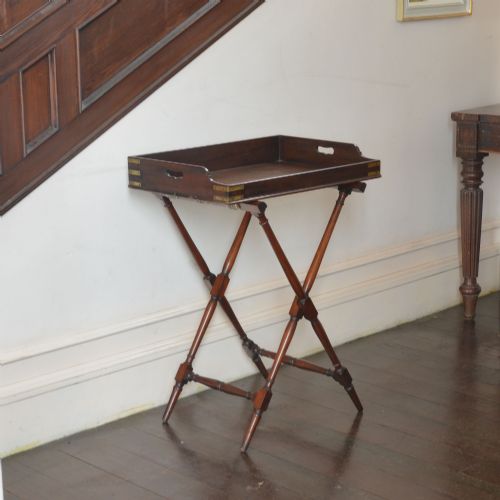
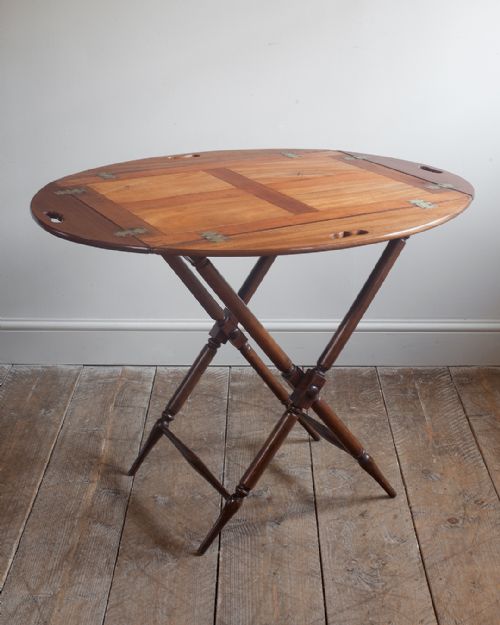
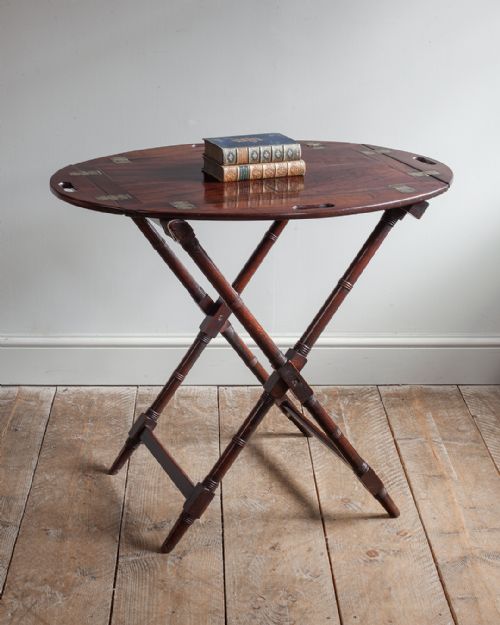
Georgian versions typically feature solid mahogany construction with shaped gallery edges and hand-cut handholds for lifting. The wood displays a deep natural grain and patination developed over centuries.
They often sit on folding X-frame stands that match the timber quality of the tray itself, presenting clean lines without excessive ornamentation.
What defines Anglo-Indian brass inlay work?
Anglo-Indian pieces display dense floral or geometric patterns beaten into brass or copper sheets, or inlaid directly into teak and hardwood bases. Artisans frequently combined brass wire with pieces of bone to create high-contrast surfaces.
These tables reflect a distinct cultural synthesis of traditional Eastern metalwork techniques applied to Western furniture shapes popular in the nineteenth and early twentieth centuries.
How do I care for a brass top table?
Maintain the metal surface by dusting it regularly with a dry cloth and avoiding harsh chemical polishes that strip historical patination. Gentle cleaning preserves the natural darkening and ageing of the brass.
Keep wooden stands conditioned with appropriate wax and protect the joints from excessive moisture to ensure the folding mechanism operates smoothly.