
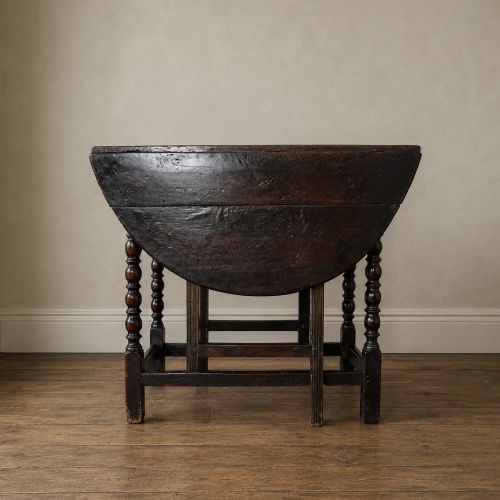
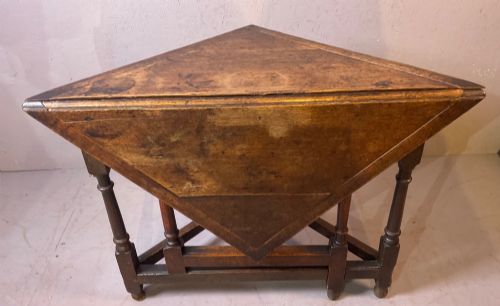
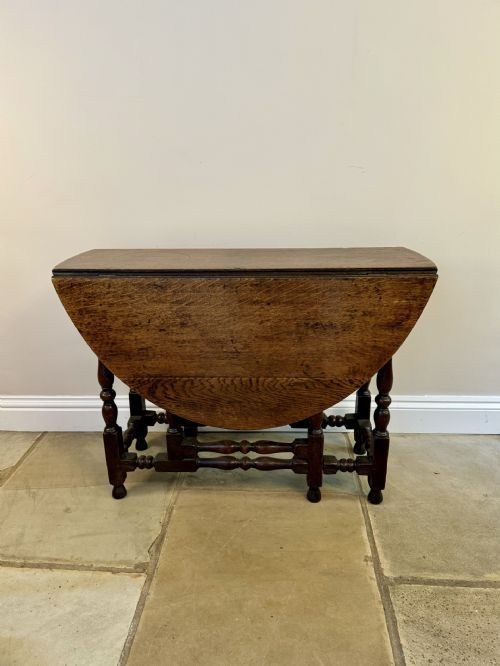
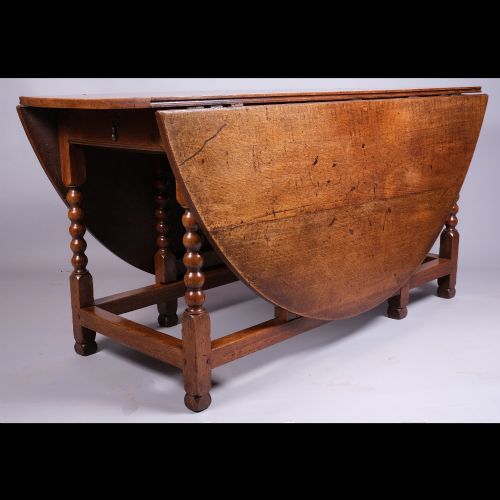
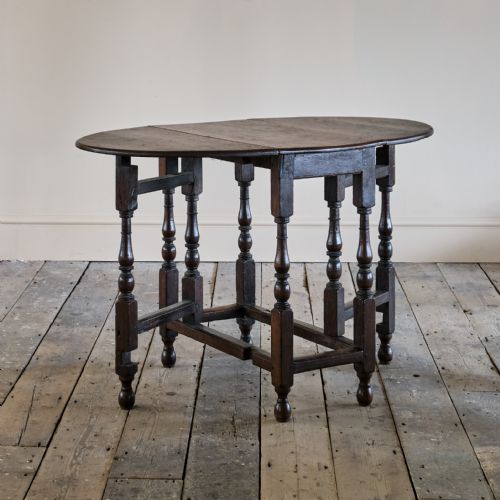

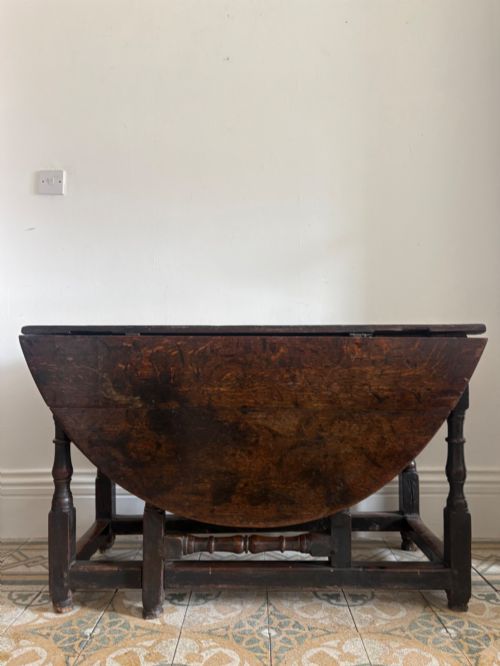

Folded Leaf Oak Table
A folded leaf oak table offers sturdy timber charm and clever space-saving engineering that suits modern dining spaces just as well as historic ones.
Folded Leaf Oak Table
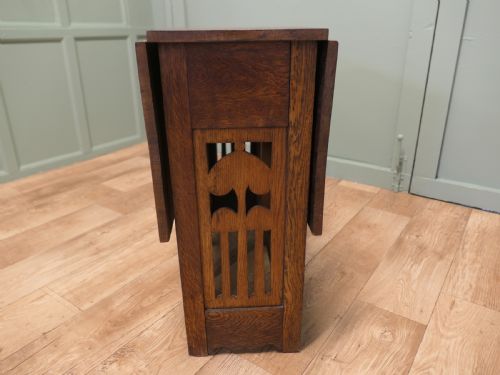
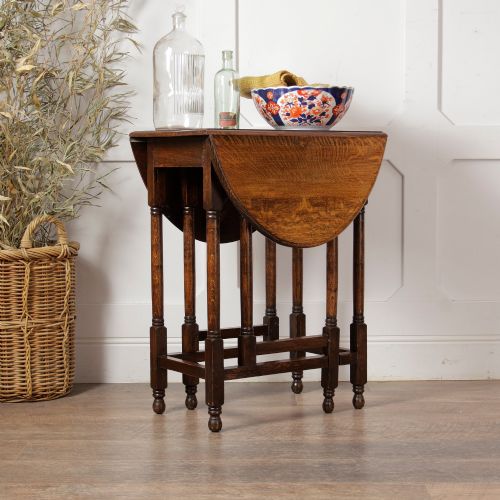
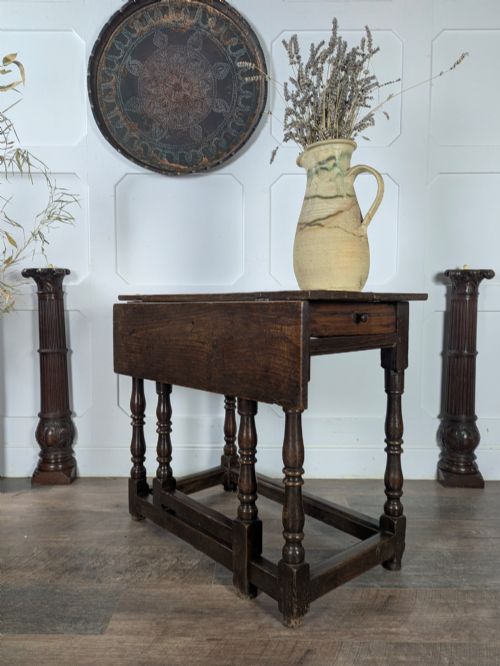
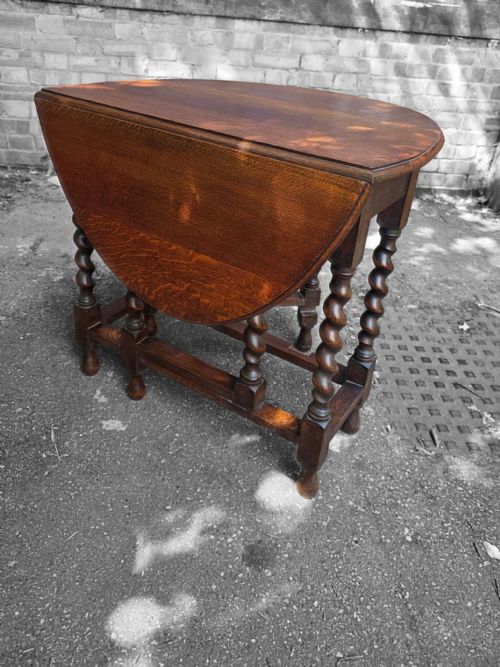
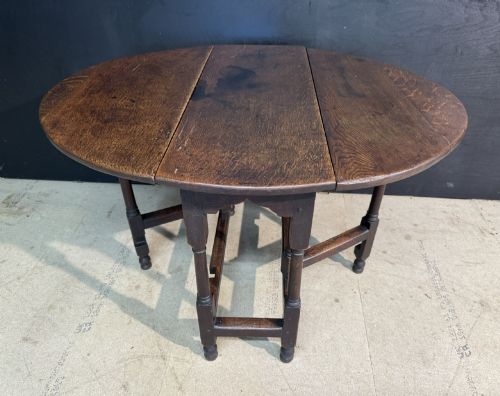
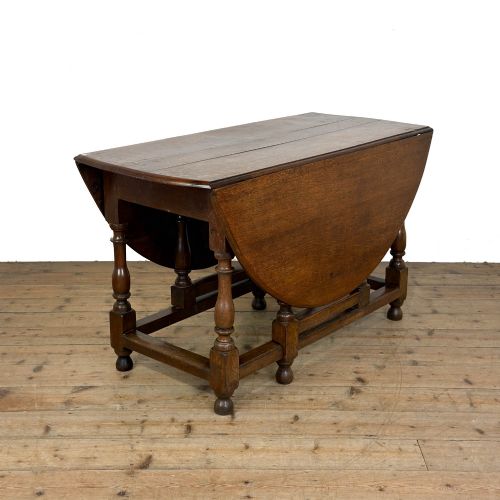
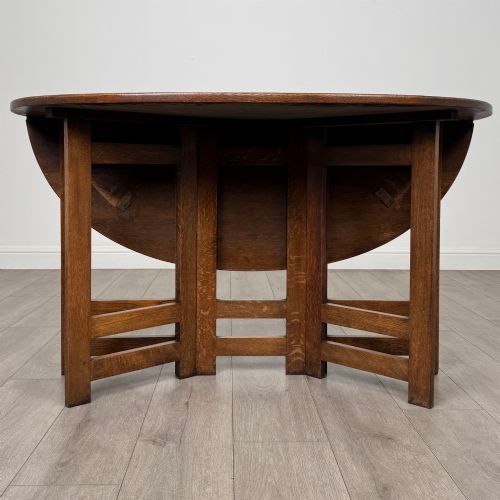
When you search for a folded leaf oak table, you encounter practical timber furnishings designed to expand for dining or gathering and drop down for compact storage. The versions you are most likely to meet on this page take the form of gateleg dining tables, drop leaf tables, and side tables constructed from solid oak.
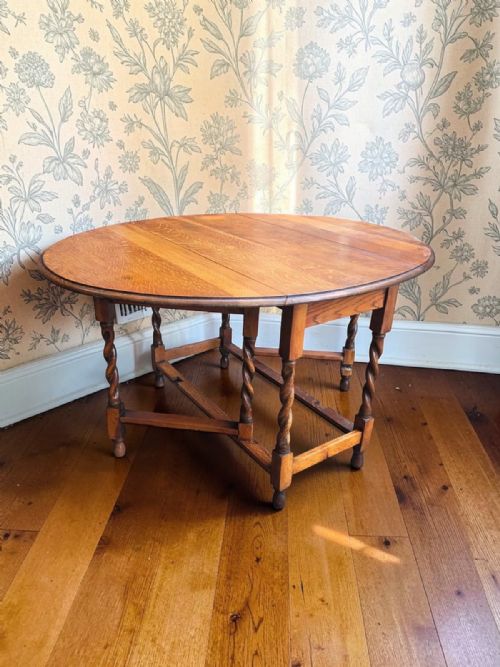
The selections span several centuries of British cabinetmaking, ranging from authentic seventeenth-century and eighteenth-century examples to later revivals from the Victorian era and the nineteen-twenties. These pieces frequently feature oval or plank tops supported by hinged legs that swing out to hold the heavy leaves in place.
How they were made
Joiners built these tables primarily from solid oak, sometimes combining it with walnut, mahogany, or ebony accents, and occasionally fitting iron or brass hinges and drawer pulls. Timber planks formed the oval or rectangular tops, which rested upon sturdy turned baluster or barley twist legs designed to pivot outward.
Craftsmen relied on traditional jointing techniques to ensure the swing legs could bear the regular weight of daily meals. Surface finishes developed through decades of wax polishing, producing the deep patina seen on the older examples.
Listings feature oak tables spanning the seventeenth century through the nineteen-twenties, incorporating styles from Jacobean revival to Arts and Crafts.
What varies in quality
The standard of a folded leaf oak table depends heavily on the integrity of the timber frame and the smoothness of the gateleg mechanism. Superior examples display tight joints, substantial table tops without excessive warping, and balanced proportions when fully extended.
Pointers to better craftsmanship include the depth of the natural patina, the crispness of the turned leg details such as barley twists or balusters, and the original condition of the operational hinges supporting the drop leaves.
The Folded Leaf Oak Table Glossary
- Gateleg table
- A table with hinged leaves supported by one or more legs that swing out like a gate. This design allowed large dining surfaces to fold away compactly against a wall.
- Baluster leg
- A turned vertical support shaped like a miniature pillar or vase. They provide sturdy weight-bearing capacity for seventeenth-century and revival dining tables.
- Barley twist
- A spiralling, rope-like turned wooden leg popular in seventeenth-century joinery and revived during the early twentieth century. It adds decorative movement to heavy timber furniture.
- Patina
- The deep sheen and mellow tone acquired by wood over decades of handling and polishing. It serves as a visual indicator of age and continuous use.
- Plank top
- A table surface constructed from solid boards joined edge to edge. Older versions display the distinct grain and tool marks of early sawing methods.
Folded Leaf Oak Table: Frequently Asked Questions
How do I use a gateleg table daily?
Keep the leaves dropped against the sides for everyday placement as a side table or console. Simply pull the swing legs outward to raise the leaves whenever you need extra surface space for dining.
Ensure you clear heavy items from the edges before folding the leaves back down to protect the hinges and pivot joints from strain.
How do I tell seventeenth-century oak from later revivals?
Examine the construction methods beneath the top, looking for hand-cut joints, pegged tenons, and signs of early tool usage rather than uniform modern machining. The timber grain and type of fastener often reveal whether a piece dates to the seventeen-hundreds or a nineteen-twenties revival.
Check the wear patterns around the feet and gateleg pivots, as genuine early pieces exhibit authentic friction marks accumulated over centuries of use.
Will these tables fit in small rooms?
Many drop leaf and gateleg designs function brilliantly in compact spaces because their surface area shrinks dramatically when the leaves hang down. You can tuck them against a wall as an occasional table and expand them only when guests arrive for meals.
Measure the floor clearance required for the swing legs to extend fully before positioning the furniture in a narrow dining area.
How should I care for antique oak surfaces?
Dust the timber regularly with a soft, dry cloth and apply a quality natural beeswax periodically to nourish the dry wood. Avoid placing oak furniture near direct heat sources or in damp environments that cause the planks to warp.
Use coasters and placemats to protect the historic finish from moisture rings and heat damage during daily use.