





Fluted Leg Upholstered Sofa
A fluted leg upholstered sofa brings neoclassical elegance to a room, offering supportive seating with distinct architectural lines.
Fluted Leg Upholstered Sofa
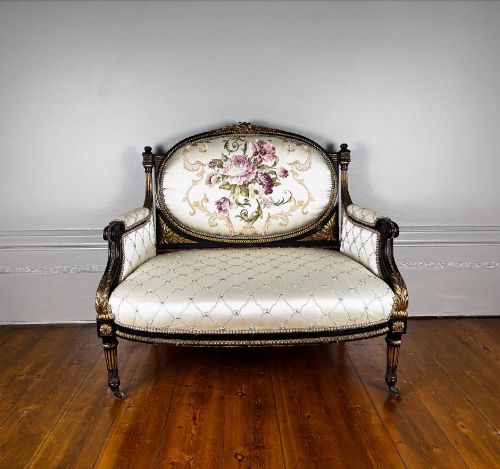
A fluted leg upholstered sofa is a seating form defined by carved vertical grooves along the timber supports beneath padded upholstery. Buyers seeking this phrase encounter examples ranging from eighteenth century Swedish and Georgian designs to nineteenth century French giltwood models and later revival pieces.
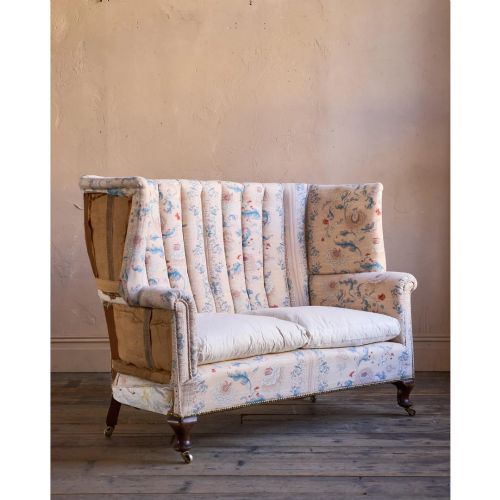
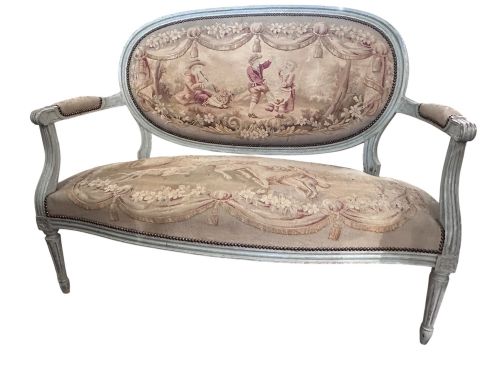
The objects appear across several forms, including larger settees, wingback sofas, and salon suites, alongside specific French variants like canapés. Materials and finishes span mahogany, walnut, satinwood, painted wood, and giltwood, paired with textiles such as linen and fabric.
Stylistic influences lean heavily toward the neoclassical, with Louis XVI style and revival pieces dominating alongside Hepplewhite manners and Regency frameworks. Dating spans from the eighteenth century through the Edwardian era and into the early twentieth century.
Materials and construction
Frames are constructed from hardwoods such as mahogany, walnut, and satinwood, alongside softer or painted timbers finished with gold leaf or giltwood. Skilled craftspeople carved vertical channels into the legs by hand, creating the characteristic fluted detail associated with neoclassical design.
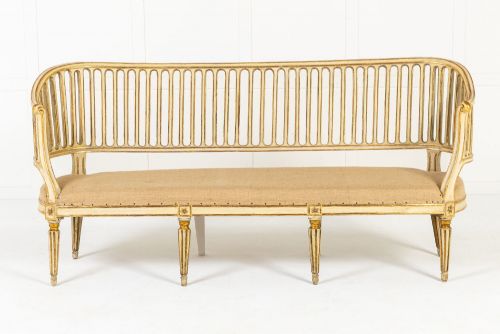
Upholstery techniques rely on traditional webbing, hessian, and stuffing beneath top covers of linen or decorative fabric. Frames often feature exposed carved woodwork around the crest rails and arms, while other variants incorporate cane panels alongside upholstered sections.
Fluted Leg Upholstered Sofa Retail Price Guide 2026
Typical asking prices for fluted leg upholstered sofa among the pieces listed under this phrase on Sellingantiques today, from the lower quarter to the upper quarter. They describe what is for sale here now, not the wider market.
Listings feature pieces spanning the eighteenth century through the Edwardian era, constructed from mahogany, satinwood, and giltwood.
Distinguishing quality across examples
Quality reveals itself in the crispness and depth of the hand-carved fluting on the legs and the sculptural integrity of the wooden frame. Finer pieces demonstrate precision in joinery and rich detailing in gilding or painted finishes rather than flat, mechanical decoration.
The choice of primary timber and the execution of secondary woods indicate the workshop standards of the period. Superior upholstery support and intact framing elements separate standard revival pieces from more ambitious bespoke commissions.
The Fluted Leg Upholstered Sofa Glossary
- Fluting
- Vertical parallel grooves carved into the surface of a wooden leg or column. This decorative technique draws directly from classical architectural pillars.
- Canapé
- A traditional French decorative sofa featuring an exposed wooden frame and upholstered back and seat. These pieces often display carved giltwood or painted finishes.
- Giltwood
- Timber coated with a thin layer of gold leaf or metallic paint. This finish appears frequently on neoclassical and French revival frames.
- Hepplewhite Manner
- A furniture design style inspired by the eighteenth-century cabinetmaker George Hepplewhite. Pieces in this manner often feature elegant tapered legs and shield or oval backs.
- Caning
- Woven rattan material used to form panels for backs or seats. It provides lightweight durability and textural contrast against solid wood frames.
Fluted Leg Upholstered Sofa: Frequently Asked Questions
What is a fluted leg upholstered sofa?
A fluted leg upholstered sofa is a seated piece featuring carved vertical grooves on its wooden supports and padded upholstery. These designs draw heavily from eighteenth and nineteenth century neoclassical traditions.
They appear in forms ranging from French giltwood canapés to Georgian and Regency settees. The combination of architectural woodwork and soft textiles defines the aesthetic.
How do I date a fluted leg sofa?
Dating relies on examining the timber species, carving style, and construction methods used in the frame. Eighteenth-century models often show hand-wrought joinery and specific regional paint or gilt techniques.
Revival pieces from the Edwardian period or early twentieth century imitate these earlier neoclassical styles. Subtle shifts in proportion and hardware help distinguish original period pieces from later interpretations.
Where should I place a settee?
A settee functions well in drawing rooms, large hallways, or bedrooms where full-sized sofas might overwhelm the floor space. Their slender profiles allow them to sit comfortably against walls or beneath windows.
Pieces with finished backs and decorative carvings also work effectively when floated within a room layout. They provide intimate seating without blocking natural light or traffic flow.