





Fluted Leg Ottoman
These fluted leg ottoman pieces combine structured seating and architectural woodwork, offering both utility and period character for any interior.
Fluted Leg Ottoman
A fluted leg ottoman or stool search reveals low seating furniture spanning the nineteenth and early twentieth centuries, including Victorian, Edwardian, and George III styles. The listings predominantly feature stools, footstools, long benches, and dressing stools rather than standard lidded ottoman boxes.
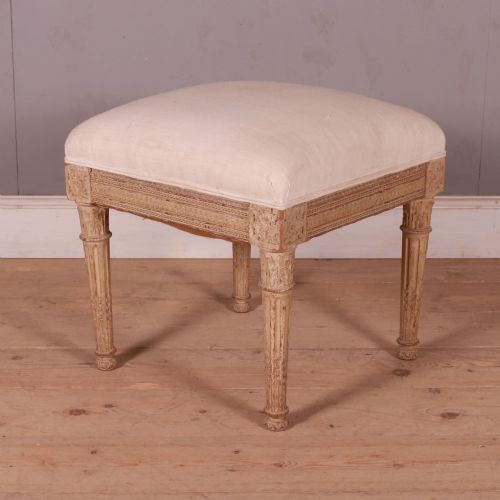
Makers and workshops from various regions produced these forms, evidenced by Swedish painted pieces, French style carved giltwood examples, and English country house designs. Mahogany and walnut frames appear frequently alongside painted wood and teak.
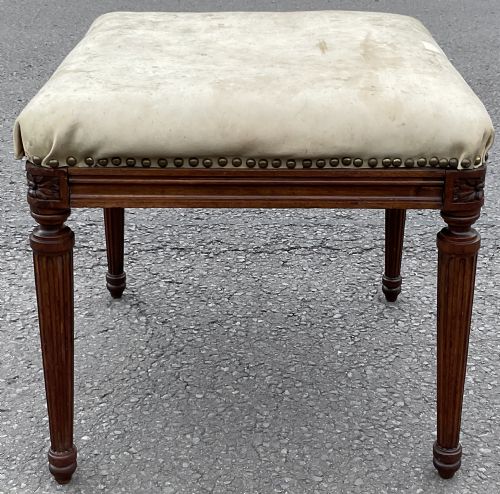
Buyers will encounter single items and pairs in equal measure, often upholstered in leather, linen, fabric, or woven rattan. Many feature buttoning and brass studs alongside the characteristic carved fluted legs.
Materials and construction
Timbers such as mahogany and walnut provide the structural integrity for these frames, shaped with hand-carved fluting along the upright supports. Giltwood and painted finishes also occur across French and Swedish designs from the nineteenth century.
Upholstery methods involve traditional stuffing techniques secured with materials like leather, linen, and woven rattan. Brass-studded detailing frequently fastens the leather coverings to the wooden framework.
Several Swedish painted stools bring bright rustic charm to the collection alongside formal mahogany benches.
Assessing craftsmanship and finish
Quality rests in the crispness of the hand-carved fluting on the wooden legs and the stability of the hardwood frames, whether formed from mahogany, walnut, or painted timber. Finer examples display precise joinery and balanced proportions suited to their specific period style.
The standard of upholstery and the choice of covering material, from buttoned leather to fine linen or woven rattan, significantly influence the overall refinement of the piece. Original painted surfaces or well-executed giltwood finishes elevate the visual presence of the seating.
The Fluted Leg Ottoman Glossary
- Fluting
- Vertical parallel grooves carved into the surface of a furniture leg or column. This classical architectural detail originates from ancient stone pillars.
- Giltwood
- Timber that has been coated with a thin layer of gold leaf or gilt. It appears frequently on decorative frames from the nineteenth century.
- Ottoman
- A low upholstered seat or bench without a back or arms. Originally introduced from the Ottoman Empire, the form evolved in European seating.
- Rattan
- A naturally pliable climbing palm used in thin strips for weaving. Woven rattan provides a breathable surface for seat panels.
- Buttoning
- Upholstery technique where deep buttons are pulled through the padding to create a diamond pattern. This secures the filling and adds texture.
Fluted Leg Ottoman: Frequently Asked Questions
What is a fluted leg ottoman?
A fluted leg ottoman or stool is a low upholstered seat supported by legs carved with vertical grooves. These pieces range from nineteenth century mahogany footstools to Edwardian dressing seats.
They function primarily as footrests, dressing stools, or long benches in hallways and living spaces. The style draws on classical architecture adapted through periods like the Regency and George III eras.
How do I date a wooden stool?
Dating relies on examining the timber species, joinery techniques, and stylistic markers visible in the frame. Nineteenth century pieces often utilise solid mahogany or walnut with hand-carved detailing.
Comparing the decorative vocabulary, such as French style carving or Swedish painted finishes, helps narrow the production era. Secondary woods and fastener types inside the frame offer further clues to age.
Where should I place a long bench?
Long benches and stools fit well at the foot of a bed, beneath a window, or along a spacious hallway. Their low profile prevents them from blocking sightlines in a room.
Many examples feature upholstered tops in leather or linen that complement seating areas or dressing spaces. Pairs of benches can also flank a central table or fireplace.
Are these pieces reupholstered?
Many older stools and benches have received new covers over time to preserve their utility. Recovered pieces often feature linen, fabric, or leather that suits contemporary interiors.
Original upholstery remains uncommon on nineteenth century examples due to natural wear over decades of use. The underlying wooden frame and carved legs generally retain their original finish.