


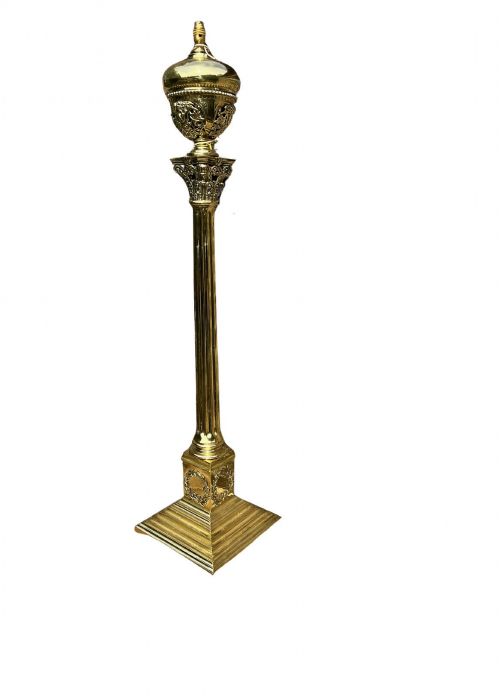


Fluted Floor Lamp
A fluted floor lamp brings architectural presence and adjustable illumination to a room, drawing the eye upward with classical columns or slender wooden stems.
Fluted Floor Lamp
When searching for a fluted floor lamp, you encounter tall upright lighting fixtures that trace their lineage through the Georgian, Victorian, and Edwardian periods into the Art Deco era. The earliest examples draw directly from classical architecture, utilising timber columns or metal shafts modelled on ancient Grecian and Roman orders.
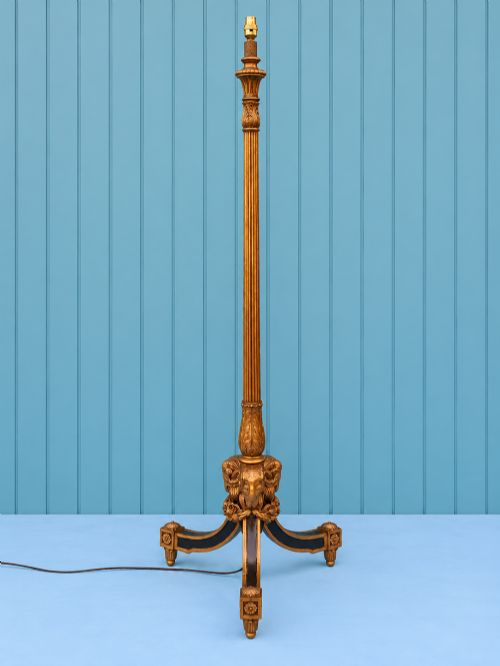
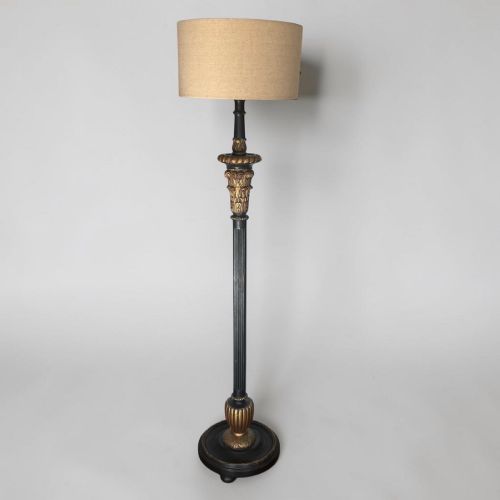
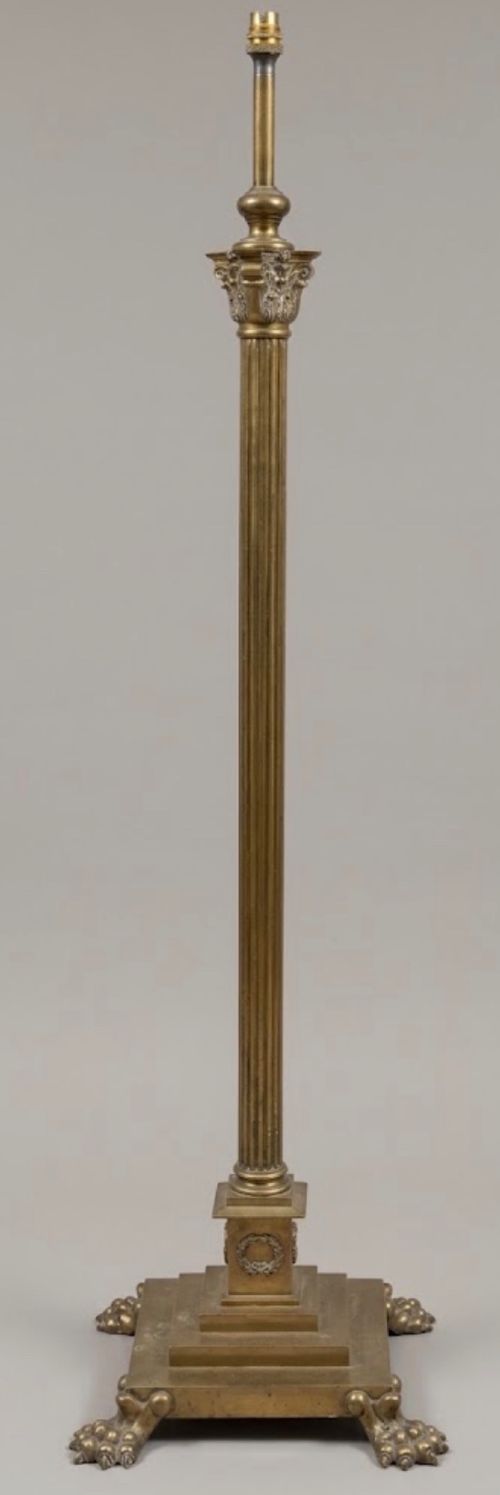
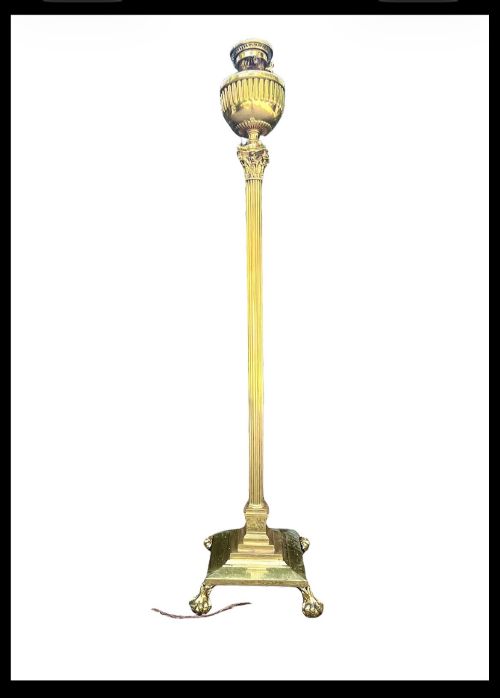
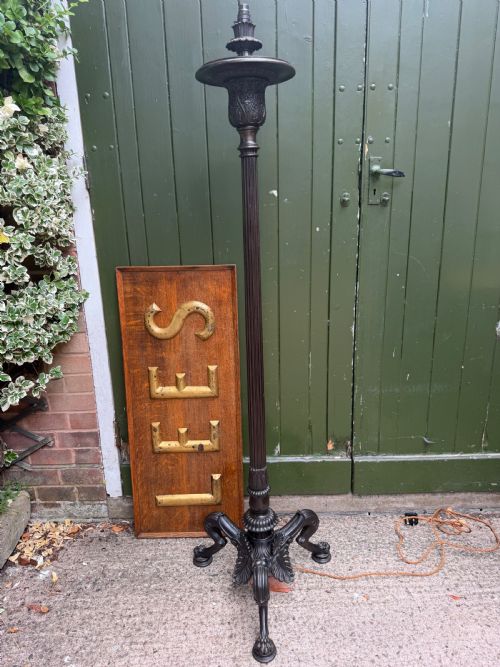
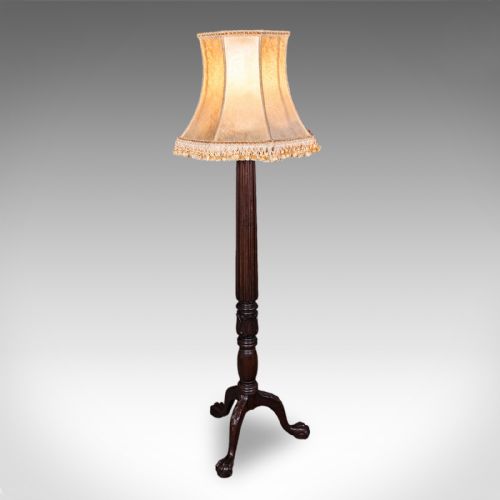
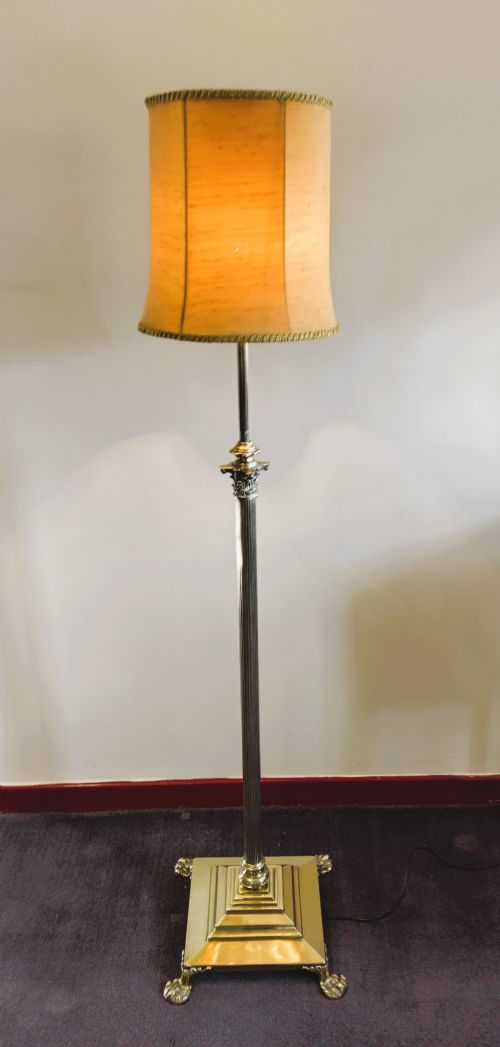
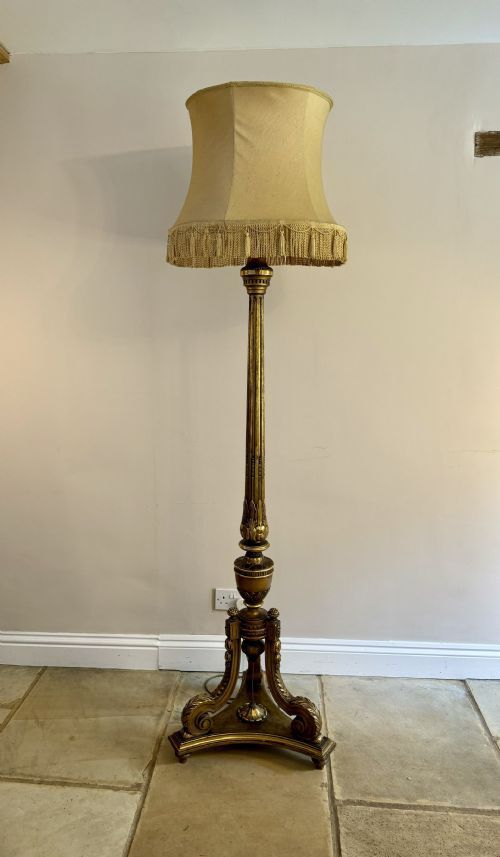
The most common variations on this page include solid brass standards, often featuring Corinthian capitals or telescopic adjustments, alongside carved mahogany and giltwood versions. These pieces bridge the gap between functional room lighting and sculptural focal points, frequently appearing as torcheres or standard lamps designed to hold fabric shades or upward-facing bowls.
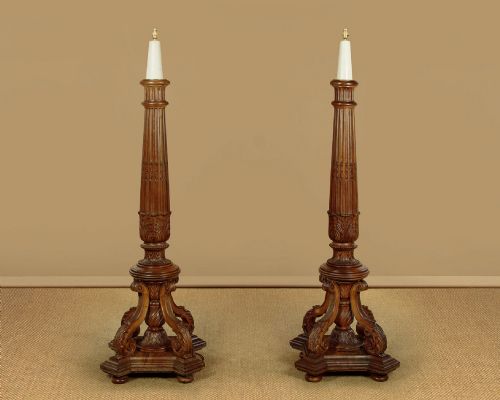
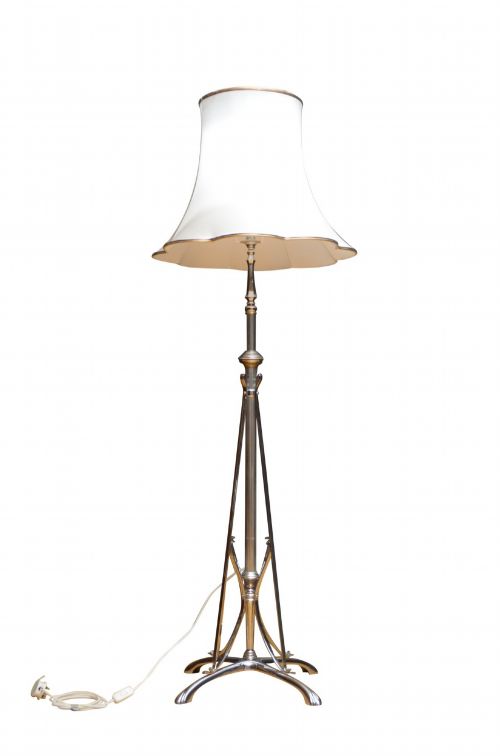
Makers and designers across the nineteenth and early twentieth centuries adapted these vertical supports to suit changing domestic interiors, shifting from heavy Victorian neoclassical brass to the clean geometric lines of the 1920s. Whether standing as a single column or paired as matching pieces, they serve to illuminate dark corners while anchoring the proportions of a large reception room.
How they were made
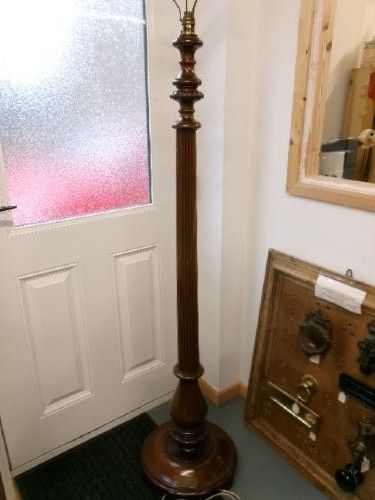
Makers constructed these tall standards using turned timbers such as mahogany and walnut, or cast metals including brass, bronze, and iron. Woodworkers shaped the slender shafts on lathes to create precise vertical flutes, while metalworkers cast bronze and brass components before applying patination or gilding.
Advanced engineering appears in the telescopic mechanisms of the late nineteenth century, which allowed owners to alter the height of the light source by raising or lowering the central column. Surface decoration combined hand-carving on wooden stems with applied gold leaf, silver plating, or patinated finishes on cast metal bases.
Fluted Floor Lamp Retail Price Guide 2026
Typical asking prices for fluted floor lamp among the pieces listed under this phrase on Sellingantiques today, from the lower quarter to the upper quarter. They describe what is for sale here now, not the wider market.
One towering nineteenth-century standard lamp stands ready to illuminate a room with the dignity of a Roman temple.
What varies in quality
The distinction between ordinary and exceptional examples rests upon the crispness of the carving and the weight of the materials used. Superior brass and bronze standards display deep, sharply defined fluting and heavy bases that provide stability, whereas simpler versions rely on lighter pressed metal or plain turned wood without decorative enrichment.
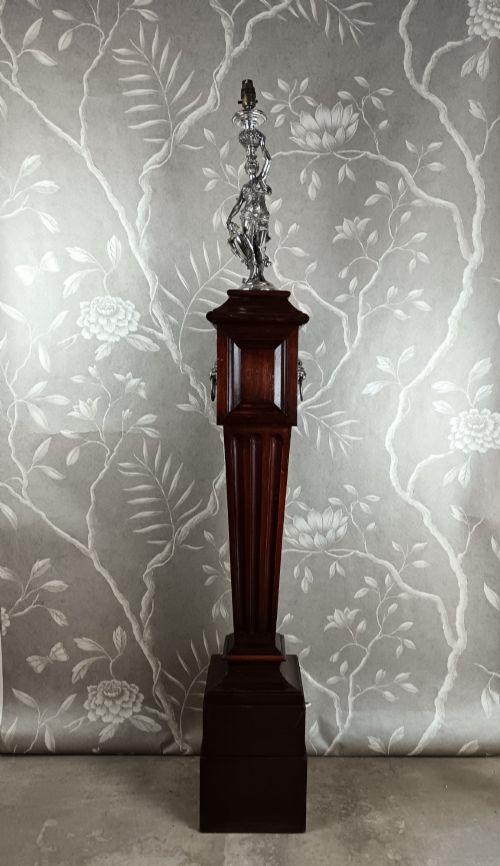
Integration of mechanical elements also separates fine pieces from standard production, particularly in adjustable models where a smooth telescopic action and secure locking key demonstrate superior workshop practice. The quality of the original gilding, patination, or figural detailing - such as marked WMF statuary or crisply cast Corinthian capitals - further defines the standing of an individual lamp.
Humphrey Hopper·WMF·Hinks
The Fluted Floor Lamp Glossary
- Torchere
- A tall ornamental stand adapted to hold a light source. These pieces originally supported candles or oil lamps before being converted for electricity.
- Corinthian column
- A classical architectural order featuring an ornate capital decorated with acanthus leaves. This motif appears frequently at the top of nineteenth-century brass standards.
- Telescopic
- A design feature allowing the vertical shaft to extend or retract. It provides adjustable height for reading or general illumination.
- Giltwood
- Timber that has been coated with a thin layer of gold leaf. It creates a bright reflective surface popular in neoclassical and revival interiors.
- Standard lamp
- A British term for a floor-standing lamp that supports a shade. It serves as a primary source of ambient room lighting.
Fluted Floor Lamp: Frequently Asked Questions
What is a fluted floor lamp?
A fluted floor lamp is a tall vertical lighting fixture featuring carved grooves or channels along its wooden or metal shaft. These pieces originated as adaptations of classical columns and torcheres.
They provide ambient illumination while acting as sculptural furniture elements in traditional and revival interiors.
How do you date a brass floor lamp?
Dating relies on stylistic clues, manufacturing techniques, and material composition. Victorian examples often display heavy cast brass with Corinthian capitals, while Edwardian and 1920s versions introduce simpler lines or Art Deco geometry.
Telescopic mechanisms and maker marks also help narrow the period of production.
Where should you place a standard lamp?
These tall lights suit corners of reception rooms, beside reading chairs, or flanking large pieces of furniture. Their height allows them to distribute light across a wide area without cluttering floor space.
Matching pairs work effectively placed at either end of a fireplace or console table.
Are these lamps converted from oil?
Many nineteenth-century standard lamps began life as oil or gas burners before conversion to electricity during the twentieth century. This conversion history is standard for antique lighting.
Wiring is typically updated to meet modern safety standards while retaining the original metal or wooden structure.